Back in the 1890’s, the city of Siena, Italy, had a problem. The city had outgrown the wells it used to supply drinking water to its people. And…
Those wells often contained contaminated water that produced chronic outbreaks of cholera and typhus.
Siena clearly needed a new water supply.
The answer lay 86 km (54 miles) to the south…on Monte Amiata.
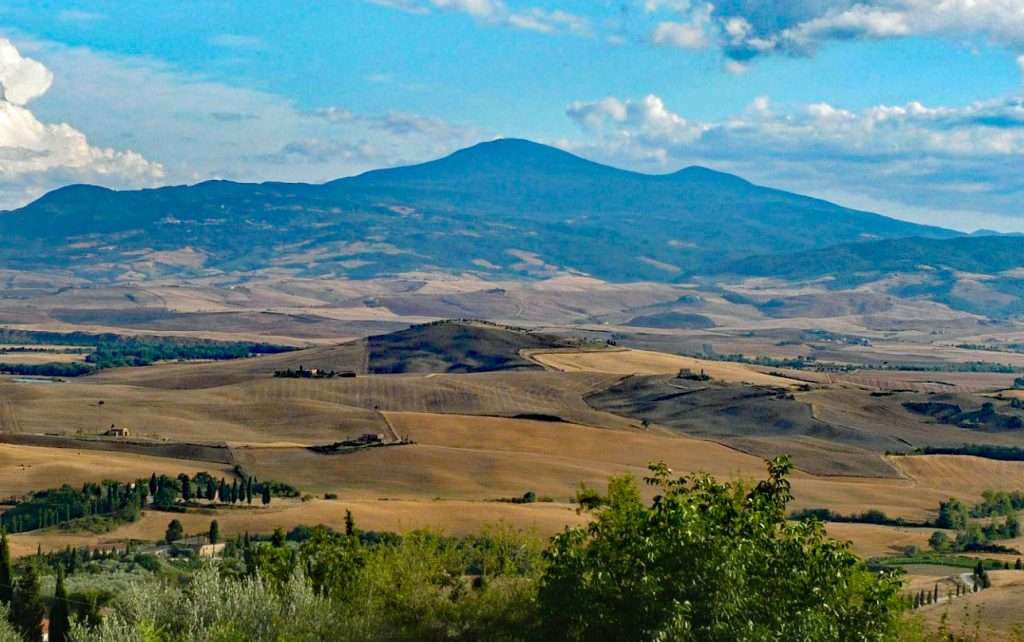
Monte Amiata lies across the Val d’ Orcia from Pienza…a 5,700 ft high volcano that last erupted somewhere between 180,000 and 300,000 years ago.
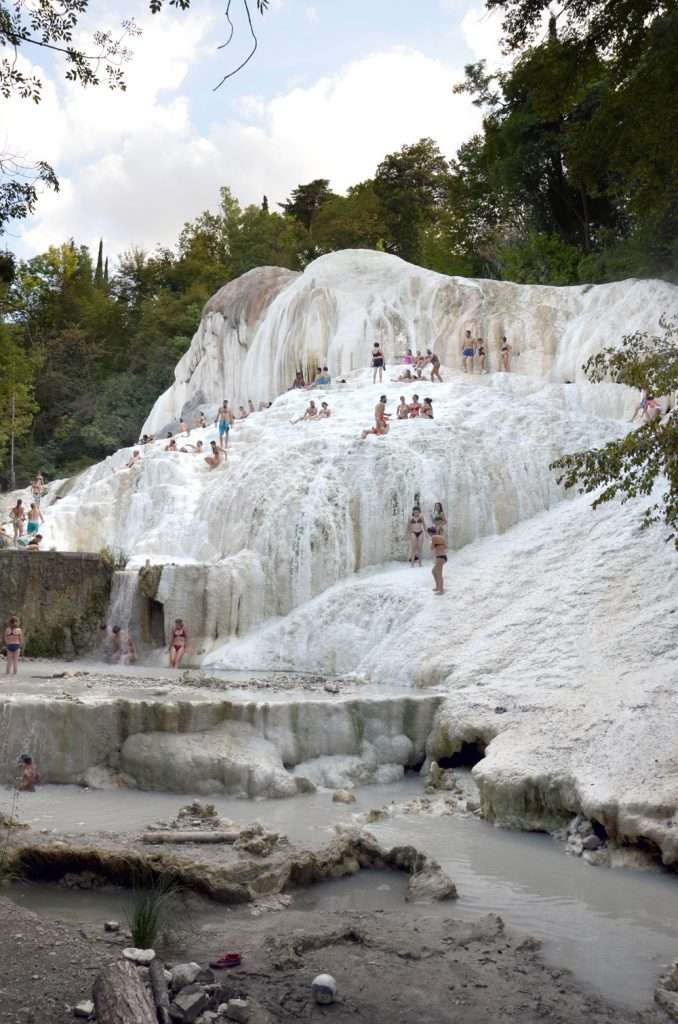
There is still enough of a molten core that Amiata is the home to two thermal baths…Bagno San Fillipo and the ancient Roman spa of Bagno Vignoni.
But something else happened since that last volcanic eruption eons ago. Some of the rock inside Amiata fissured, and those cracks became filled with rain and melted snow.
The city of Siena tested the water that flows from the natural springs on the flanks of Amiata in 1895. It proved bacteria-free, plentiful, and tasty.
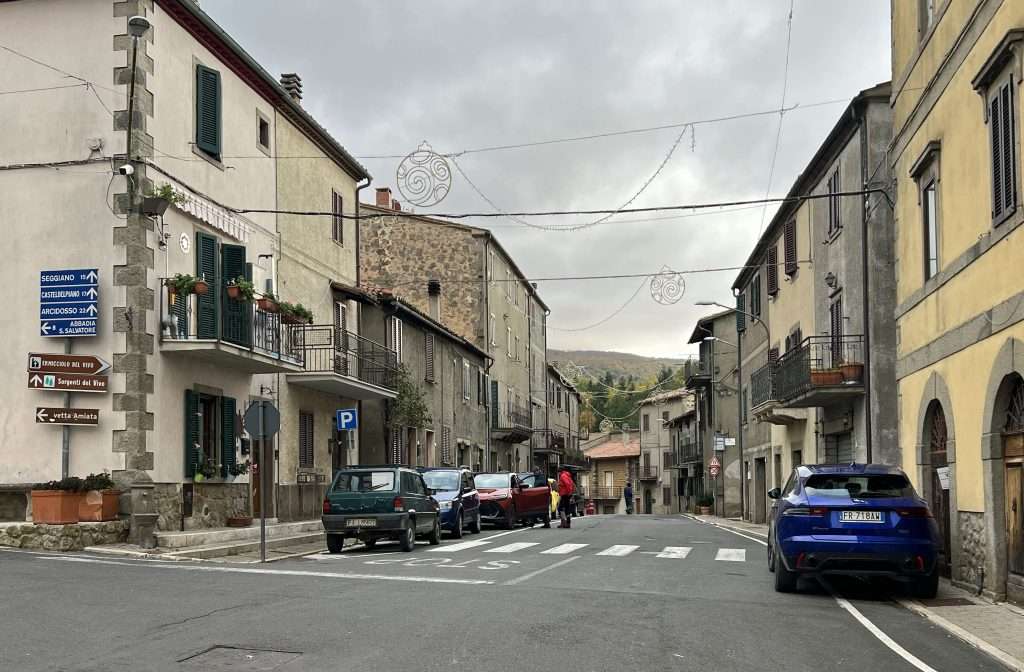
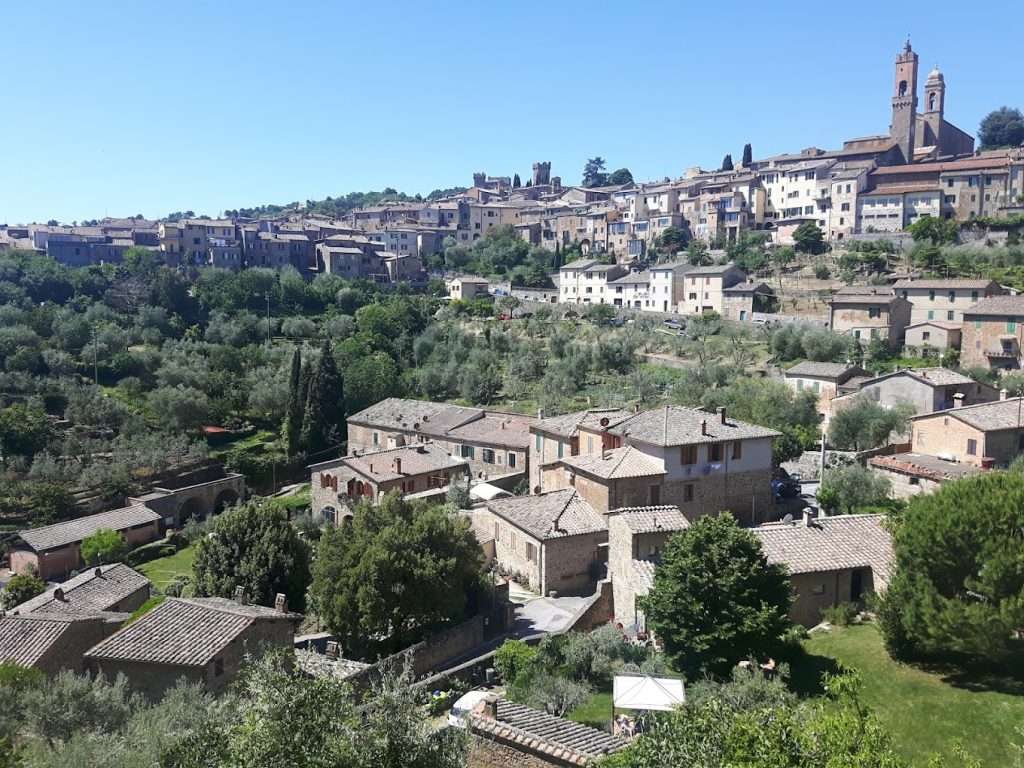
So the city of Siena went to the small village of Vivo d’ Orcia (pop. 600) to find a way to get its spring water to Siena.
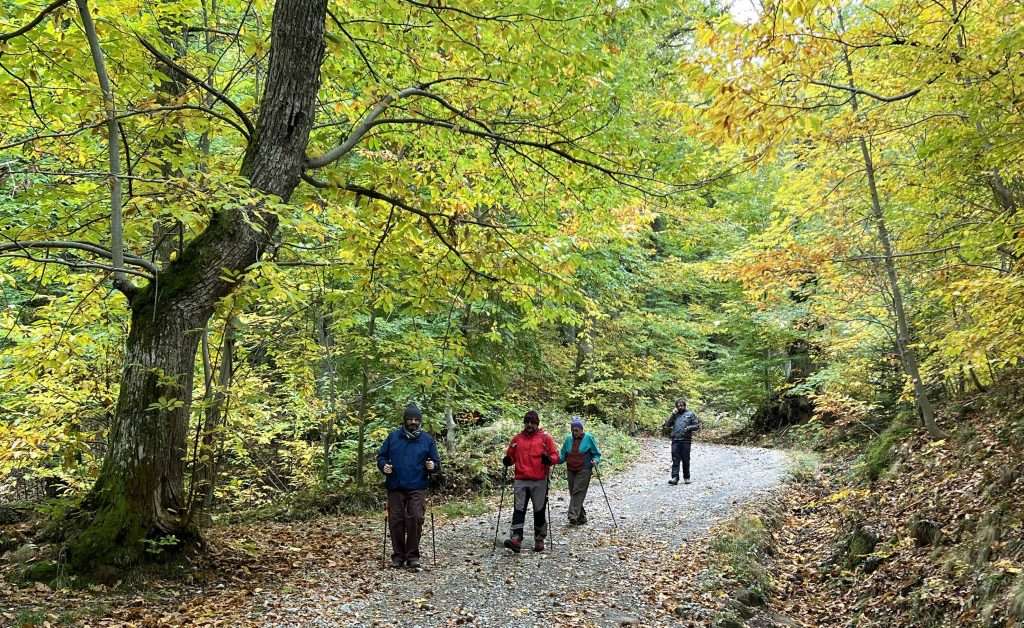
Vivo d’ Orcia is surrounded by chestnut forests and…a little higher up the mountain…vast stands of beech trees.
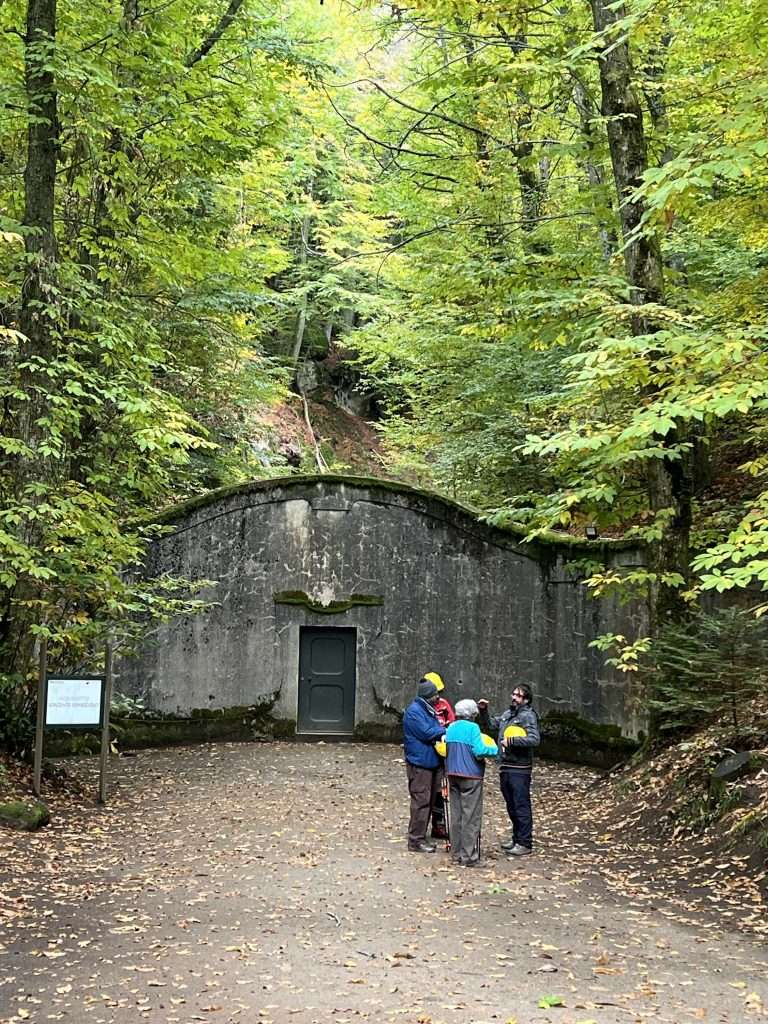
At an elevation of 1,007 m (3,300 ft.) we found…seemingly very much out of place…a cement wall with a small door.
The sign by the door read Acquadotto Sorgente Ermicciolo (Aquaduct Sourced at Ermicciolo).
We knew the ancient Romans were famous for building aqueducts…but 19th century Italians?
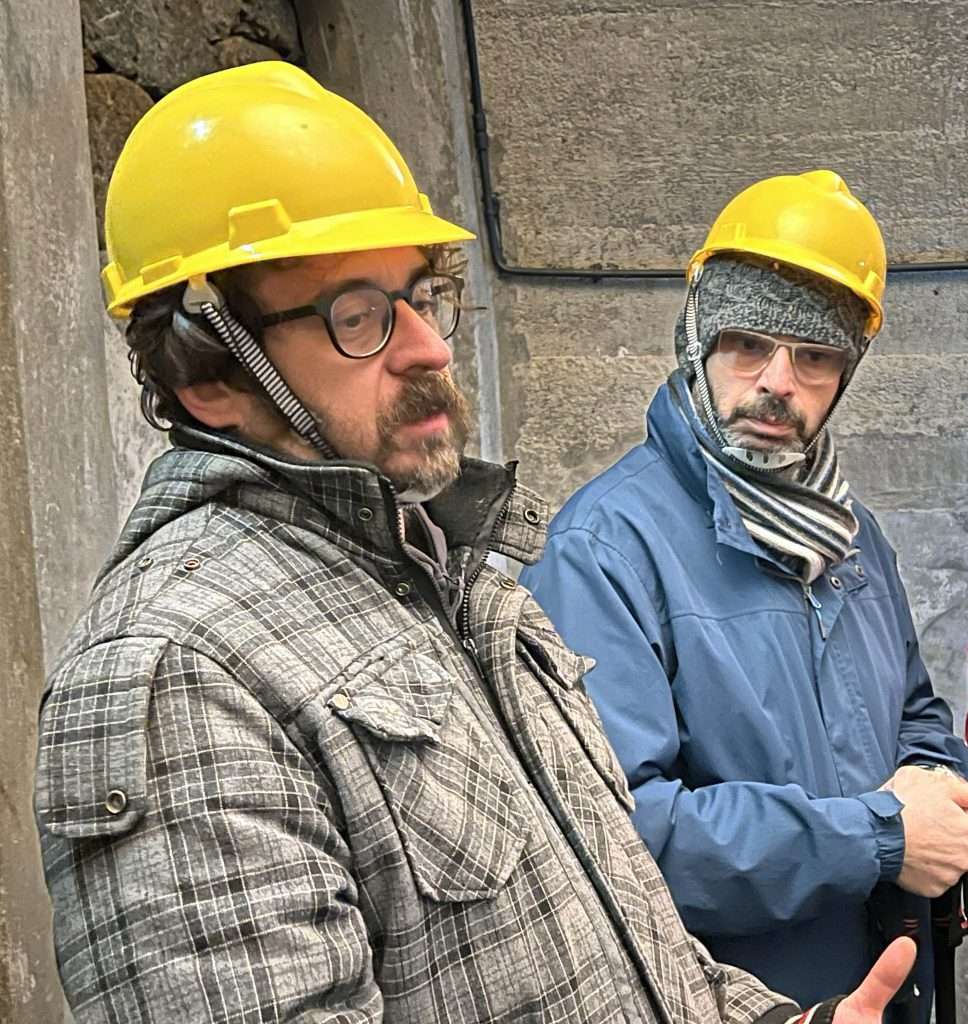
Our guide, Fabio Rossi…at the left in this picture…showed us what was behind that small door.
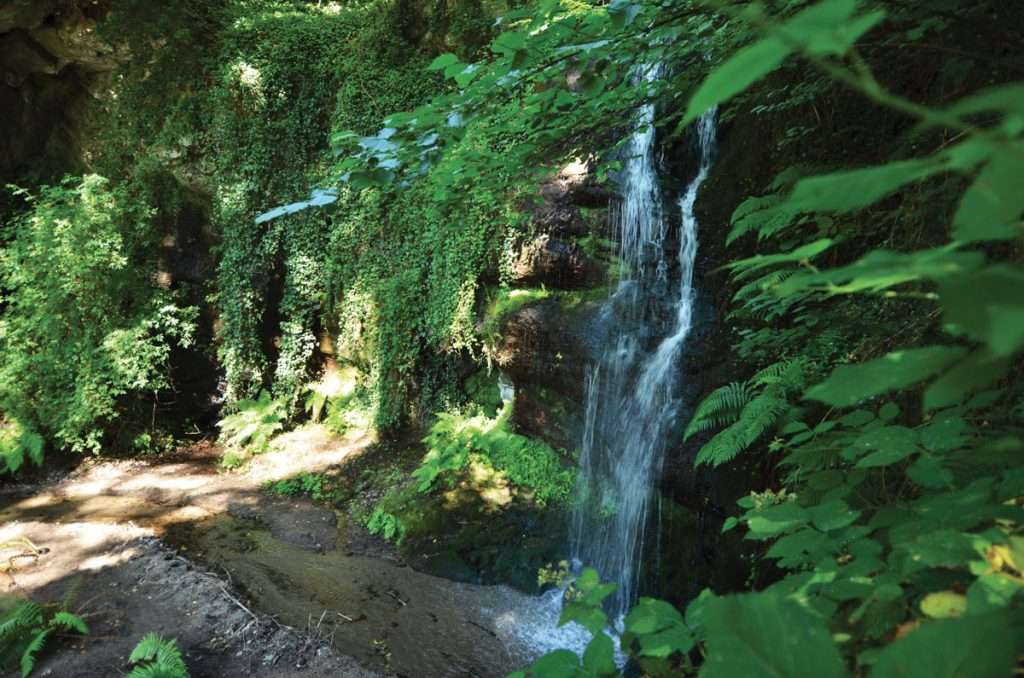
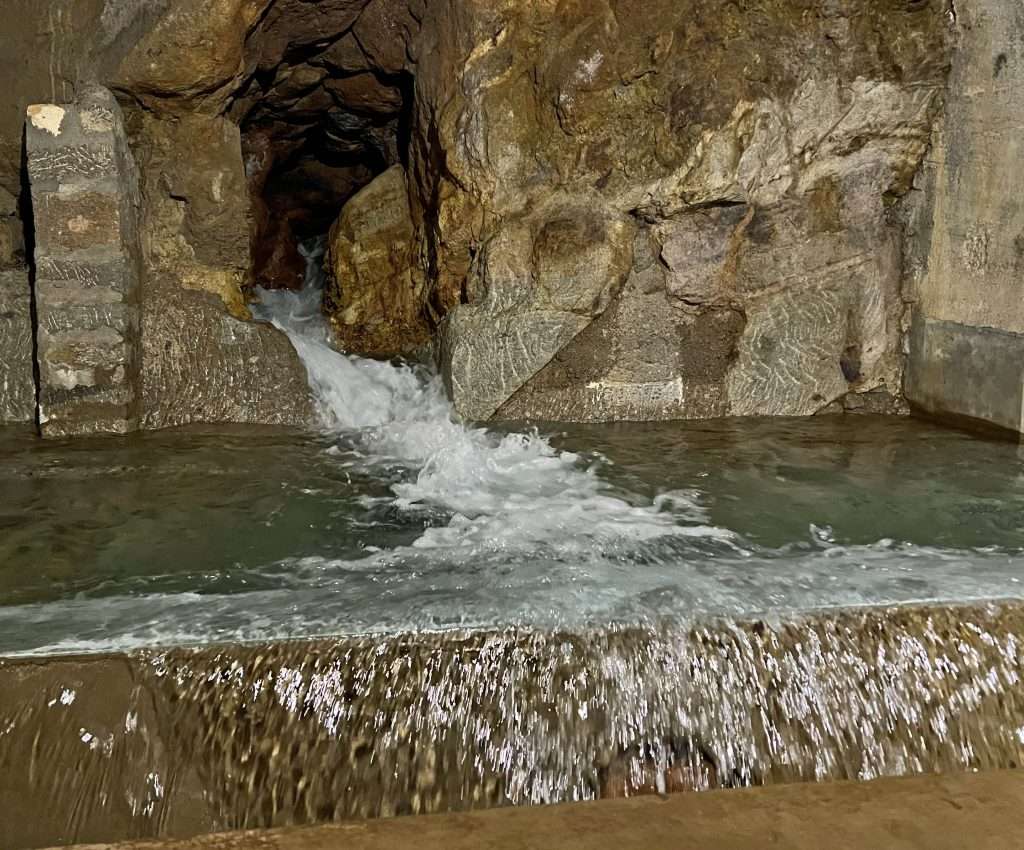
Water gushing from a natural spring deep inside the bowels of Mt. Amiata.
The city of Siena consumes 3.6 million liters of water a minute. This spring produces 9.6 million liters a minute.
Getting the water from the spring (elev. 3,300 ft) to the bottom of the valley (elev. 938 ft) was not a problem.
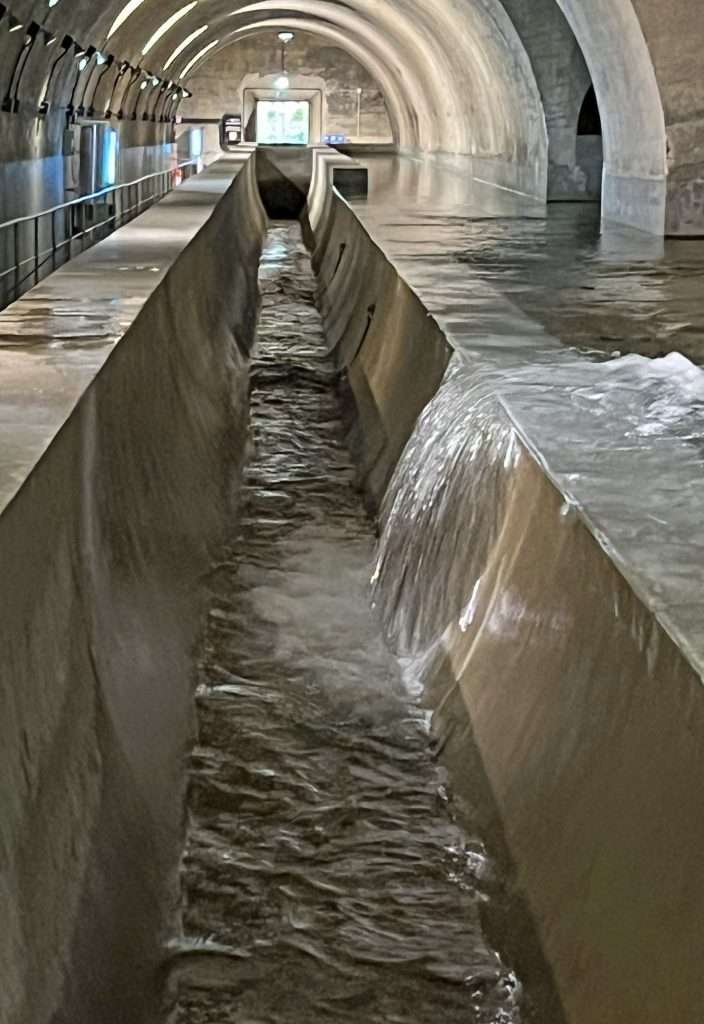
Getting it under the hilltop town of Montalcino and across the Orcia and Ombrone rivers…all without pumping stations…would prove to be more of an engineering challenge.
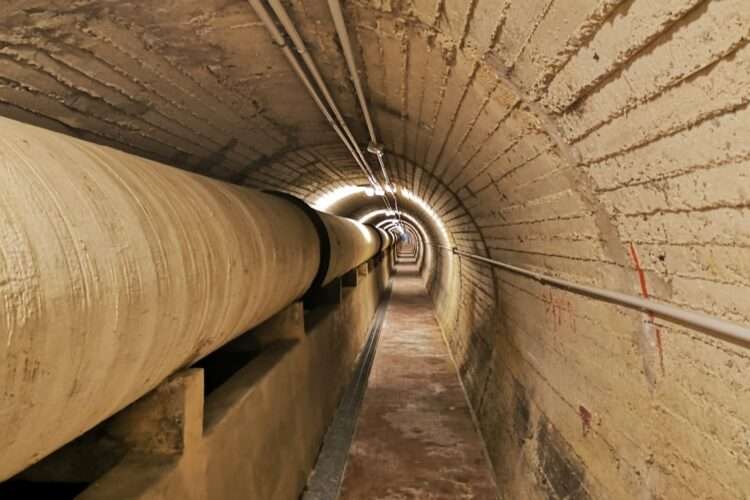
An 87 km-long tunnel would provide the solution.
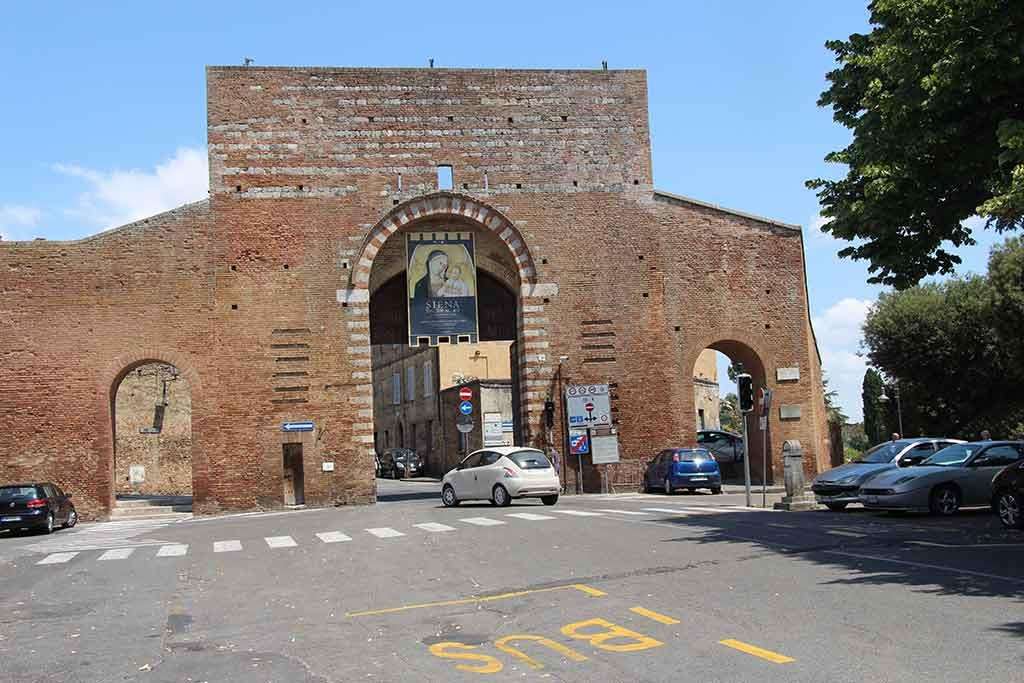
In 1908, after 6 years of construction, the project was completed…and fresh water from Mt. Amiata was delivered to Porta San Marco in Siena…
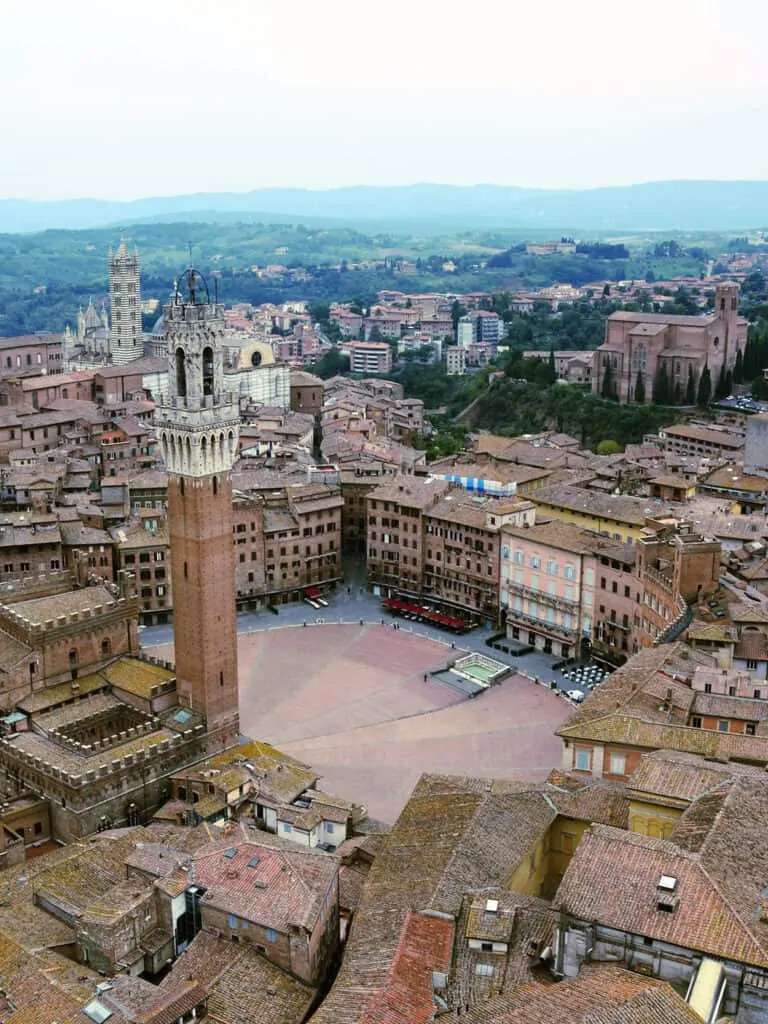
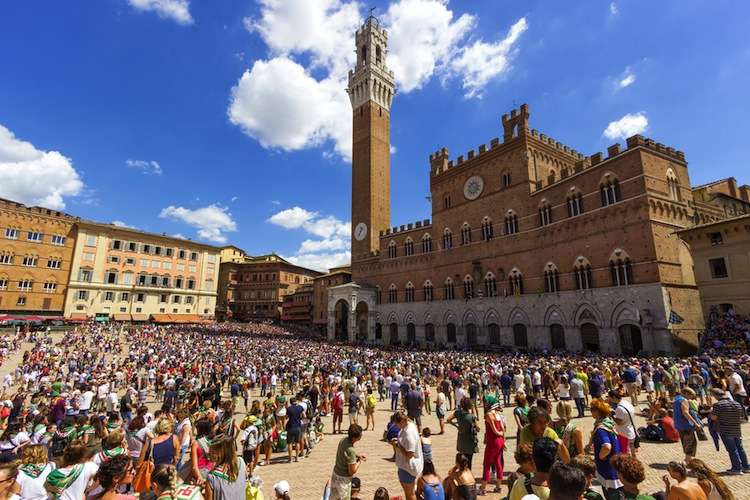
…which means today when tourists visit Siena’s main attraction, the Campo….
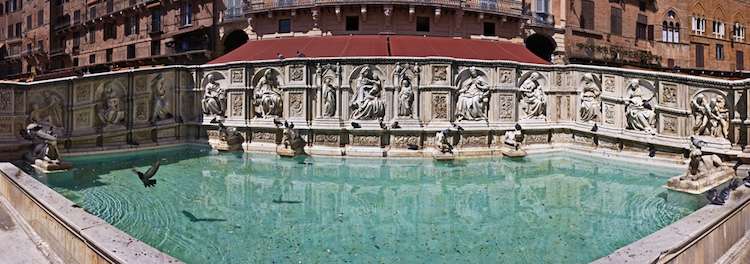
…and take a drink from the Fonte Gaia (Fountain of Joy), they will be drinking fresh water from Monte Amiata.
When Carol and Roger first arrived in Italy this past August, they couldn’t believe the heat (see https://rbergson.org/european-heat-dome/). Fortunately, Pienza was spared the forest fires that spread across France and Spain . Pienza also managed to avoid the heat-related deaths common to non-air-conditioned living. However, that many days in that much heat was something they would not soon forget.
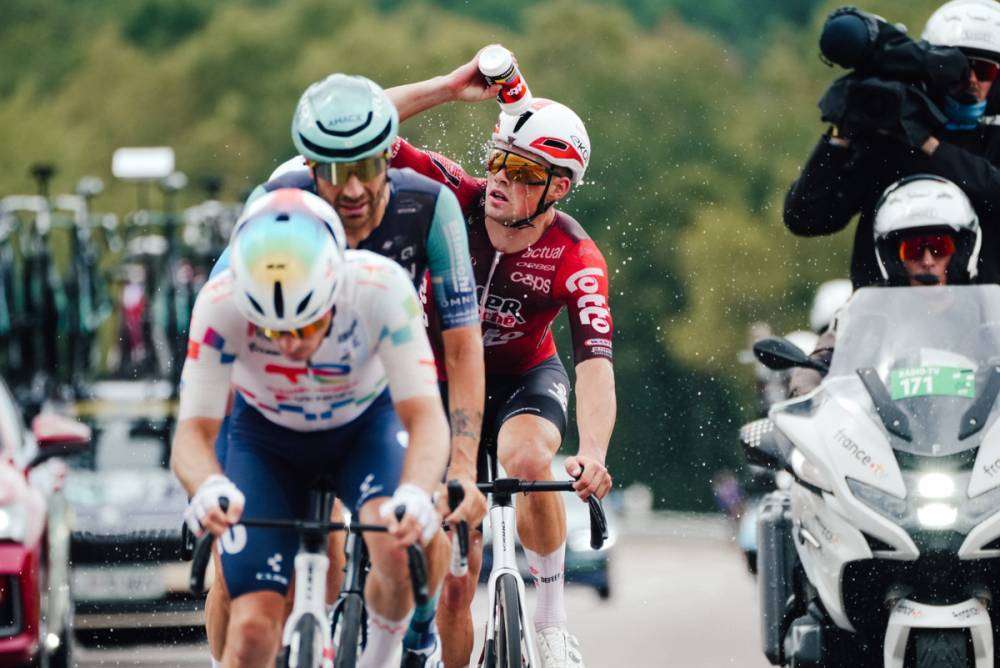
This year’s Tour de France demonstrated just how much hotter than normal the Summer was.
The previous record for the average high temperature was set in 2022. It was a fraction of 1°F warmer than the previous record. And that record was hotter than its predecessor by also a fraction of 1°F.
This year’s Tour de France was the hottest on record…fully 6°F hotter than the previous record.
The ramifications of the oppressive heat became apparent this fall…
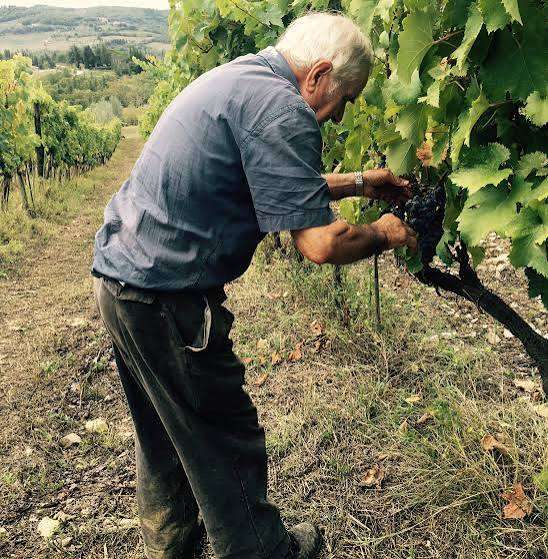
Here, in our neck of the woods, the wine industry was impacted by the abnormal Summer temperatures. The Brunello Growers’ Consorzio reported its grape harvest started 15 days earlier than last year…which was already earlier than the “old normal.”
Our friends at Innocenti Winery told us they had completed their grape harvest two weeks before the what had been the traditional start date of the harvest.
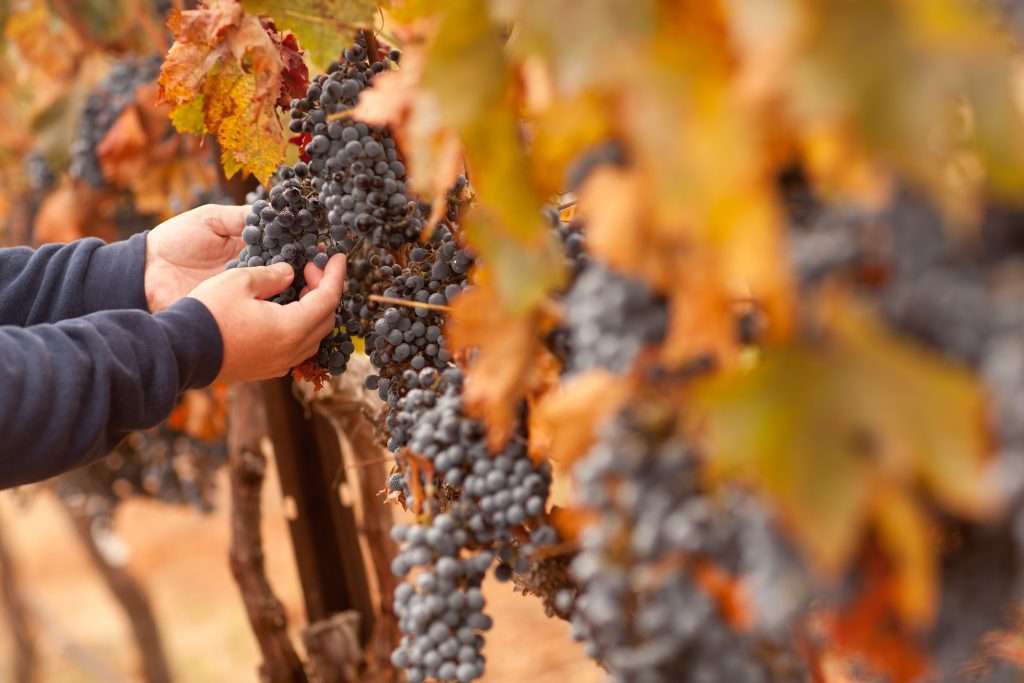
There was ample rainfall in the Spring, allowing most grape plants to survive the heat.
Despite this, the Growers’ Association reported yields were down 10%-to-15% from last year and some vines died for lack of irrigation.
The situation with olives is much the same…
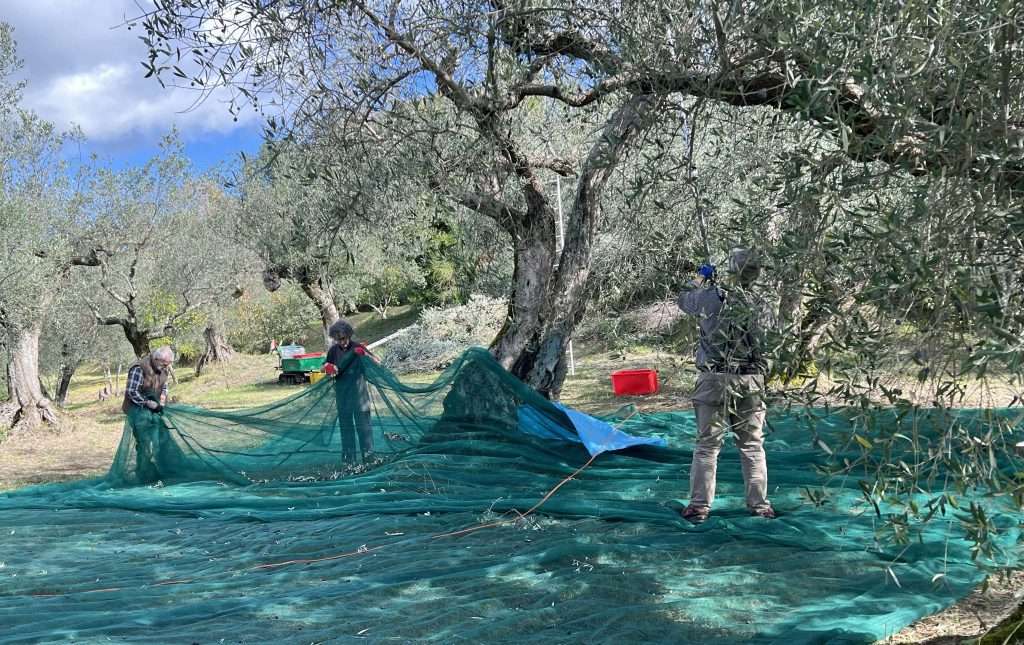
In this part of Tuscany, the olive harvest normally starts at the beginning of November and runs until mid-December. This year, at the beginning of October, Carol and Roger saw growers shaking olives off their trees.
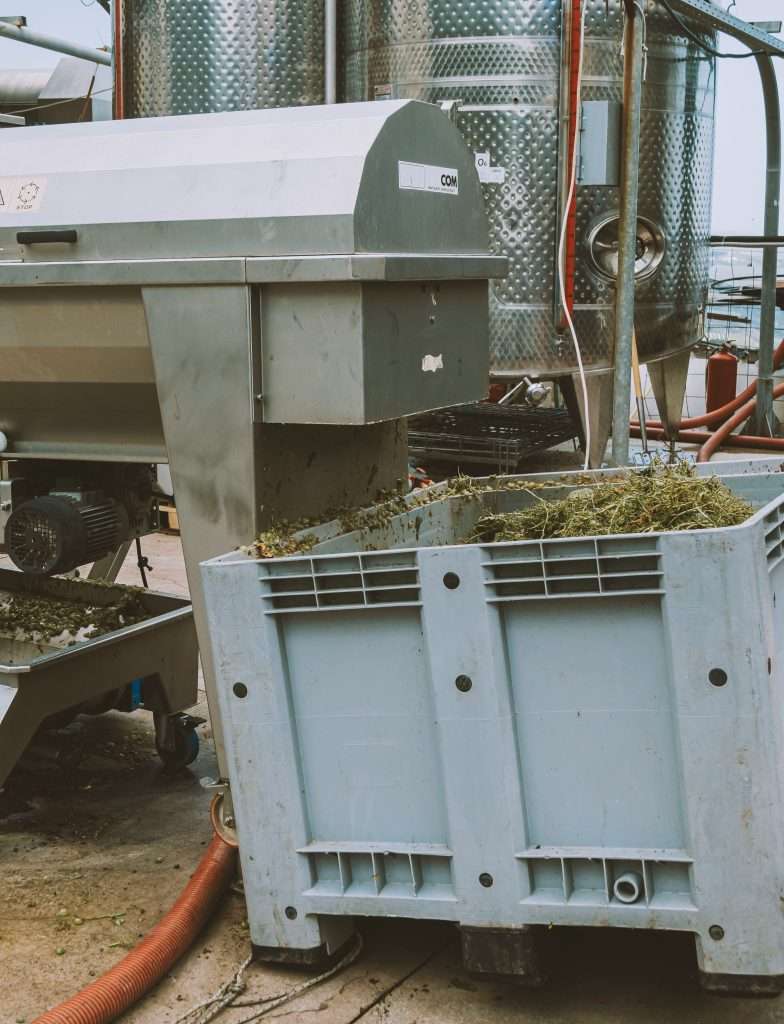
The local olive press…which starts producing oil when harvest begins…had already been operating full steam early in October.
Our harvest began October 19th this year, compared to November 5th last year.
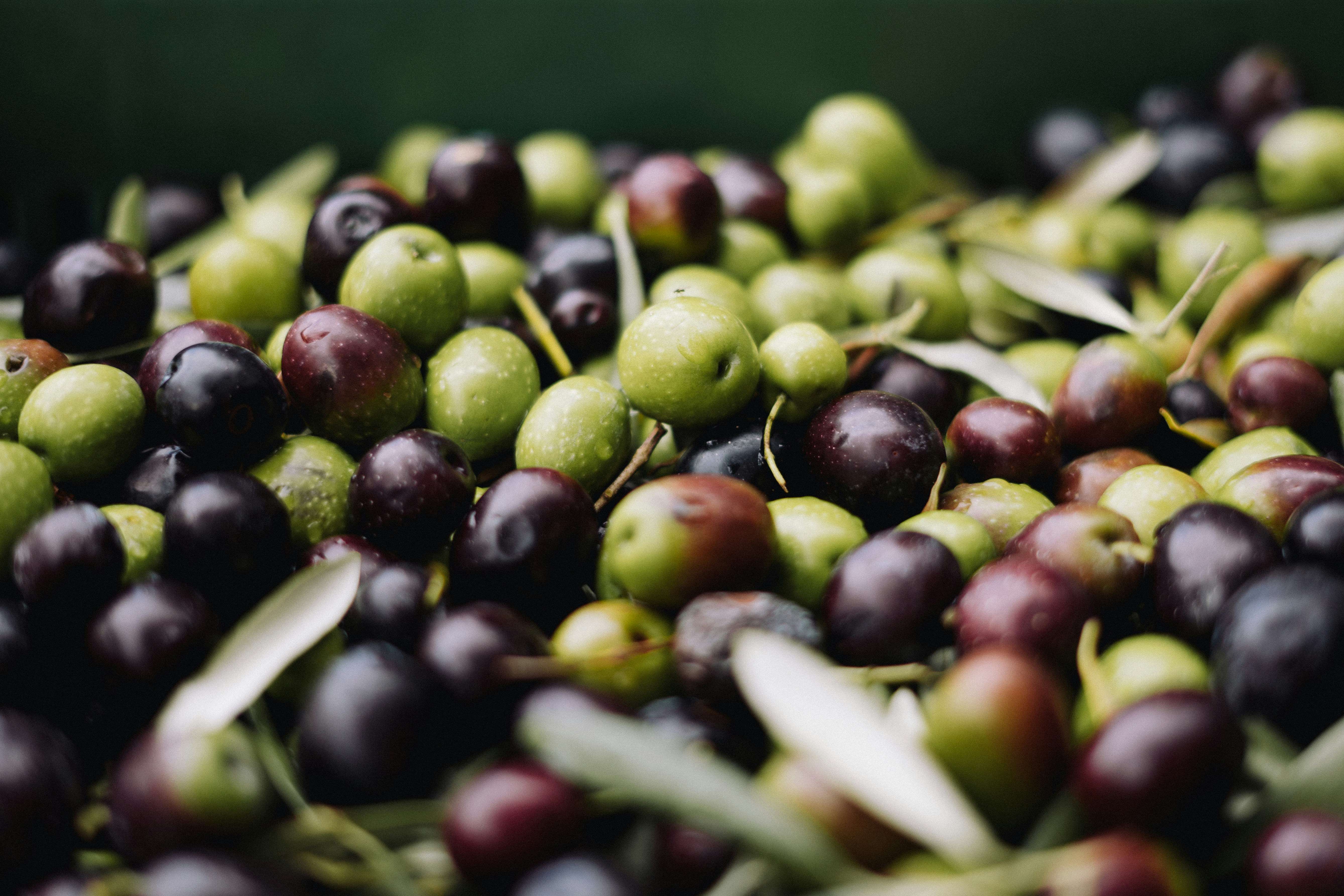
Olives harvested in a normal year look like this…a mixture of green, partially red, and black fruit in various stages of ripeness.
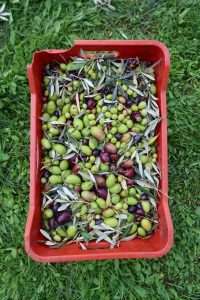
This year, the olives looked like this
The olives at the left were from last year’s harvest. The olives at the right are from this year’s.
This year’s batch were harvested two full weeks earlier but look like they were harvested two weeks later.
Carol and Roger realize one year does not make a trend.
It’s possible this year was simply an anomaly, although a very unpleasant anomaly. They arrived in Pienza the middle of August…because that’s when tradition says the oppressive heat normally breaks. They will be making different plans next Summer.
In the middle of the 16th century it started a revolution…
… in music.
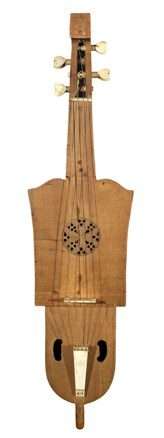
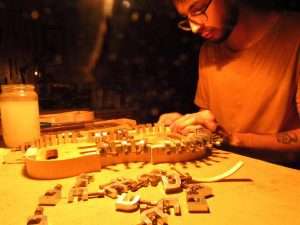
During the Renaissance, stringed musical instruments looked like this…
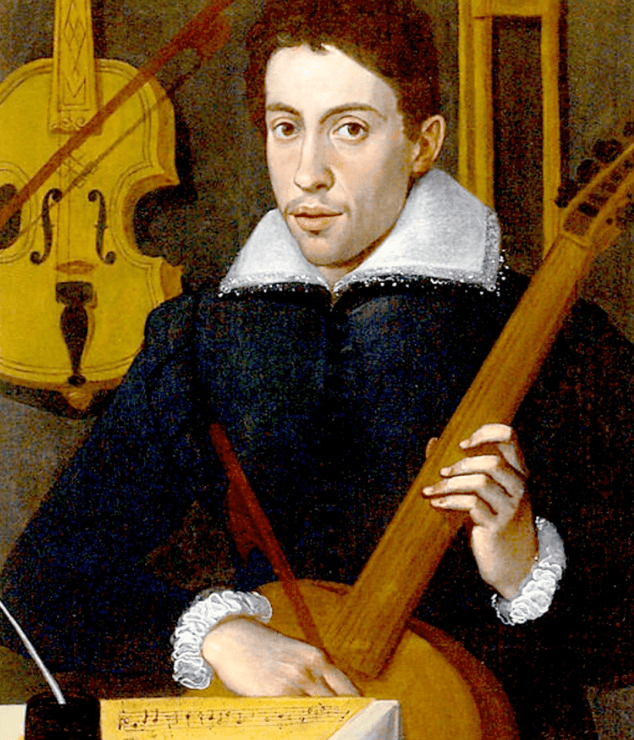
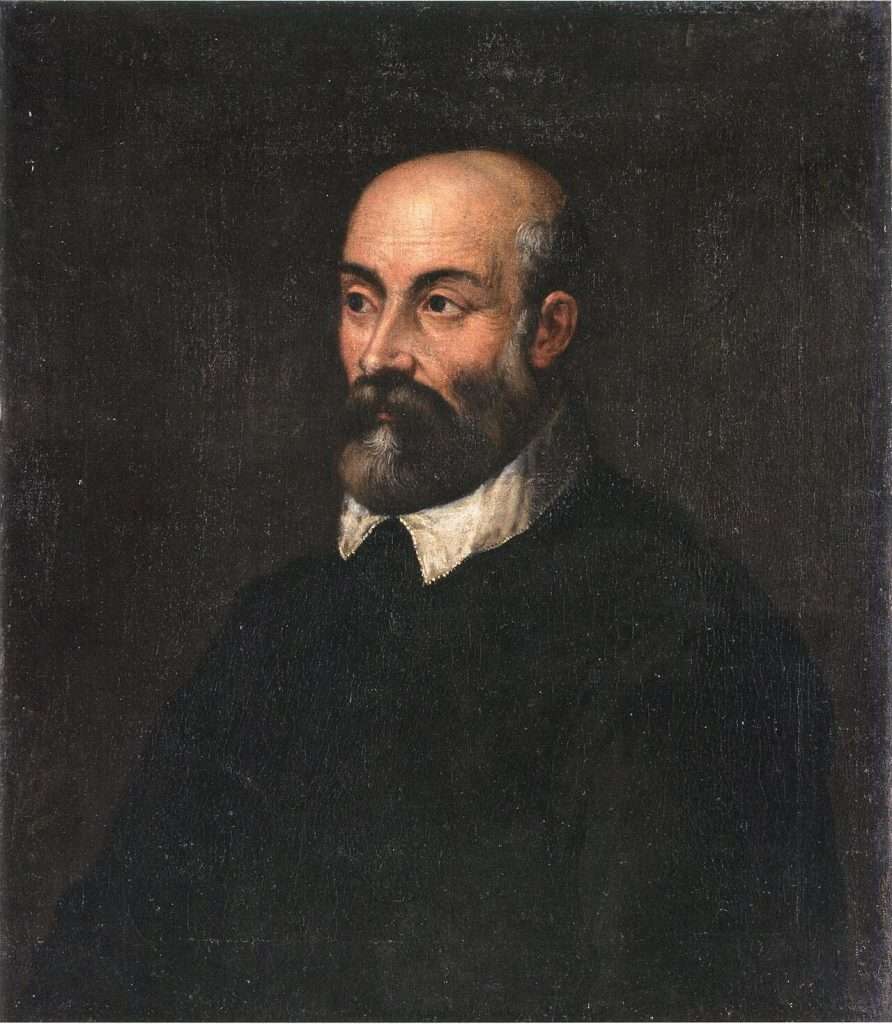
Then in the middle of the 16th century, this man changed all that.
His name was Andrea Amati. He is credited with building the first modern violin.
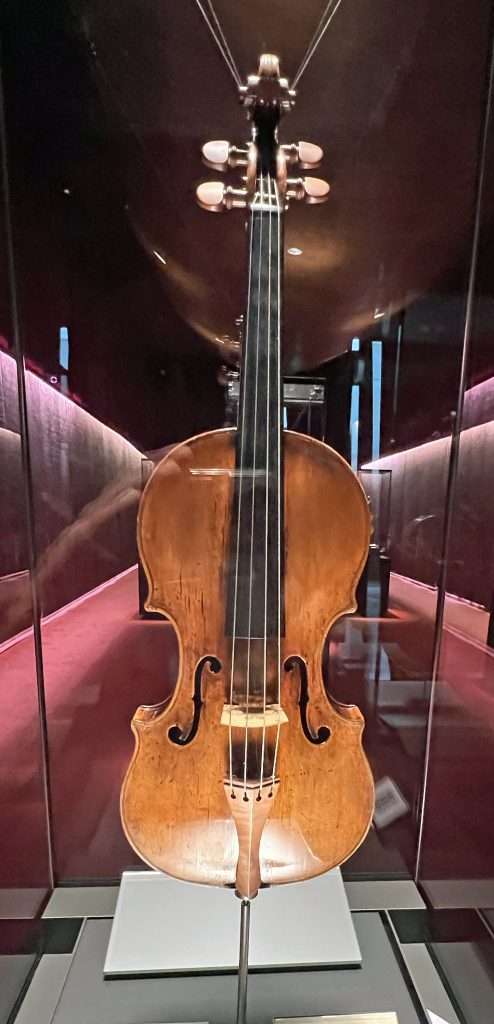
This is violin he built in 1566.
Andrea had two sons and three grandsons…who also became master violin makers.
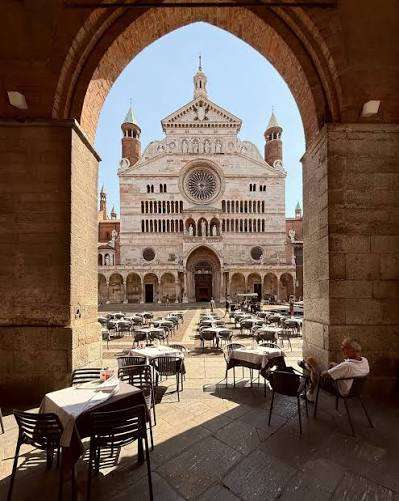
This spawned two and a half centuries of exceptional instrument makers and put the small city of Cremona in the forefront of the European music scene.
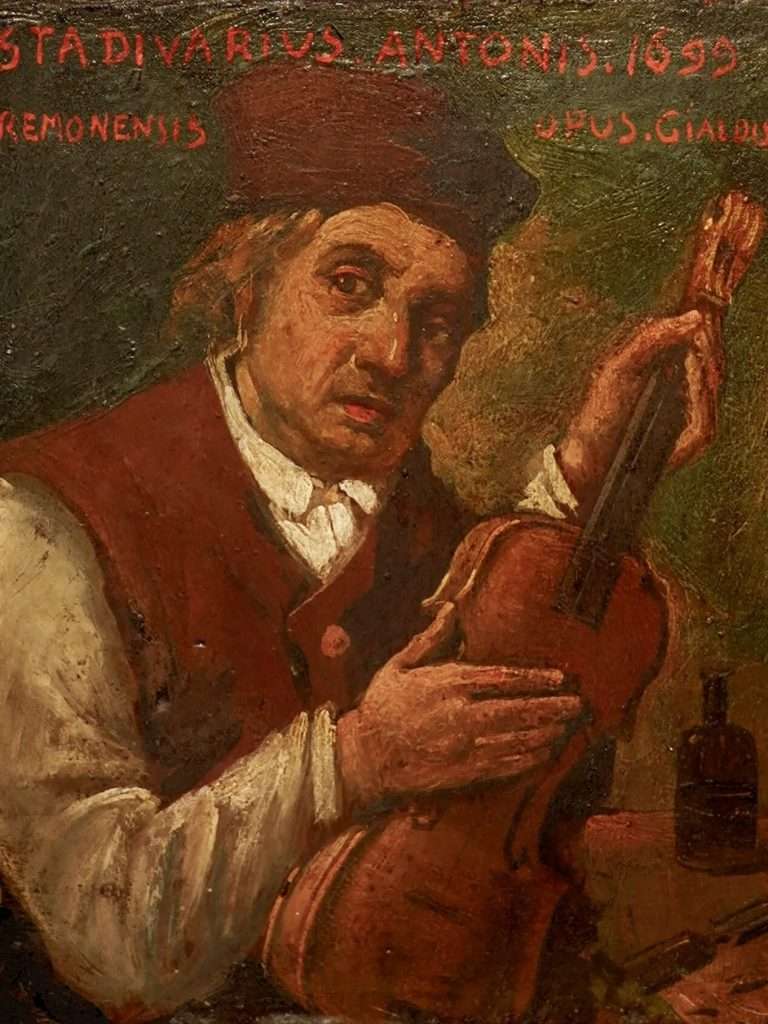
Three generations later, Antonio Stradivari was born. He revolutionized the way violins were made.
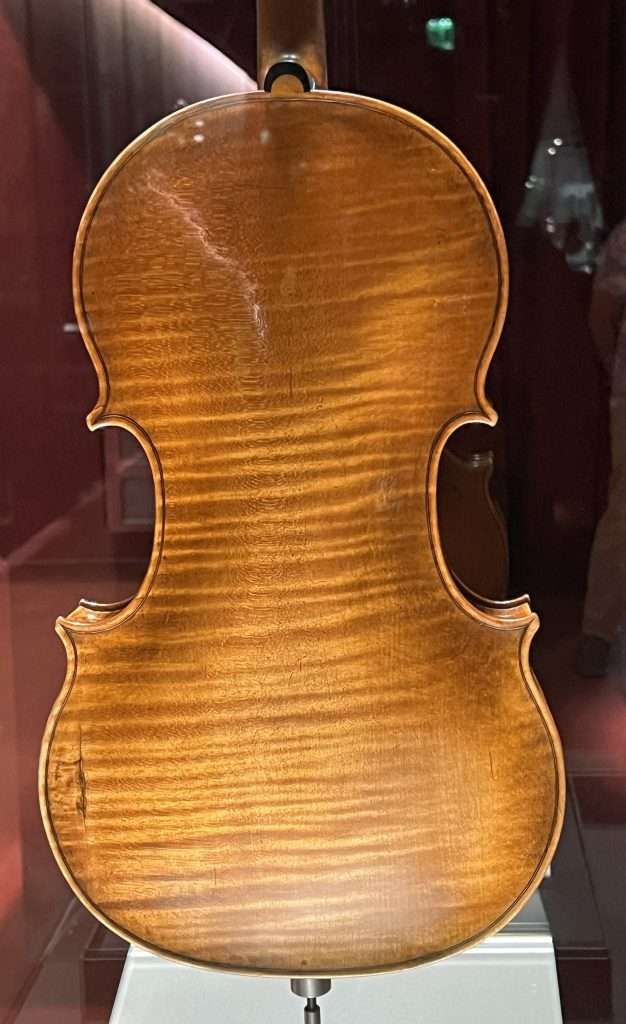
He discovered making the back of a violin from spruce improved the sound quality.
He redesigned the neck of the violin to make it easier to play.
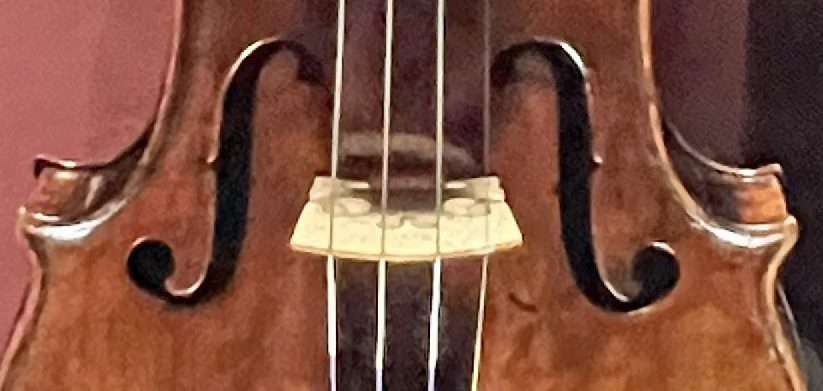
And he discovered that if he made the “f hole” on the right side of the strings just millemeters longer than the one on the left the sound improved.
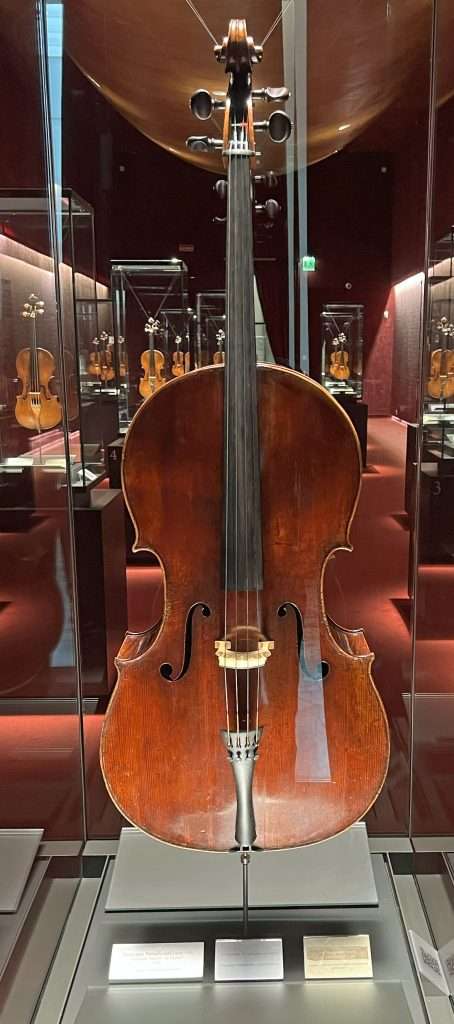
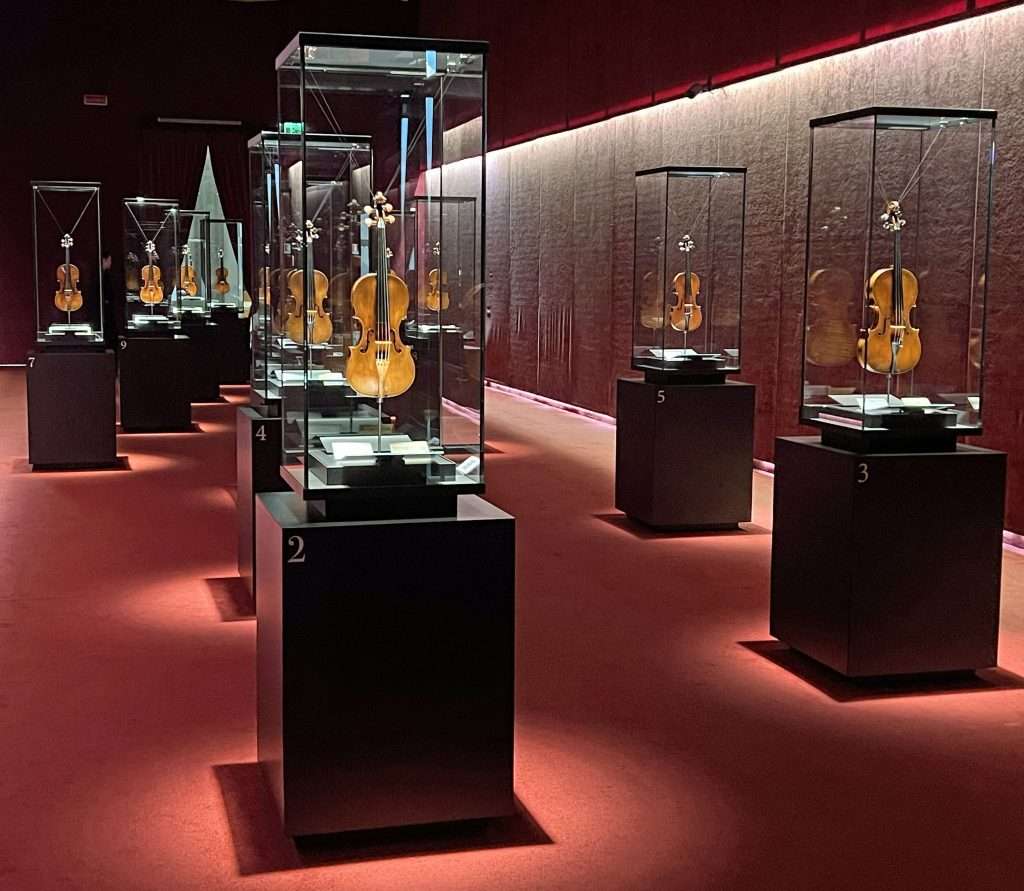
In his lifetime, Stradivari made nearly 1100 stringed instruments…including this cello (made in 1700).
They are so cherished for their exceptional sound quality, nearly half of them are still in use today.
All of the violins and cellos seen here are now housed in the Cremona Violin Museum.
This room, where the best of the best are on display, is called “the Treasure Box.”
It contains violins made by several generations of Amatis, several generations of Stradivaris, as well as Guareris, Rugeris, and Bergonzis.
Forty-one violin-makers in all.
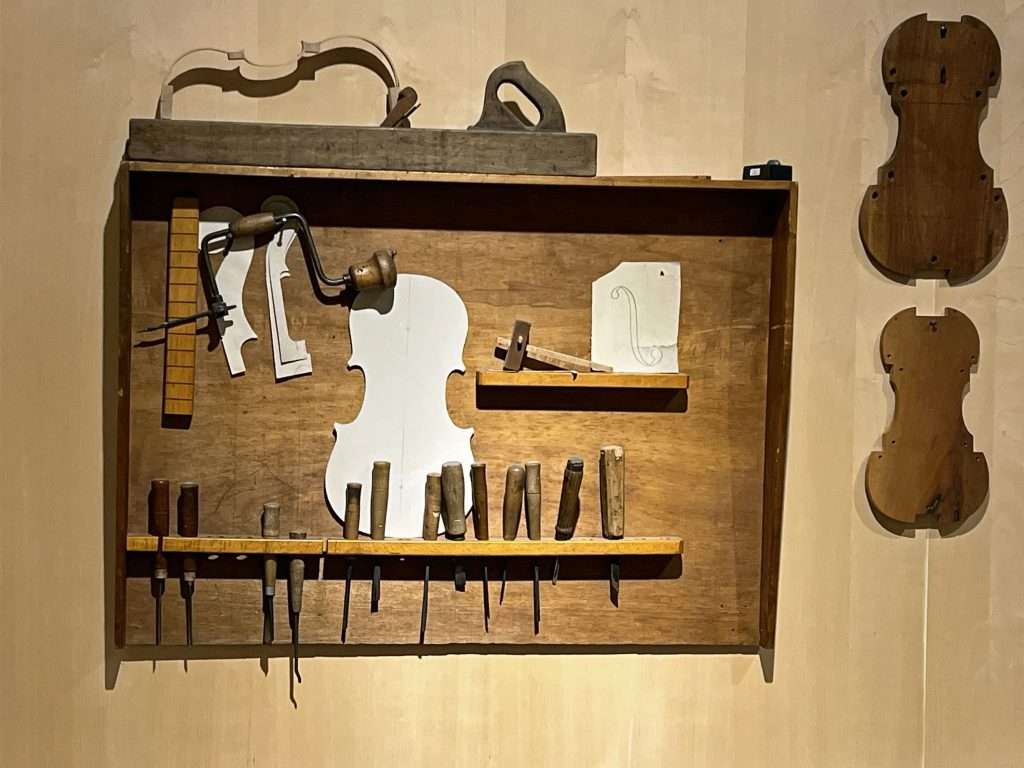
Several of the tools from the old workshops have been saved…
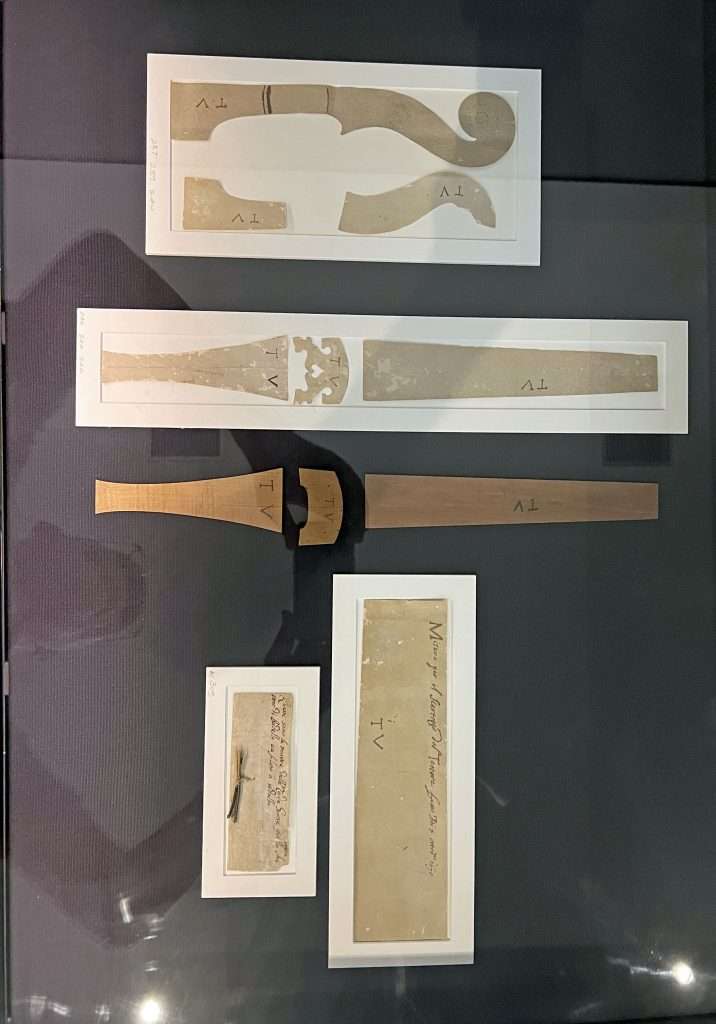
…as have several of the original patterns Stradivari used to make his instruments.
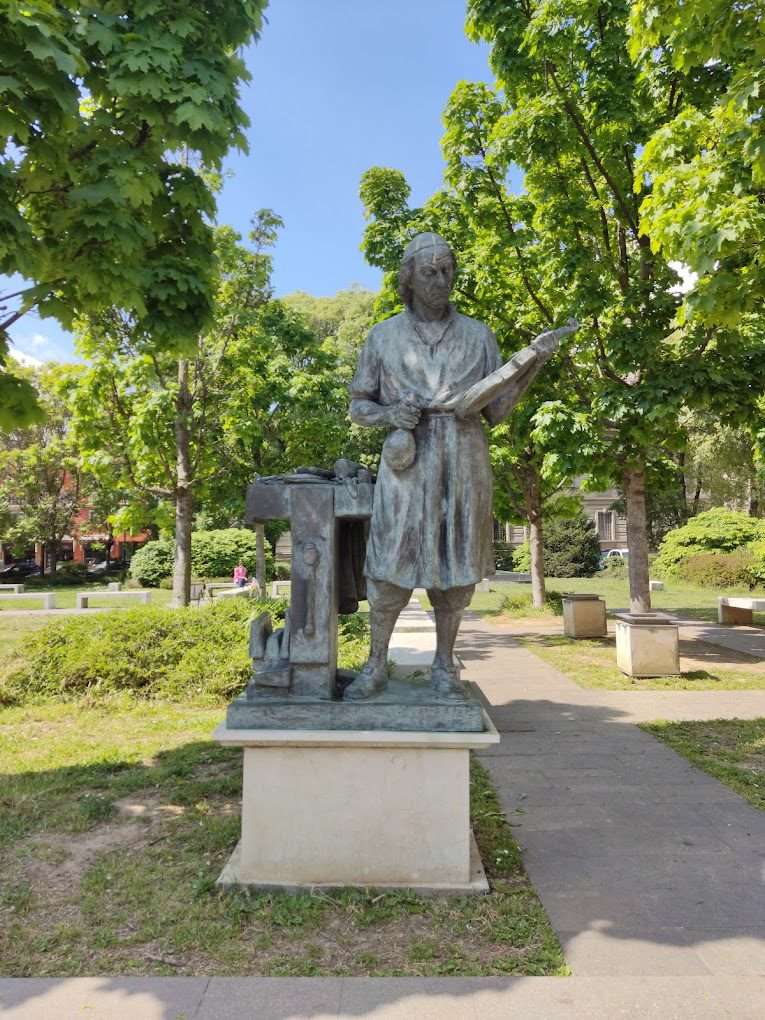
The city of Cremona has preserved the memory of these great artisans with public statues and piazzas renamed in their honor.
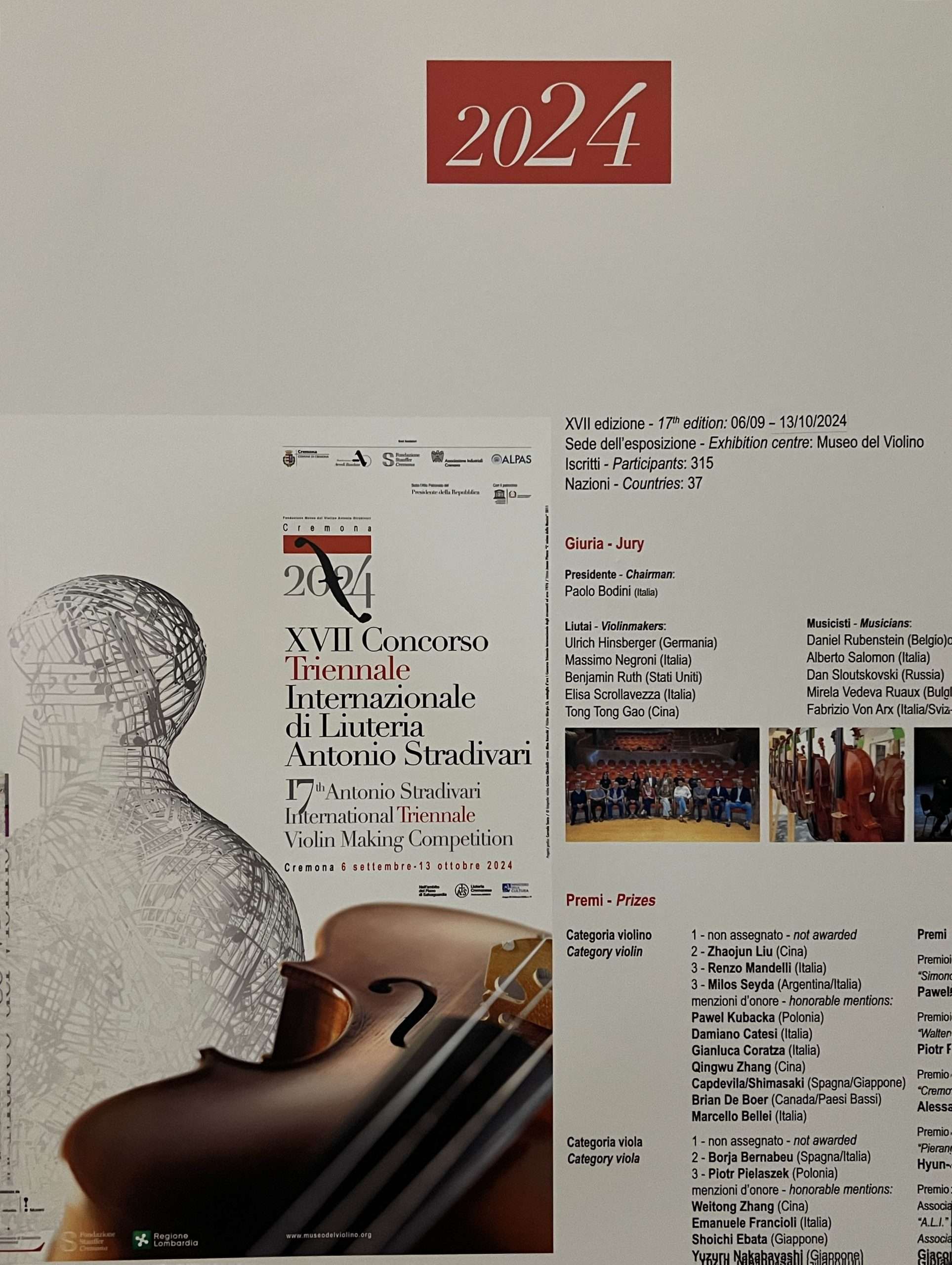
Every three years, the museum sponsors a violin-makers’ “Olympics.” The last one, held in 2024, had 315 entrants from 37 different countries.
While there were numerous awards handed out, it’s notable that there was no gold medal granted in either the violin or viola category.
Today, Cremona remains a center for the manufacture of stringed instruments.
There are nine shops where a serious musician can purchase a custom-made violin.
Roger’s interest in Cremona’s violin-making tradition was triggered by the 1998 film, “The Red Violin.” It is available to rent on Prime Video, Apple TV, or Fandango.
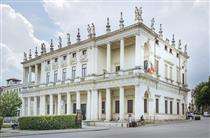
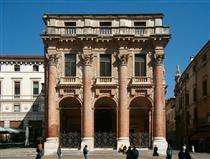
Andrea Palladio was born in Padua, Italy in 1508. At age 13, he moved to Vicenza…a wealthy city on the northwest frontier of what was then the Republic of Venice… and apprenticed to a stone cutter. Eventually, he became a master cutter, then a project manager.
In Vicenza, he learned to network with the city’s elite…and was soon hired to design several palazzi and villas for the city’s wealthy.
In all, Palladio designed 23 palazzi in the city of Vicenza and another 24 villas across the Venetian Republic.
Collectively, they have been named a UNESCO World Heritage site.
In the midst of all this design work, he wrote “The Four Books of Architecture,” which survives today as one of the most influential works on architectural theory of all time.
What is it that made Palladio unique among Renaissance architects and made his legacy unequaled to this day?
Doric columns, lintels, cornices, loggias, pediments, and domes were all used before Palladio applied them to his designs. But he had a sense of proportion and a vision of spacial harmony that none of his predecessors possessed.
Many of his projects were updating the facades of existing building or were constrained by the footprint of a villa he redesigned. That he could incorporate these limitations in designs and yet break new ground is why he is still considered a genius five centuries later.
Back when Carol first studied Italian at the University of Washington, she did a project on Palladio, and it kindled a love of architecture that lasts to this day.
So there was no way that she and Roger could travel to the Veneto and not visit a number of Palladio’s most famous villas.
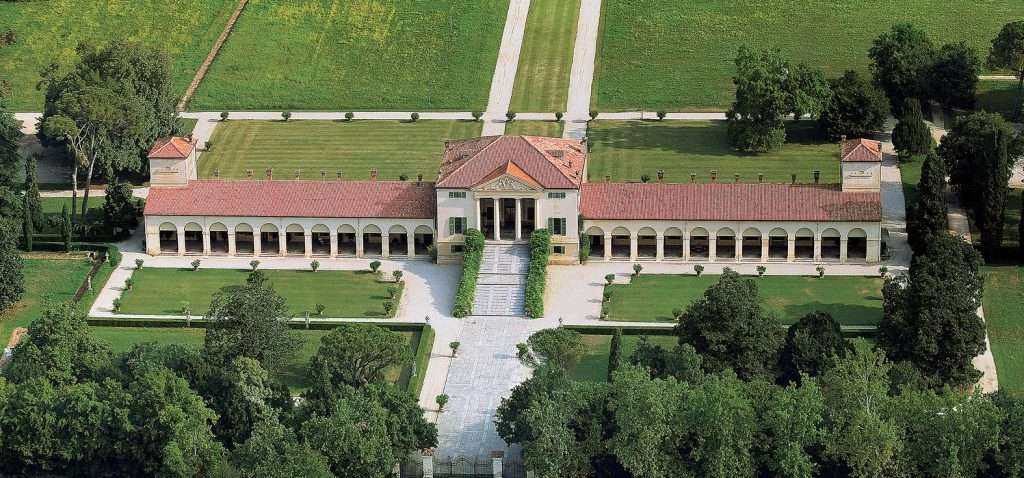
Villa Emo:
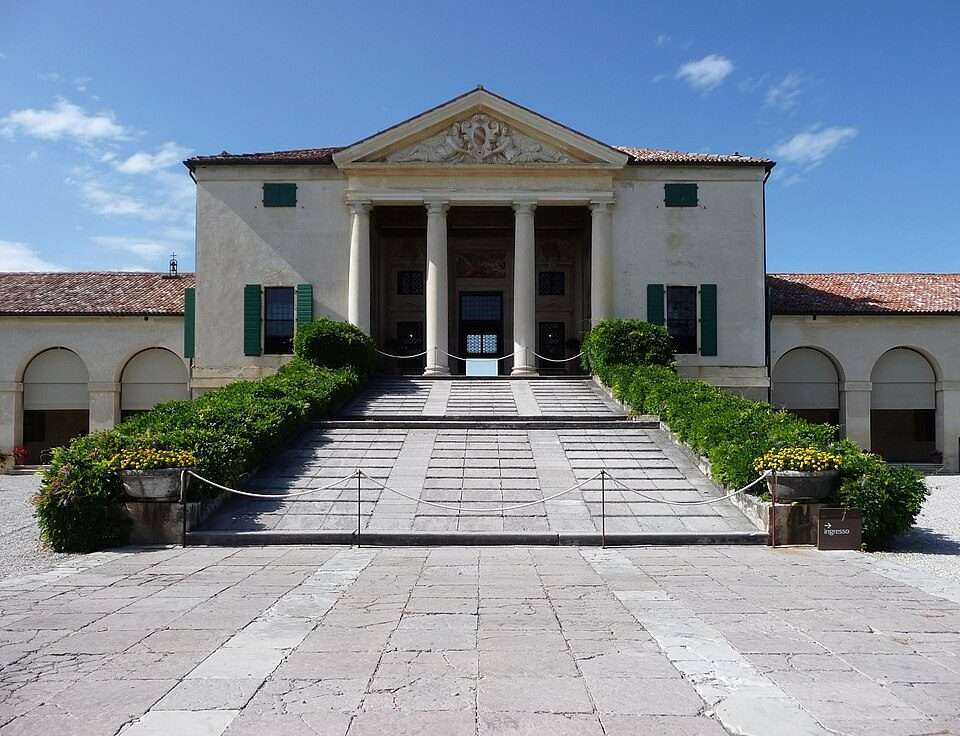
Villa Emo is a classic Palladio villa. When Leonardo Emo commissioned Palladio to design this villa, the extended family owned hundreds of acres of farmland. The existing building was inadequate for the family’s needs, so Palladio was hired to replace it.
The new villa is three stories, the ground floor was functional space…kitchen and wash areas.
A large stairway leads to a columned loggia with an entrance that leads to the piano nobile…where the family lived and conducted business.
The top floor was used for storage and servants’ quarters.
The two barchesse…the wings to either side…were for storage and farm implements…though later were repurposed for family quarters.
Villa Maser:
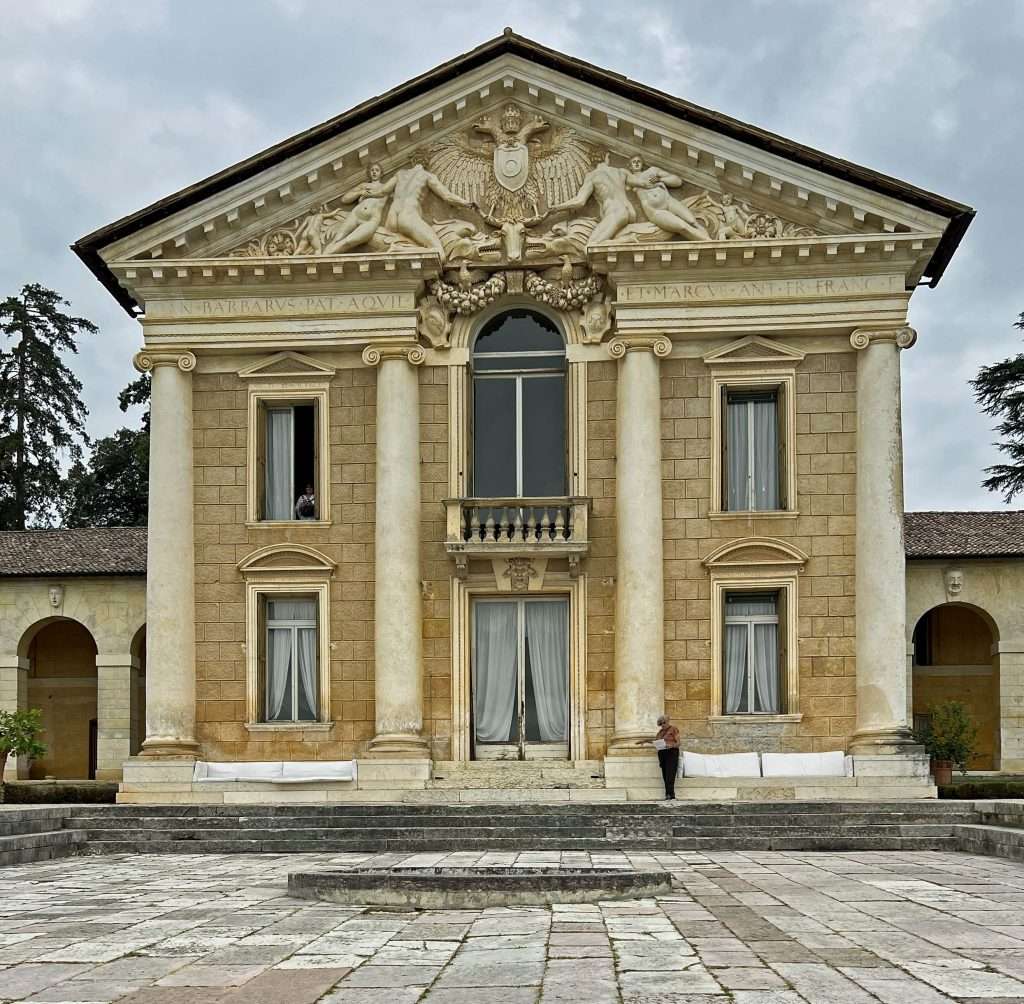
Daniele and Marcantonio Barbaro commissioned Andrea Palladio to design this agricultural estate around 1550.
While the house looks large from a distance, it is only when you get up close do you begin to appreciate its grand scale…
That tiny-as-an-ant creature standing next to a middle column is Carol.
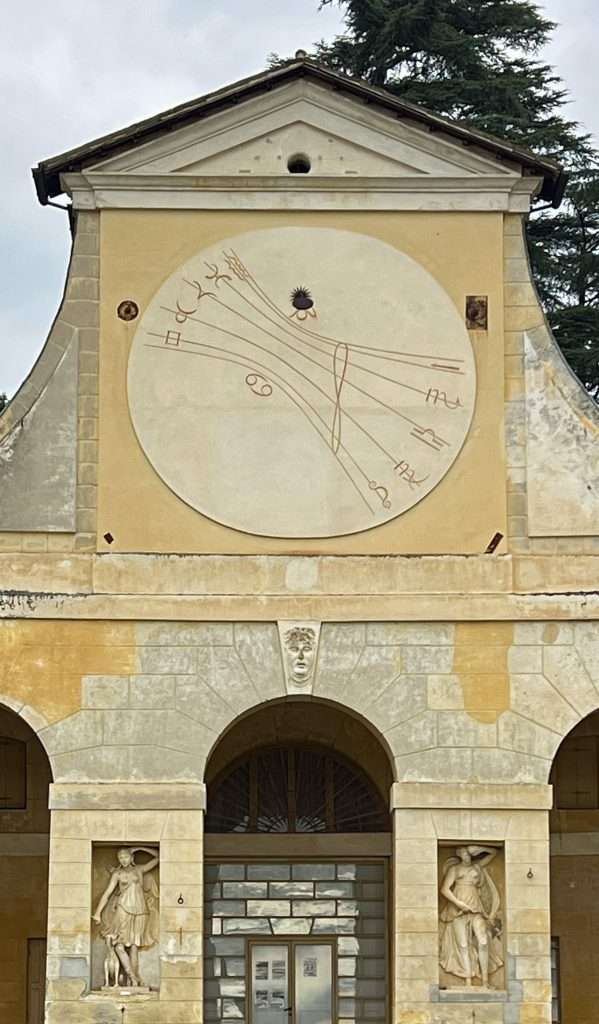
At the left end of the barchesse is a sundial to tell the time of day…
At the opposite end of the other barchesse is a sun calendar…with the symbols of the zodiac instead of the months we now use.
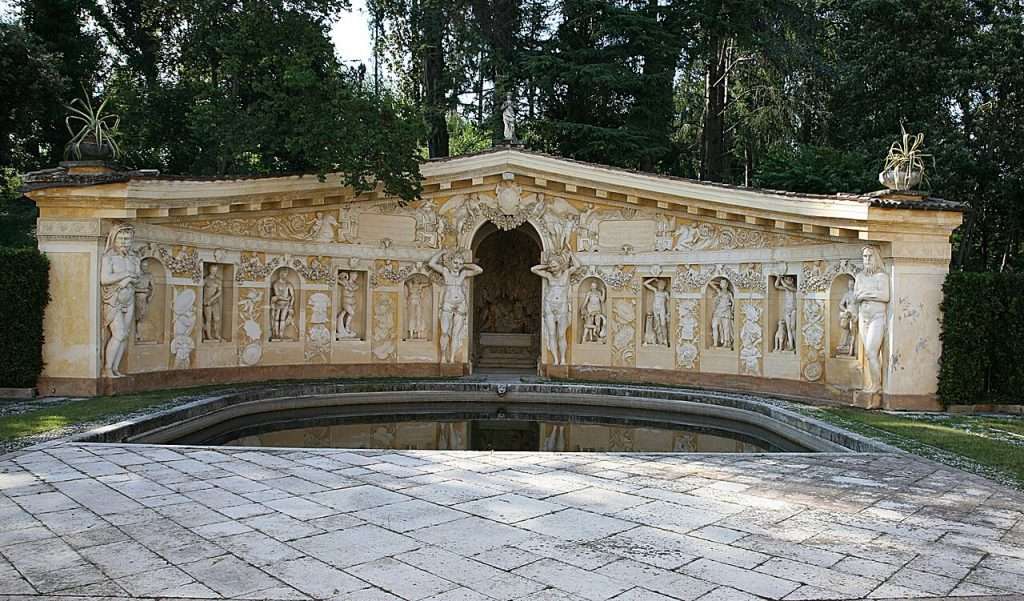
Behind the main building is the highly-decorated nymphaeum. It served a dual use…at once a quiet social space and same time the controller of the villa’s household water supply and garden/greenhouse irrigation system.
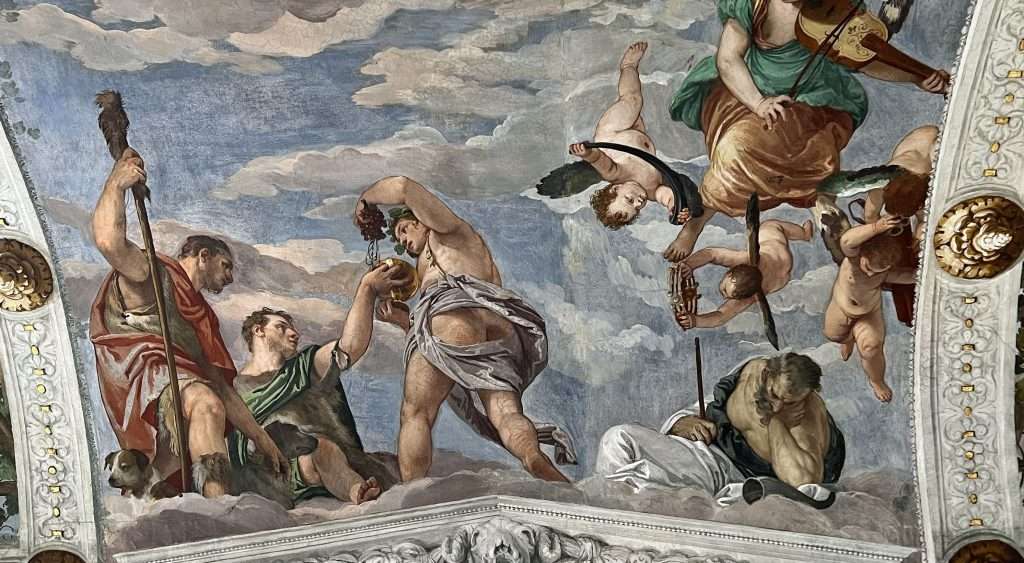
Inside the villa, the walls and ceilings are covered with frescoes by the Venetian Renaissance master Paolo Verese.
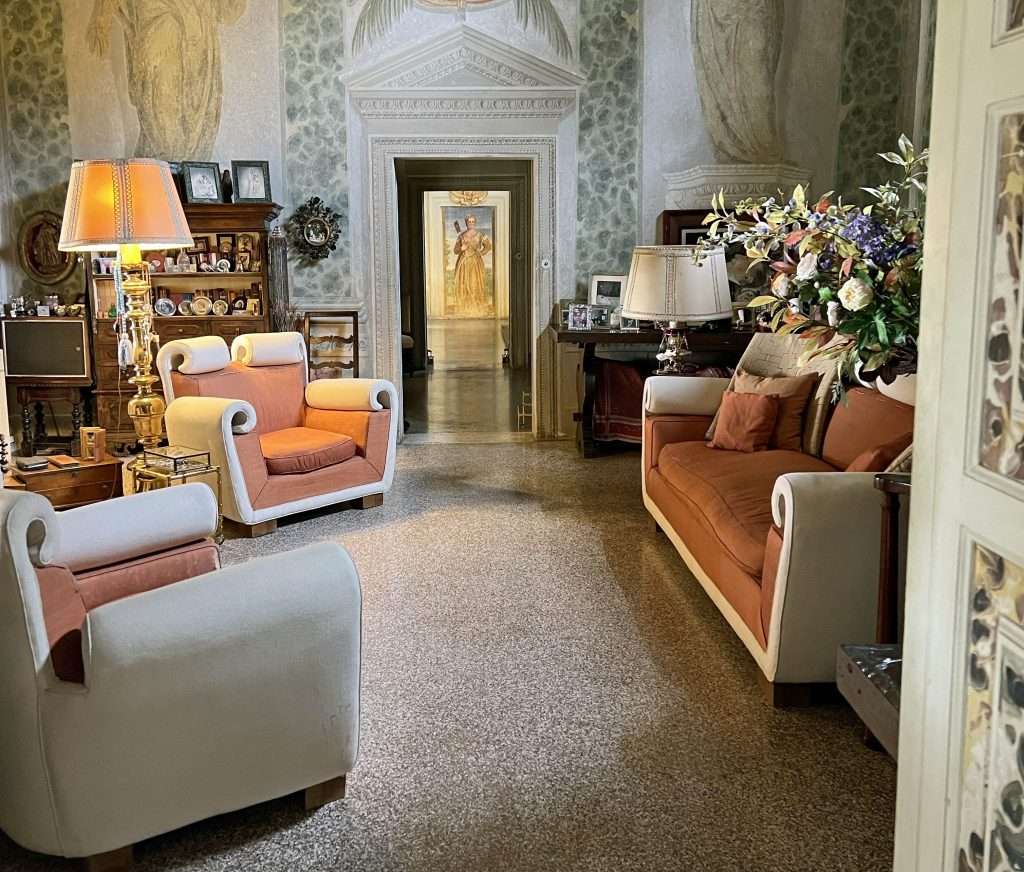
At the end of one set of rooms is a fresco of Verese’s wife. Note how Palladio’s use of perspective frames the painting with doorways through three rooms.
La Rotonda:
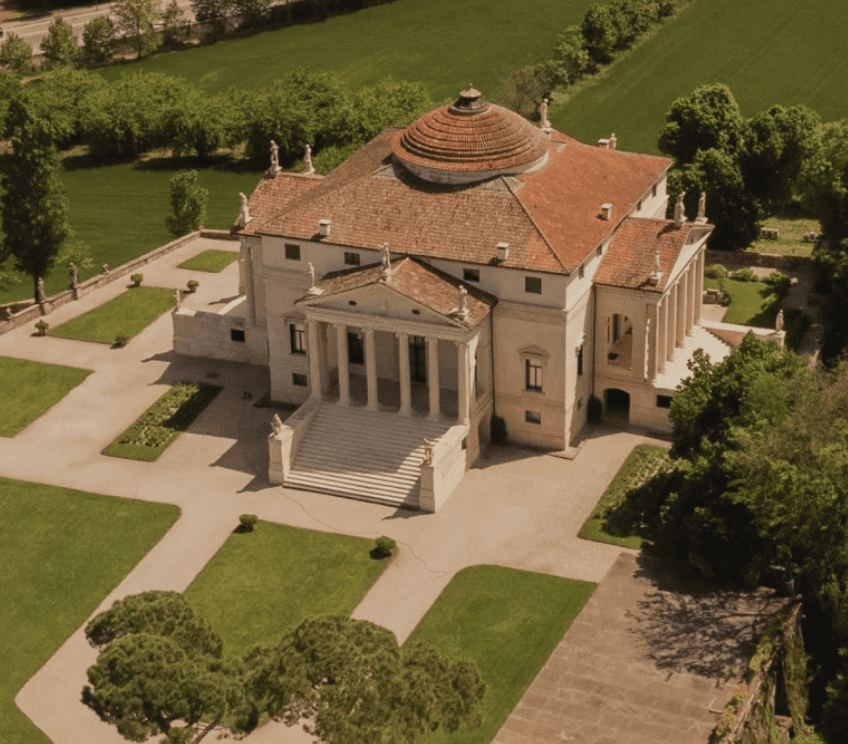
There is a hill just outside Vicenza called Monte Ciello.
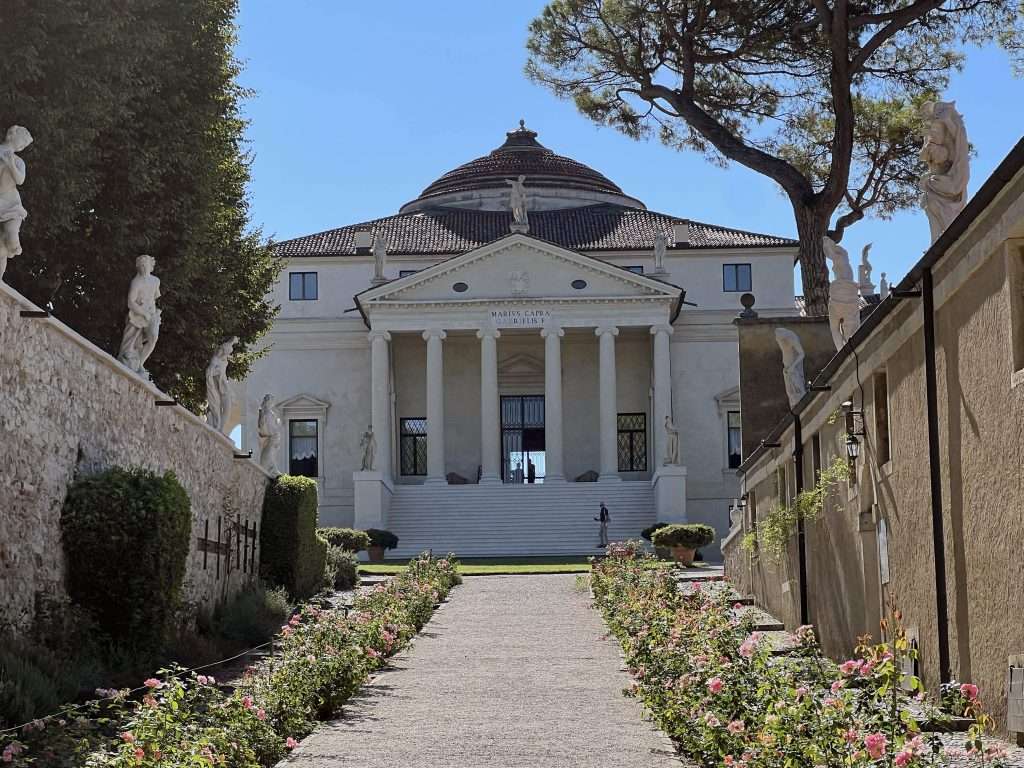
This is the place where Paolo Almerico chose to build his country home. He hired Andrea Palladio in 1565 to design the villa.
And…this is where Thomas Jefferson got his inspiration for his home (not coincidentally) called Monticello.
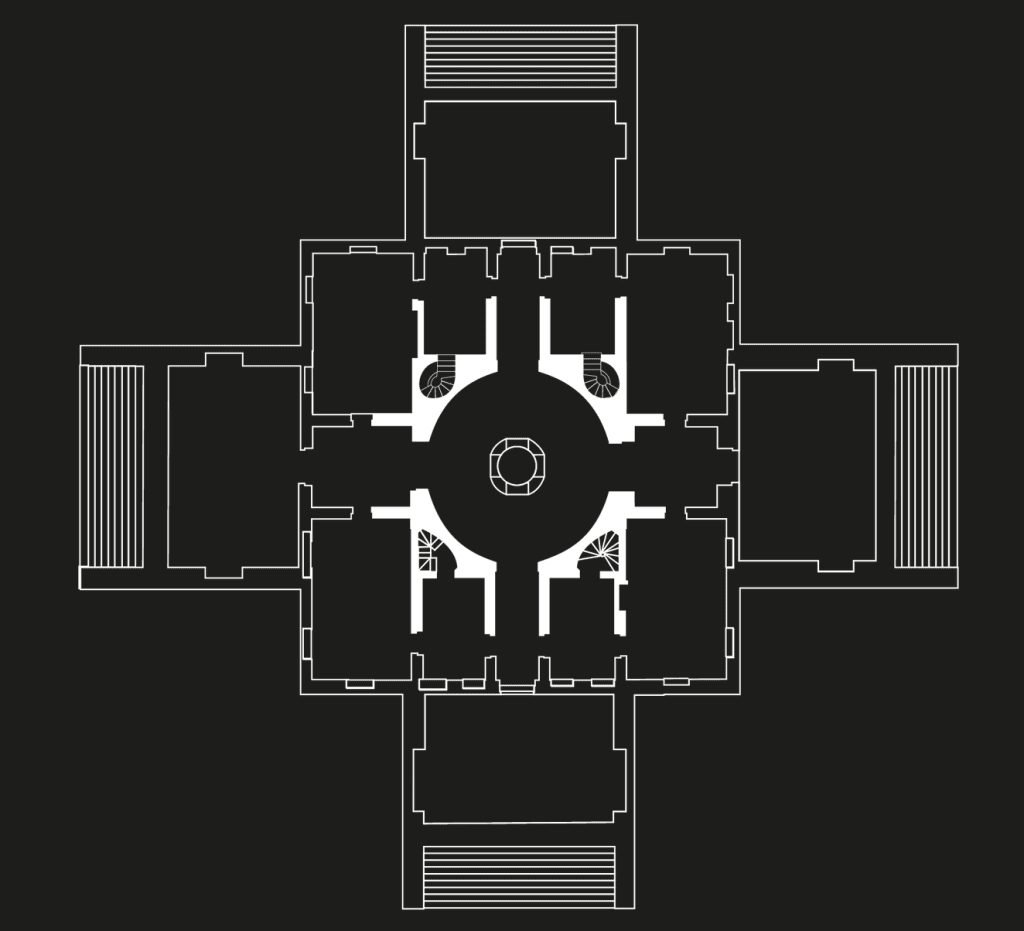
La Rotonda is different from other villas in several ways. It combines the features of Palladio’s other country homes with design elements of pagan temples from ancient Rome. And it was designed for a single resident, rather than a family…which gave Palladio freedom to use living and work space differently.
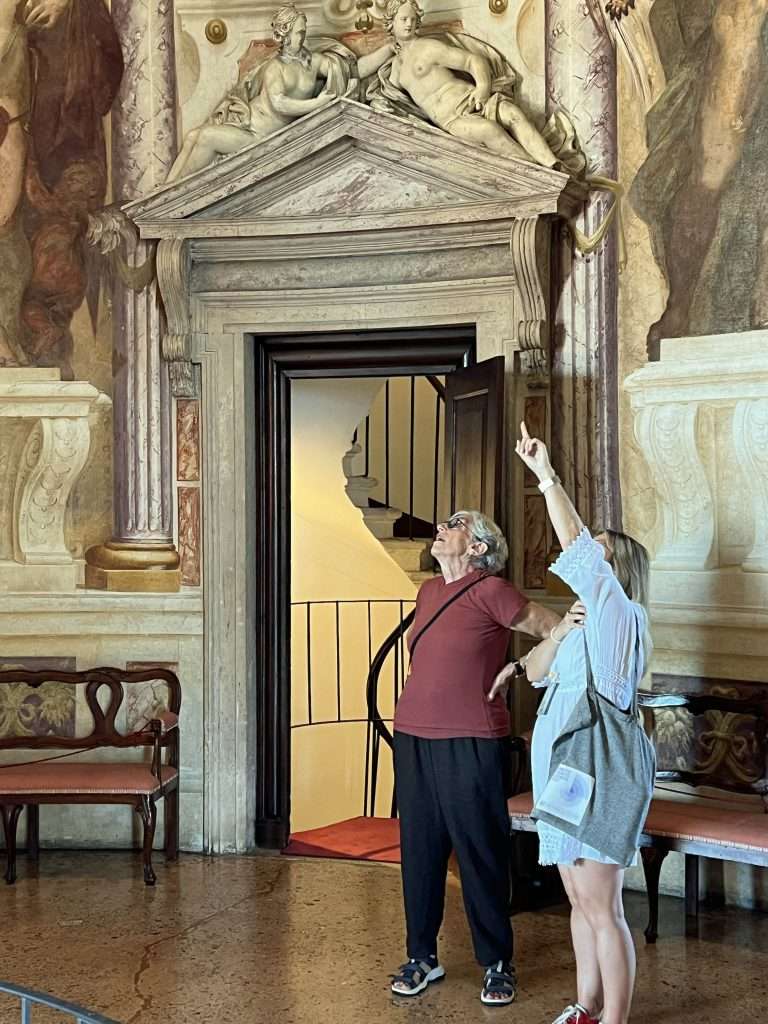
Inside the villa, it’s something else.
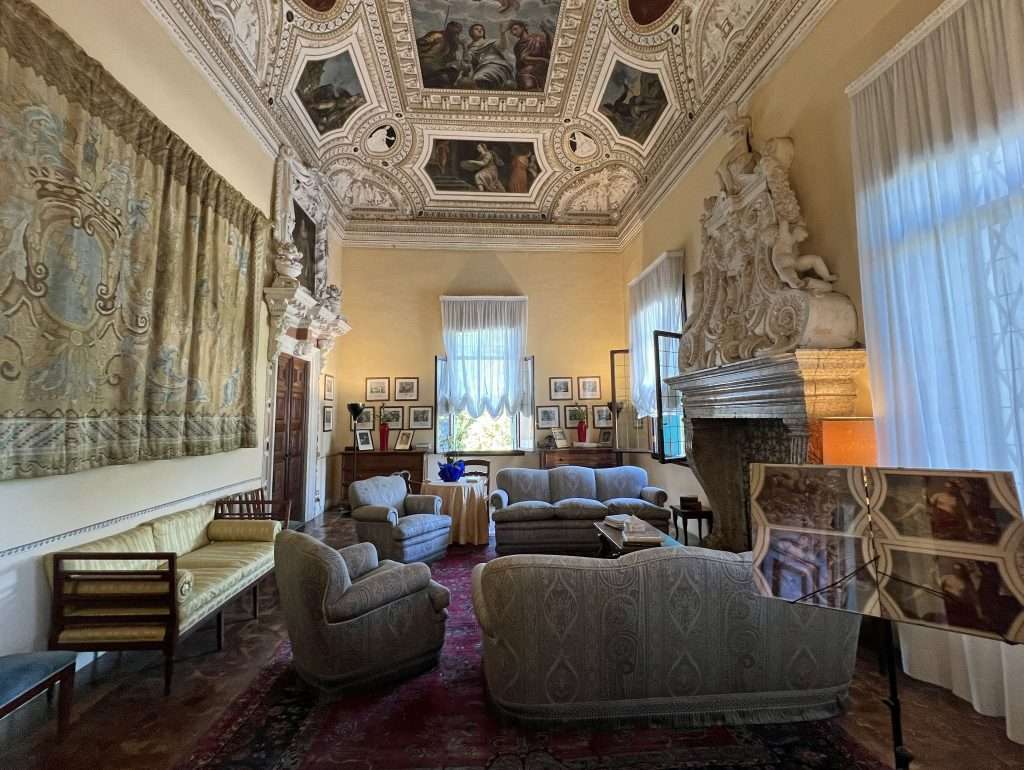
Frescoes everywhere…
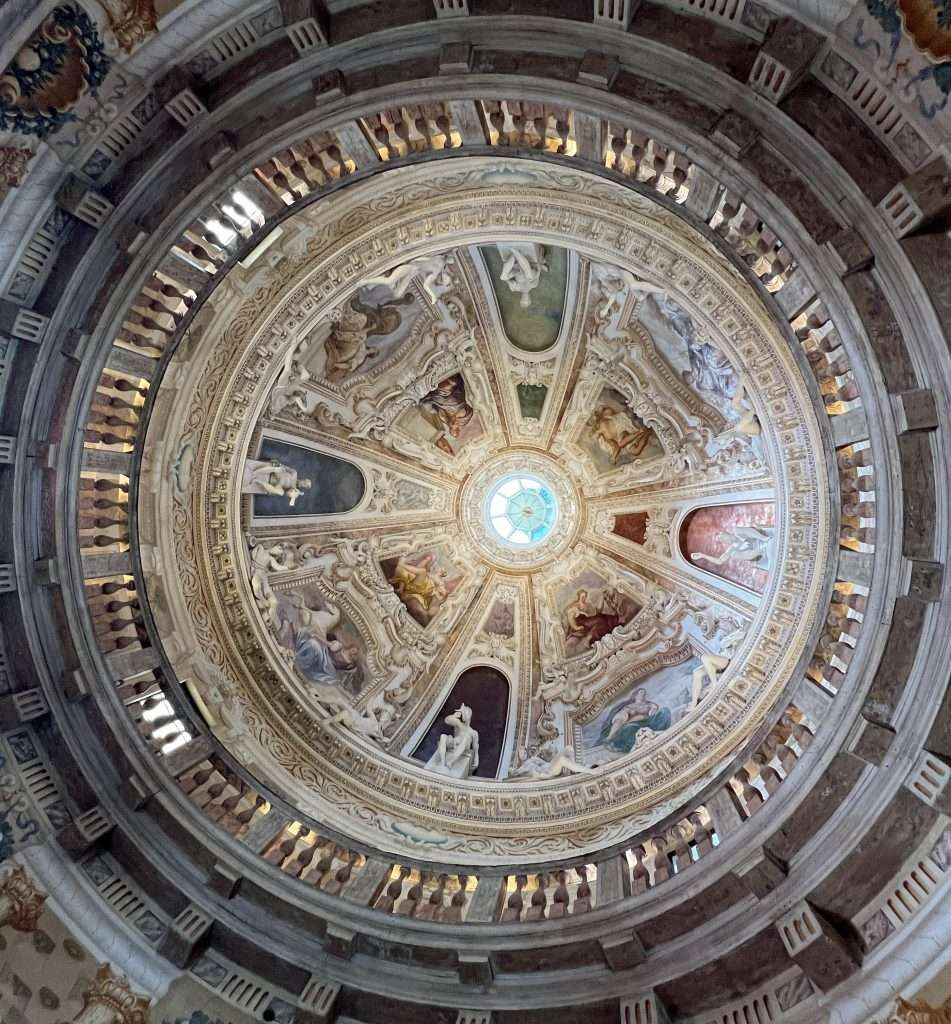
The inside of the dome is glorious…
…a small detail of one of the many panels in the occulus.
This decor is clearly post-Palladio, but it is indicative of the opulent life-style of its residents over the centuries.
It’s easy to see how Palladio’s sense of spacial symmetry and geometric balance influenced Thomas Jefferson when he designed his own Monticello….
the University of Virginia,
and influenced other architects who…
…designed a few other well-known buildings in the United States
Teatro Olimpico:
Palladio never got to see his final project completed.
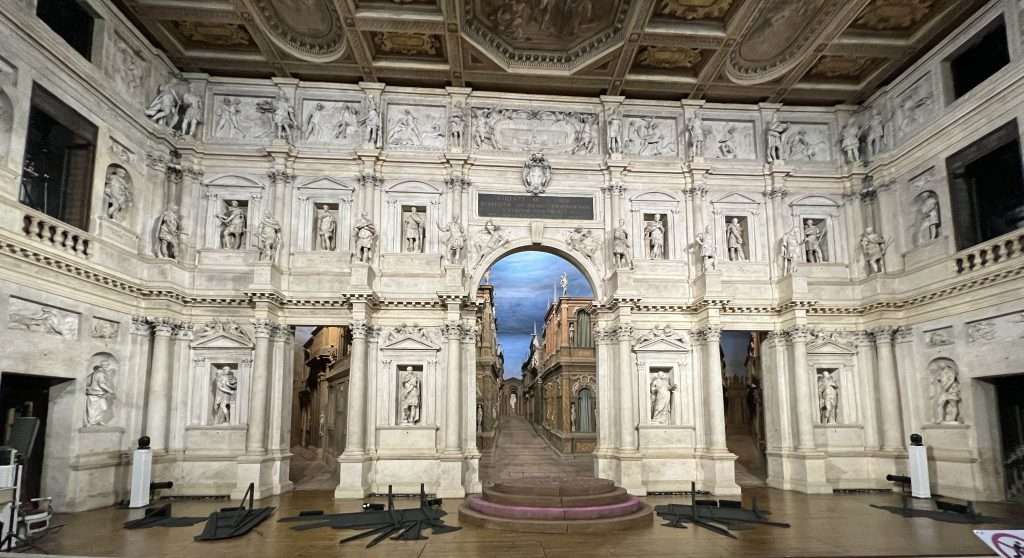
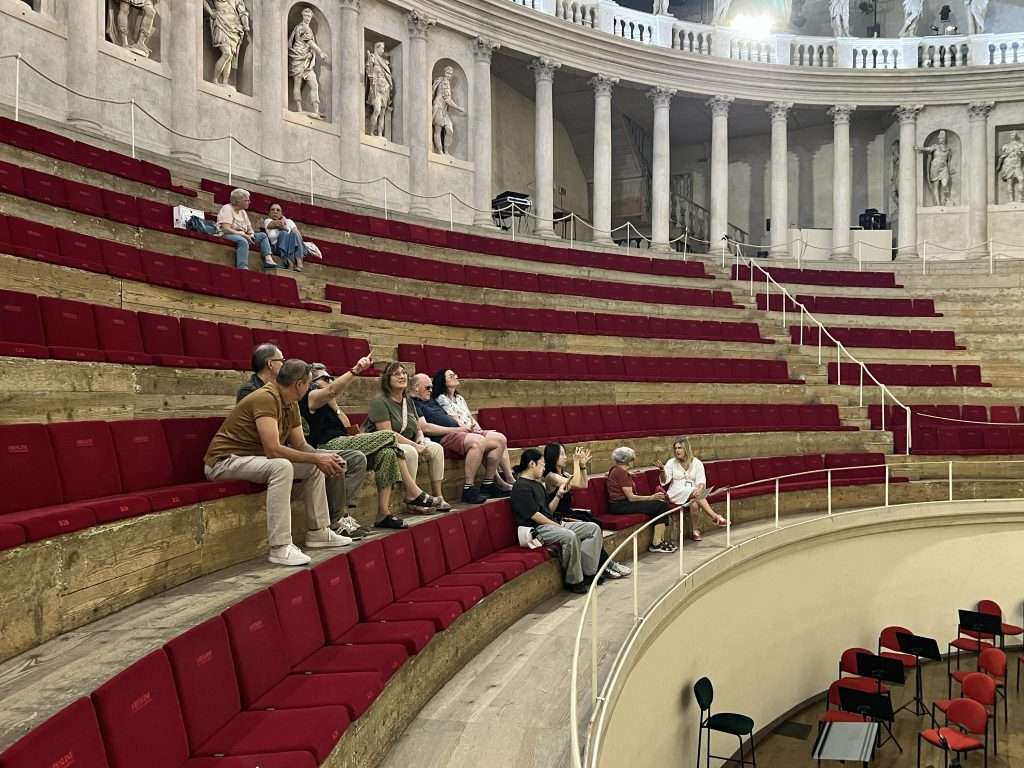
The Accadamia Olimpico, a group of cultural intellectuals in Vicenza, hired Palladio to design a theater for their use in 1579. He completed it’s design…
…in 1880,but died before the construction of the theater was complete.
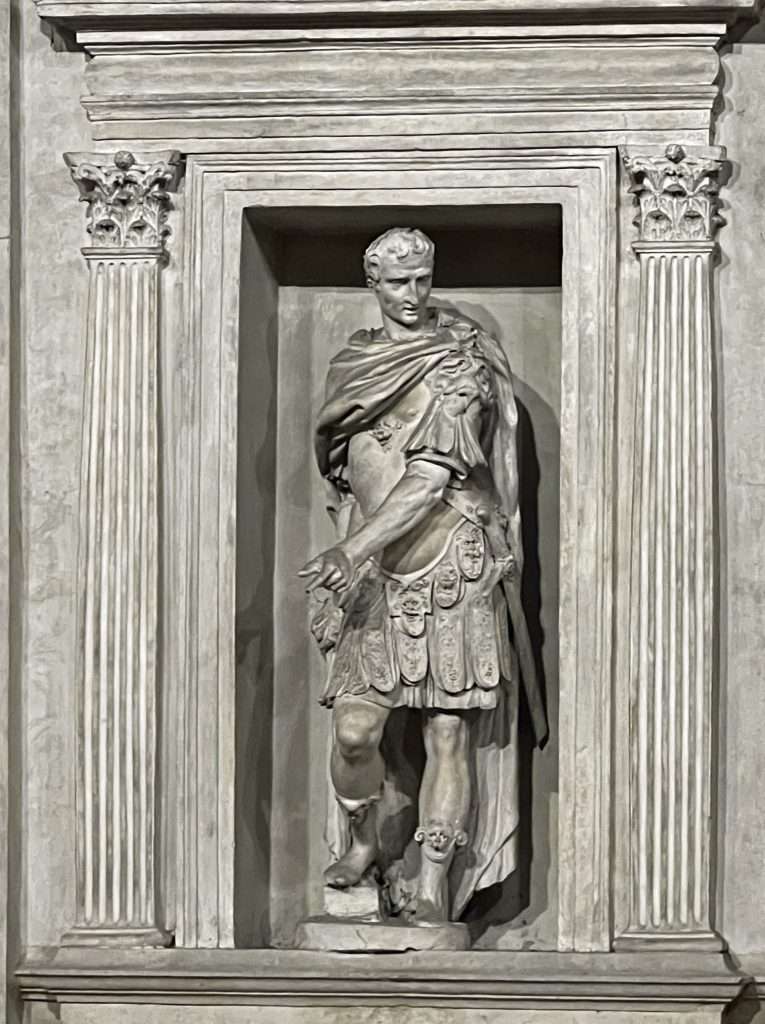
The many niches surrounding the stage hold statues of prominent members of the academy.
Sophocles’ Oedypus Rex opened the building in March of 1585 …making the Teatro Olimpico the oldest indoor theater in the world that’s still in use.
The first weekend in September in Pienza is the Fiera del Cacio (Cheese Fair). This year was the 64th edition…an homage to the town’s principal product, Pecorino di Pienza.
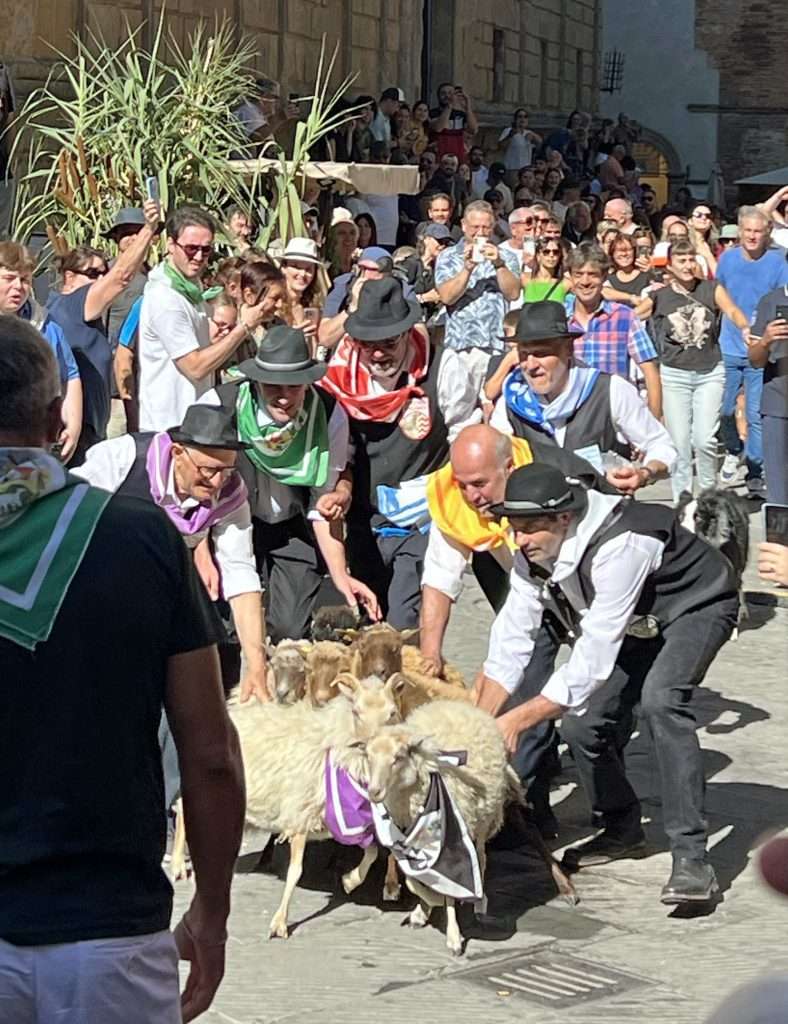
Sunday morning culminates a week of activities. The opening event is the running of the sheep, a much smaller…and safer…version of the running of the bulls in Pamplona, Spain.
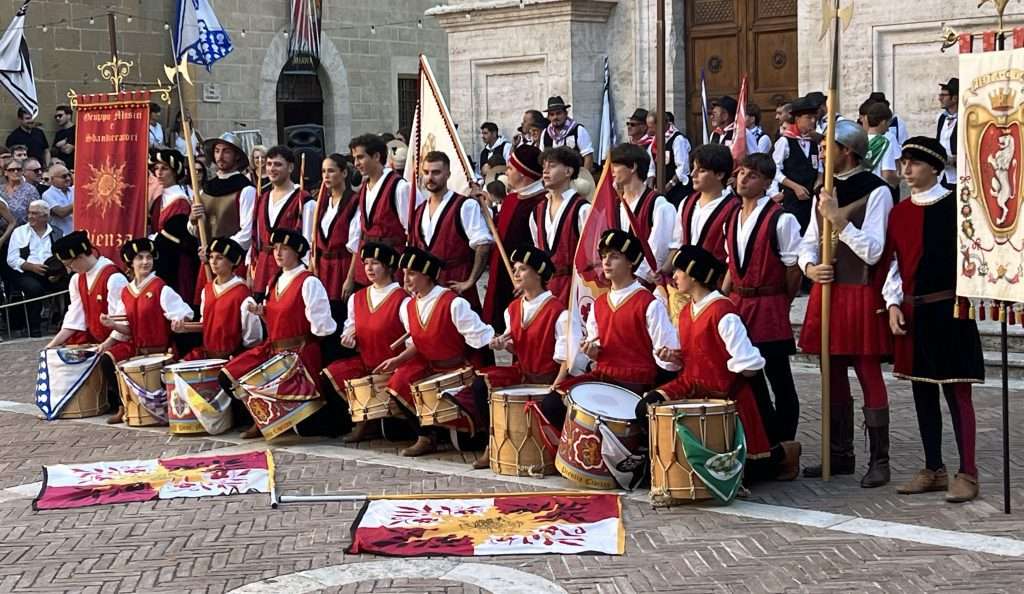
The afternoon festivities started with an exhibition by the town’s sbandieratori.
The short video at the right is best seen full screen
(We have written many times before about the history and development of the flag throwers.
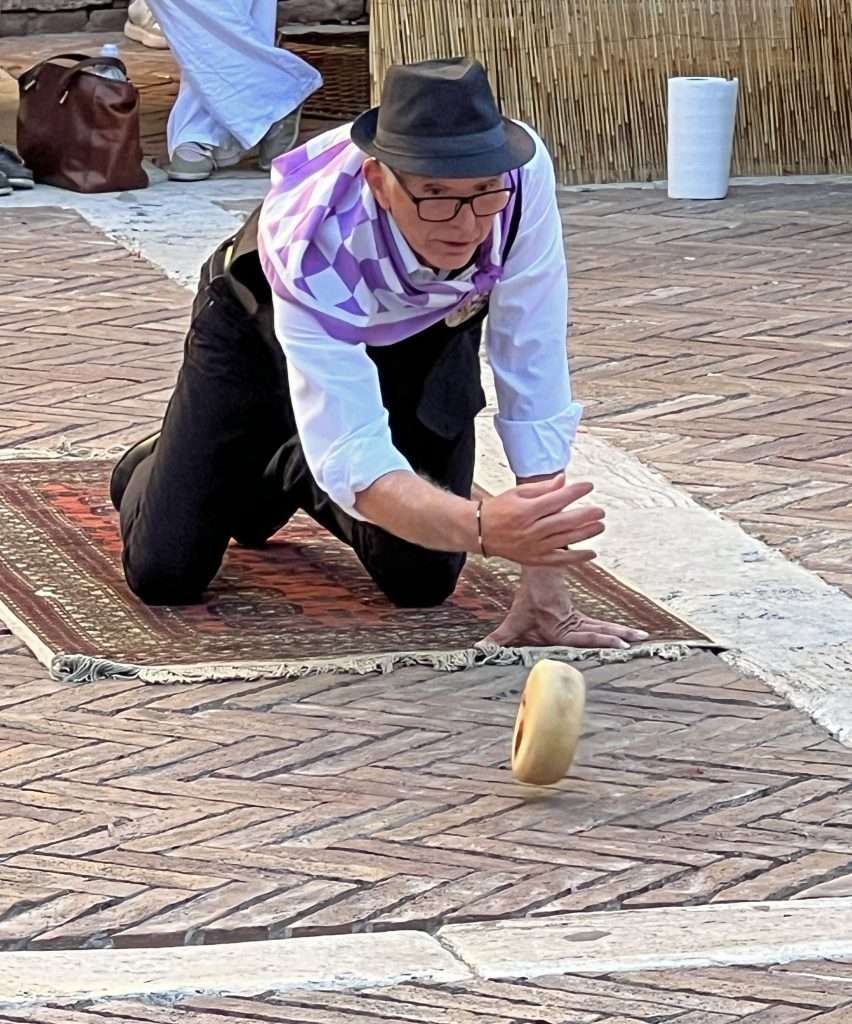
The sbandieratori were followed by the headline event. Each Pienza contrada (neighborhood) sends a team of six cheese rollers. The competition, a combination of horseshoes and bocce, has each contestant roll a 1 kg wheel of cheese over a bumpy 500-year old pavement to see who can get the wheel of cheese closest to a bowling pin.
All of this led Carol and Roger to wonder, where do the Pientini learn these skills?
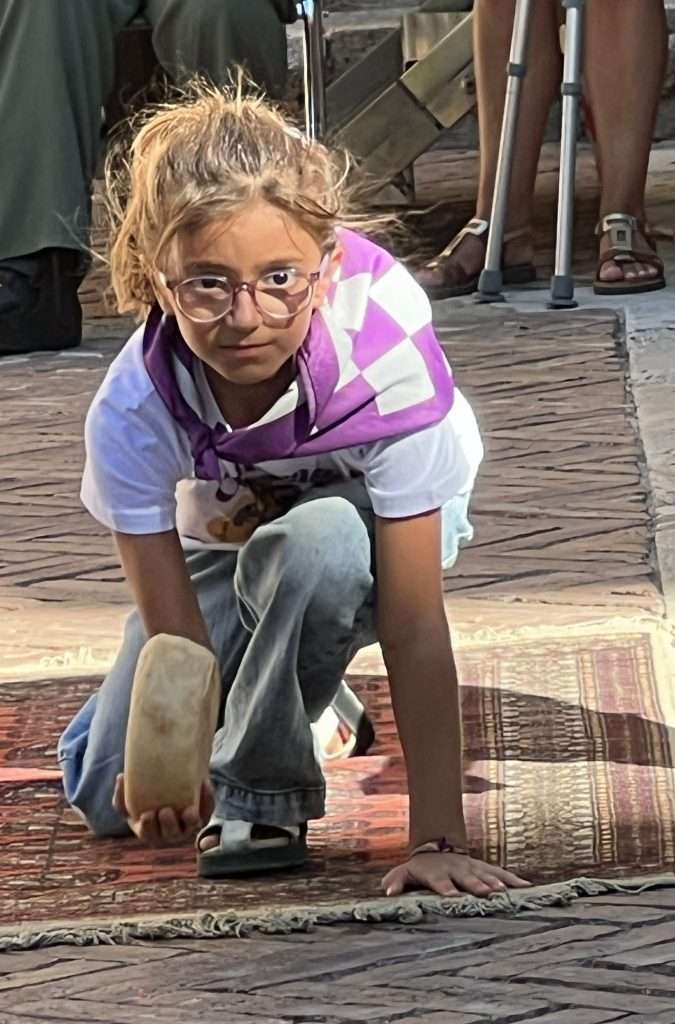
The answer is: they start ’em young.
Each contrada rercuits its own giovani (youngsters). Many practice for years before making the neighborhood varsity.
Some don’t do too badly in their rookie season, and some need a bit more practice.
(Again, this video is best seen expanded to full screen)
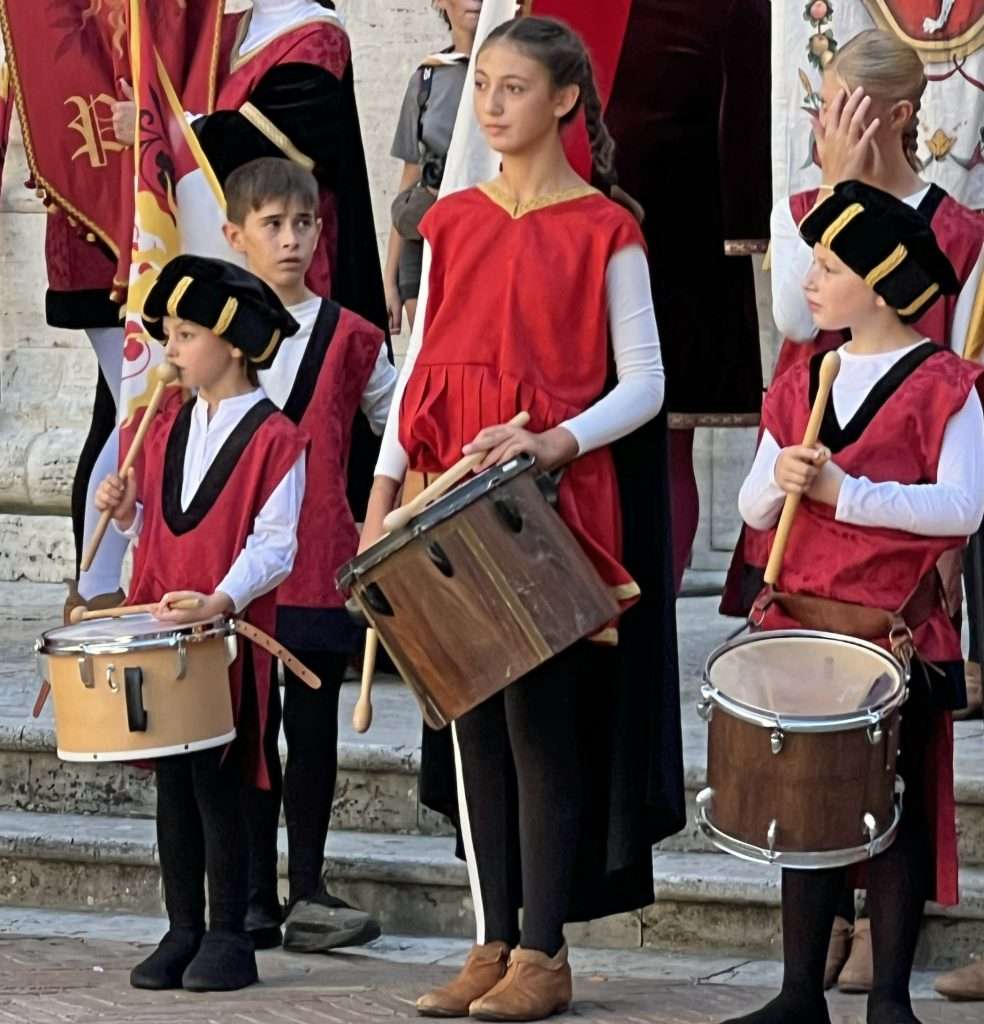
Gruppo Musici e Sbandieratori Pienza is a community organization that trains both the flag throwers and the drum corps whose rhythms support them.
The drummers start learning the ropes by the time they’re barely old enough to attend school.
Same with the young sbandietori…
(Remember, expand this video and the next to full screen)
…though it will take years more practice before they are as proficient as their elders.
In a world in which lots of the Pienza teens we see dream of escaping to life in a big city…especially New York…it’s refreshing to see so many of the children eagerly participating in the traditions that make life in this small town so special.