Author: Roger Bergson

  • Postcards from Ireland

    On their way back from Pienza to Seattle, Carol and Roger stopped over in Ireland for 10 days of sightseeing.

    Dublin…with a quarter the population of Ireland…was quaint but was like any other big city.

    One pleasant surprise was the pub scene. Irish pubs are friendly and welcoming (except for the one tourist trap we visited) with good food (delicious fish and chips…every bit as good as Iceland’s) and, of course plenty of Guinness.
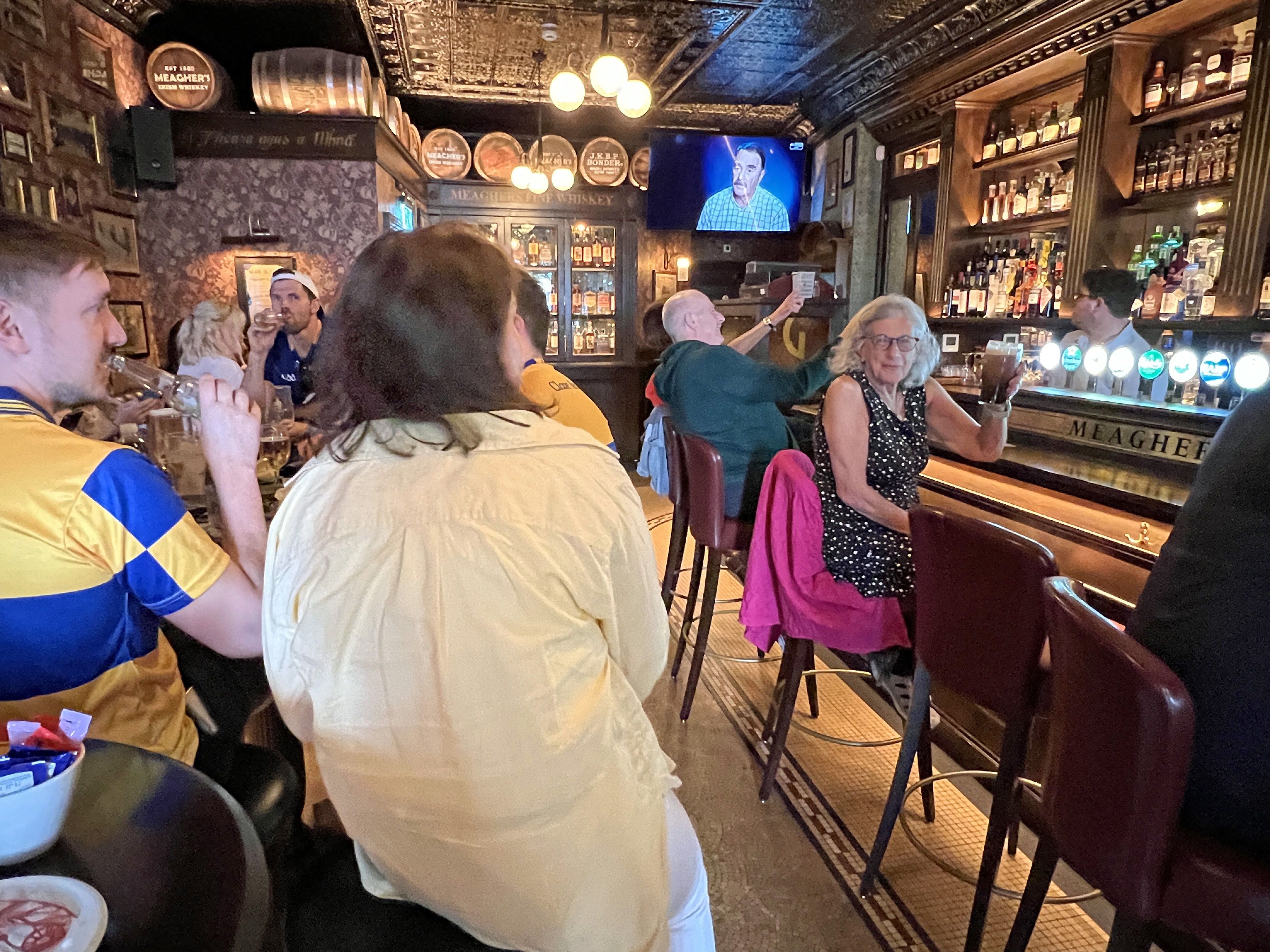
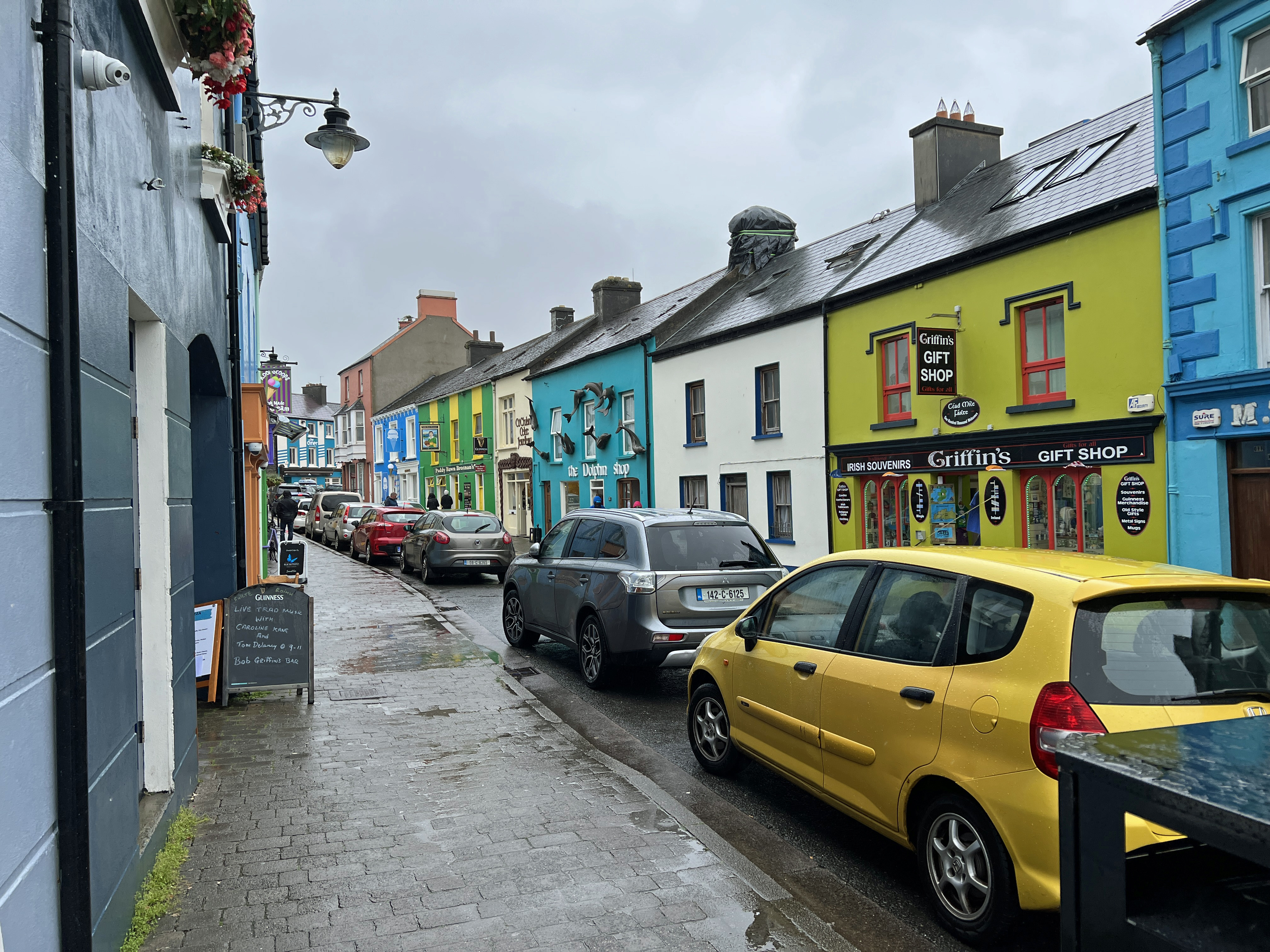
    Heading out of Dublin, Carol and Roger found more and more of the signage in Gaelic…This bar in Dingle is named “The Courthouse Pub.” We know this not because we became suddenly fluent in Gaelic, but because the name was written in English on the other side of the building.

    The small towns in the countryside are as charming as picture postcards.

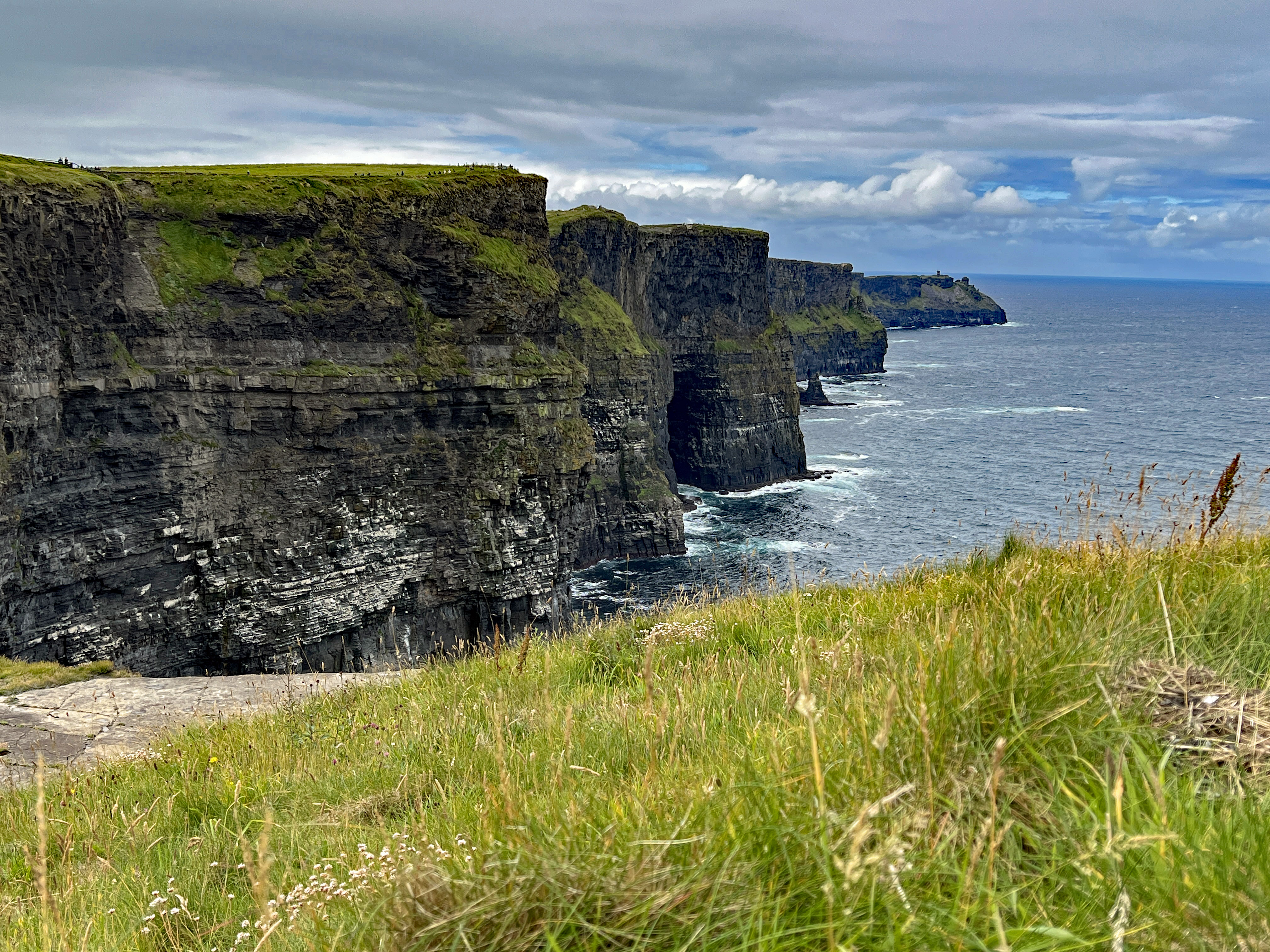
    The physical geography is something else. The west coast of Ireland is called the Wild Atlantic…for good reason.

    When George Lucas was looking for an otherworldly location to film scenes for Return of the Jedi, here’s where he chose.

    When Sir Francis Drake scattered the Spanish Armada off the coast of England in 1588, the Spanish fleet tried to re-group off Ireland’s Atlantic Coast. The wild weather and the rocky shoreline drove many of the warships aground, drowning hundreds of Spanish sailors.
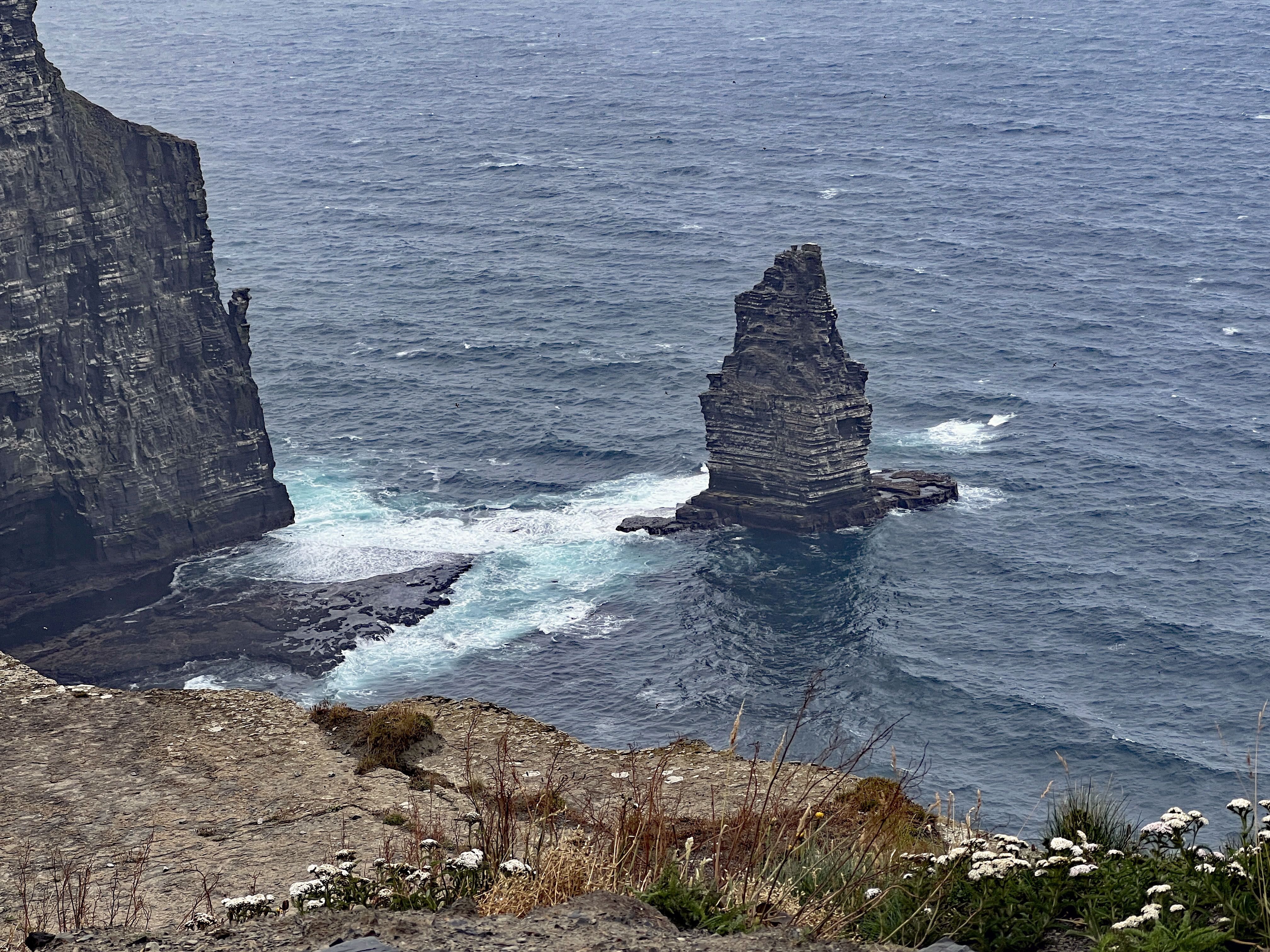
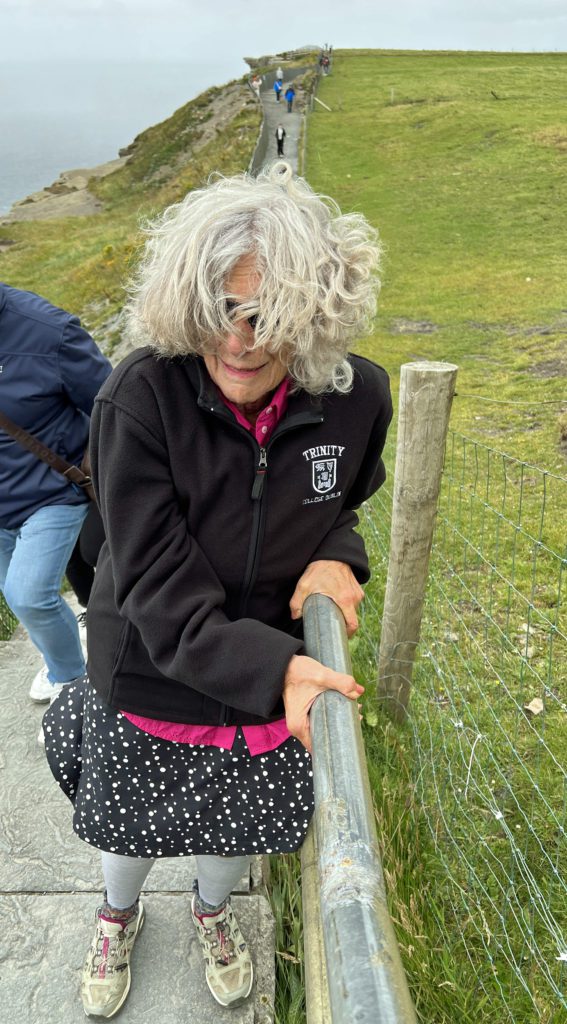
    The winds were so strong at the Cliffs of Moher…40 mph…Carol had to hang on for dear life to keep from being blown over the edge.

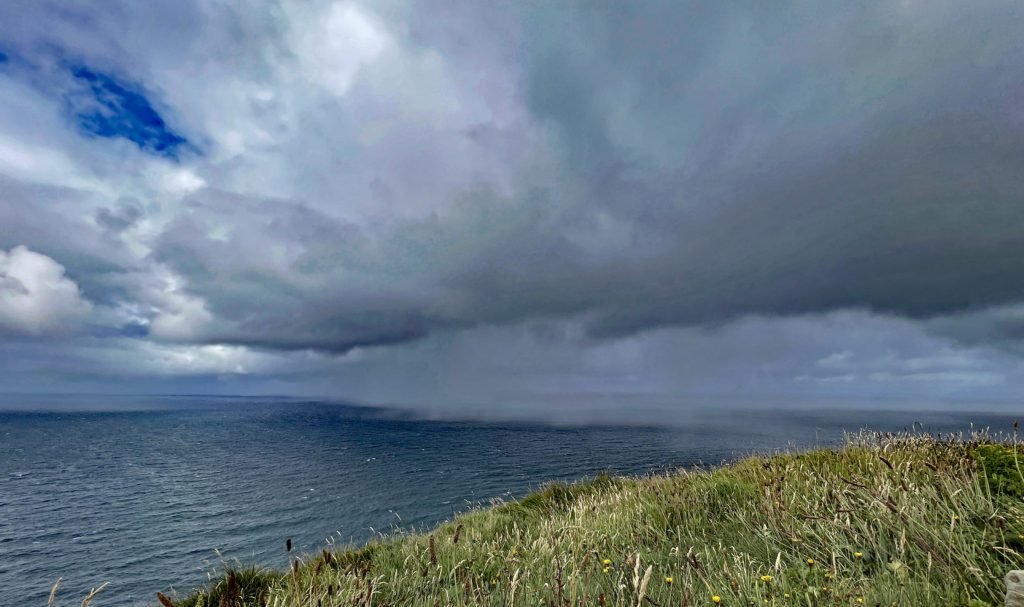
    July is supposed to be one of Ireland’s drier months. Carol and Roger spent their day on the Cliffs of Moher watching the rain squalls roll in. In fact, they sat through

    • 11 rainstorms on Monday
    • 5 rainstorms on Tuesday
    • 4 rainstorms on Wednesday
    • 1 rainstorm on Thursday…all day.

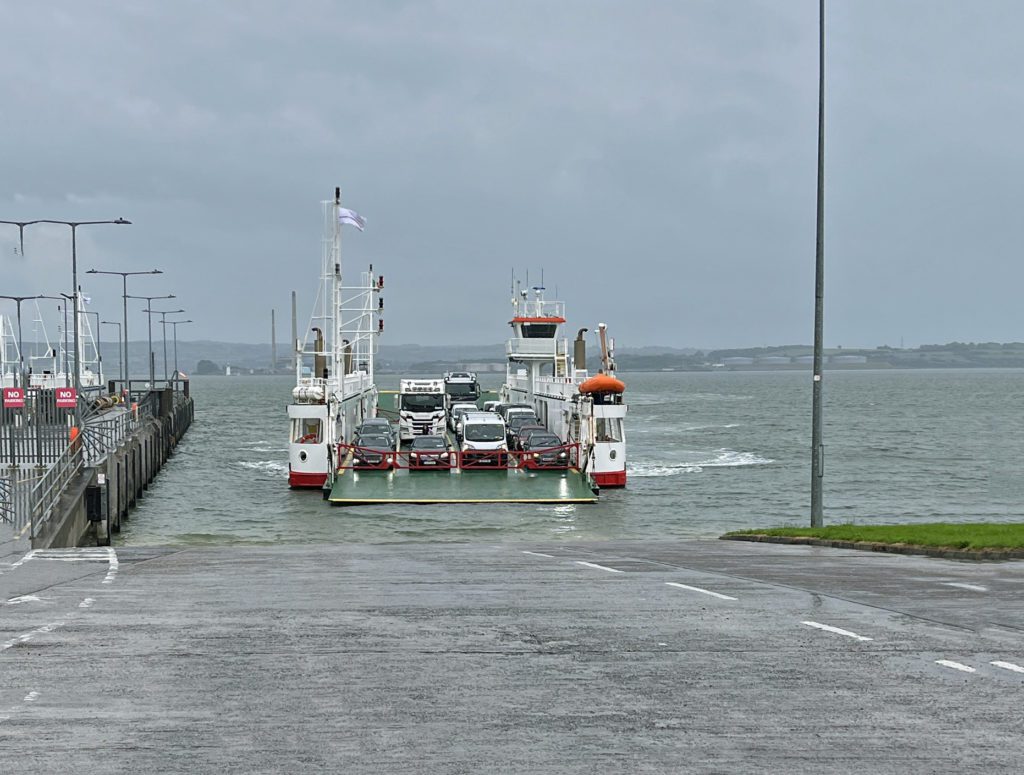
    Carol and Roger crossed the Shannon River estuary on a small catamaran ferry….to the Dingle Peninsula.

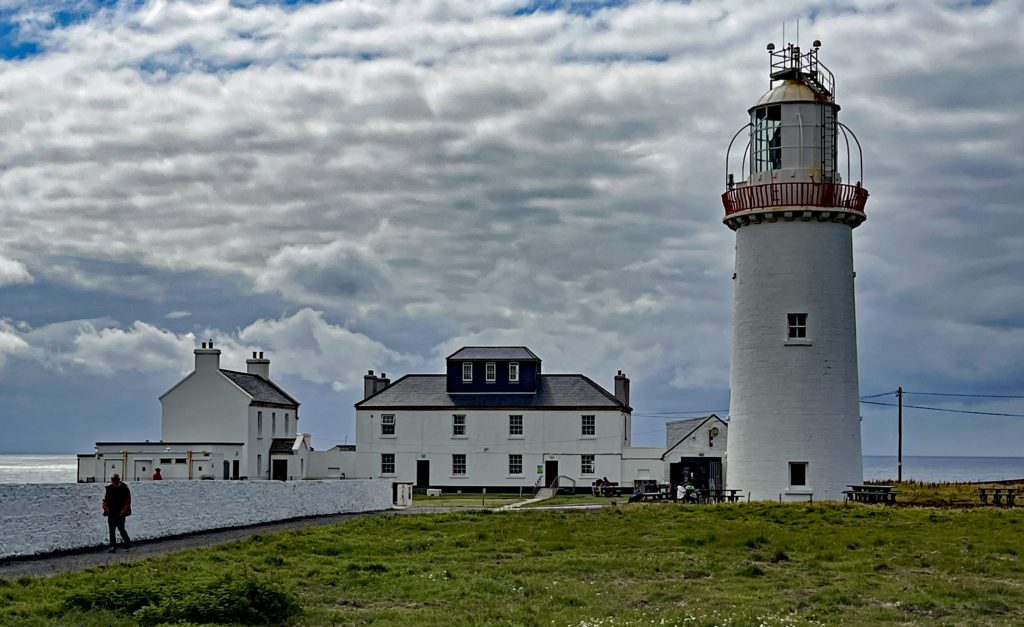
    The Dingle Peninsula is just as wild as the Galway coast. Had this lighthouse been built back in the days of the Spanish Armada, perhaps the four ships that got blown onto the rocks on this peninsula could have avoided their fate.
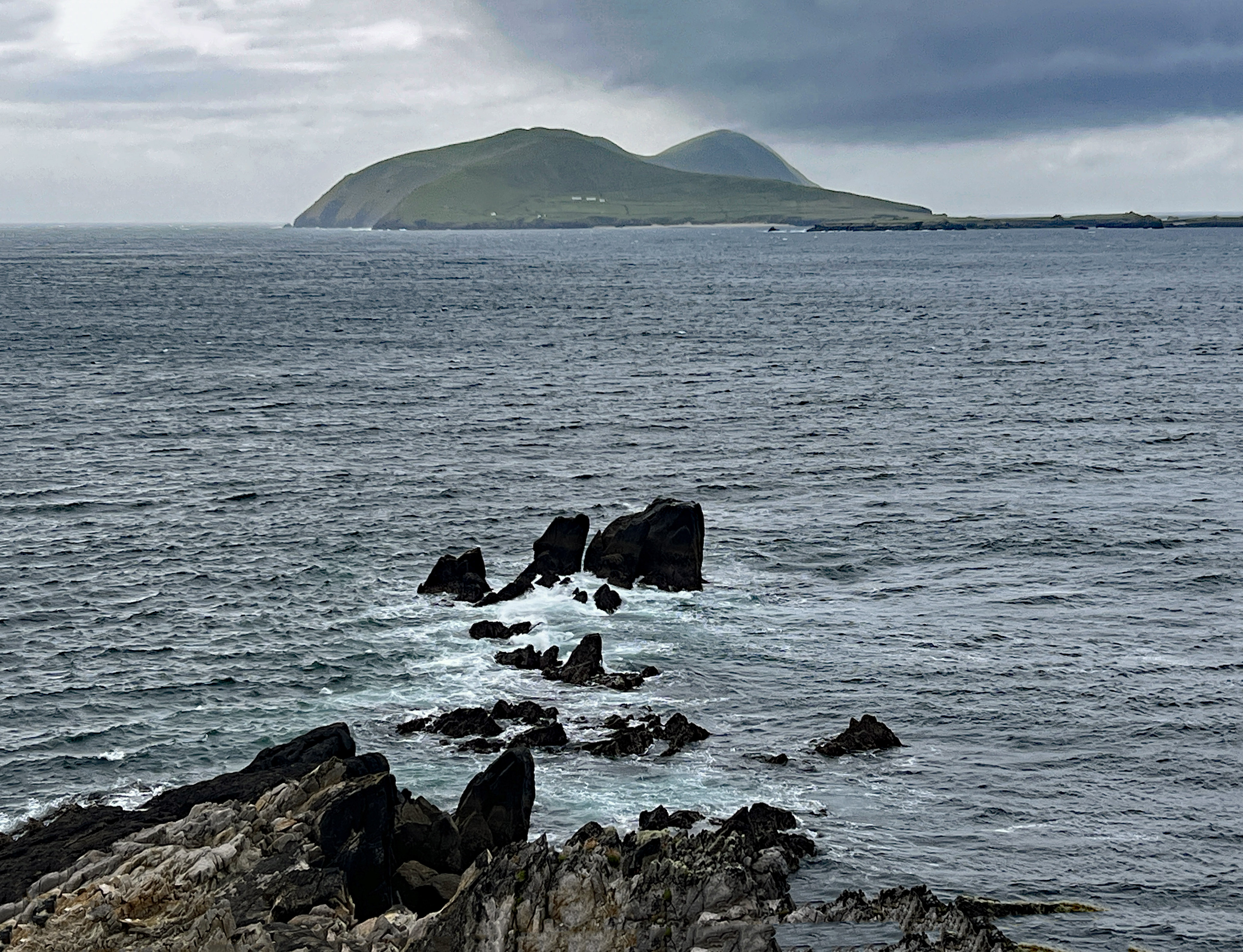
    Off the western tip of the Dingle Peninsula lie the Blasket Islands…the western-most speck of land in Europe. The Blaskets are so remote and desolate that in 1953 the Irish government forced the few remaining residents to relocate to the mainland.


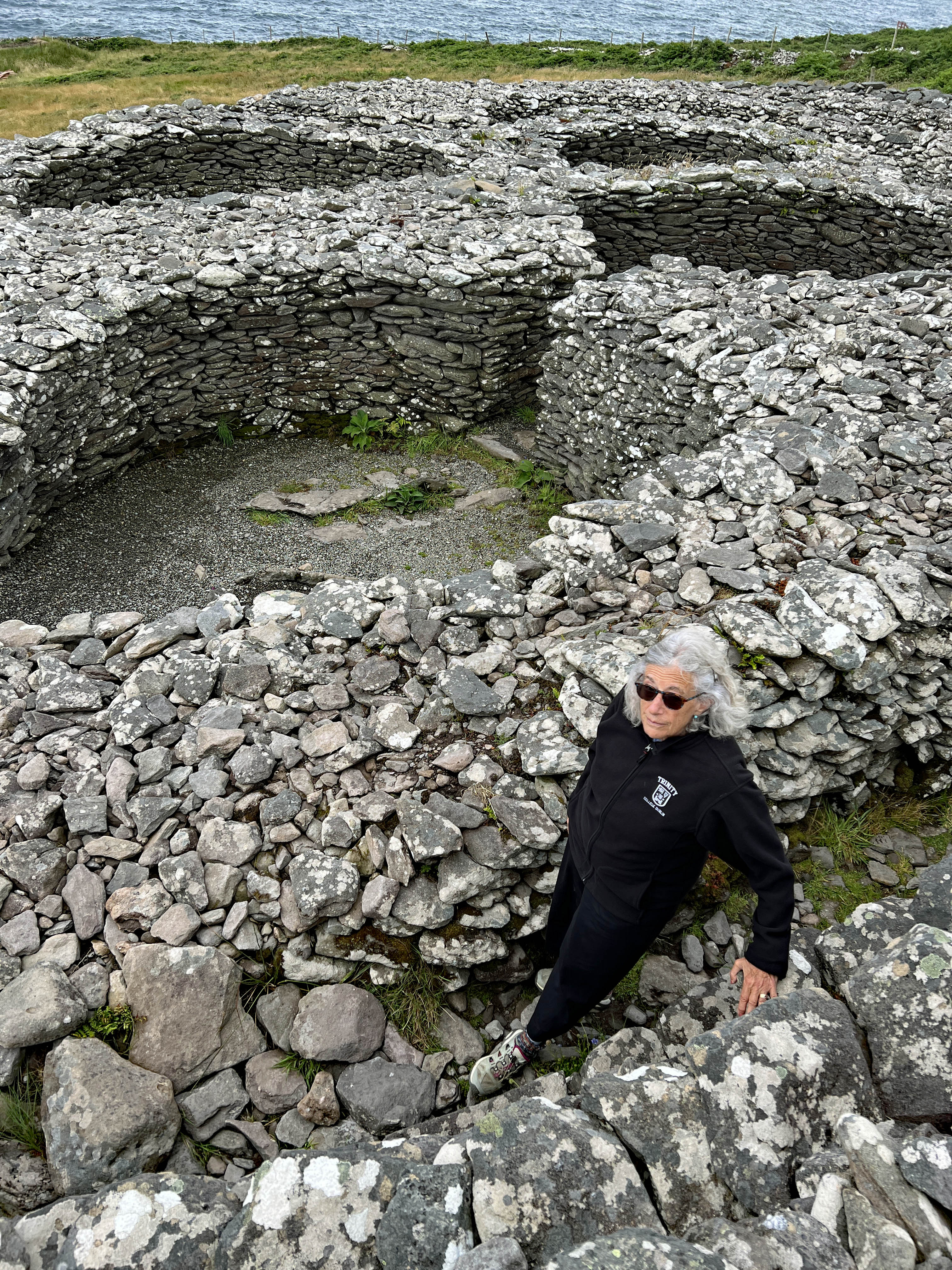
    The Dingle Peninsula contains many Lios…or prehistoric forts built by the Druids for protection and family housing. This particular one is called Cashel Murphy…and dates back 5300 years (3200 BCE).

    One family lived in each of the circular openings (called beehive huts), which…more than a millenia ago…had stone roofs.
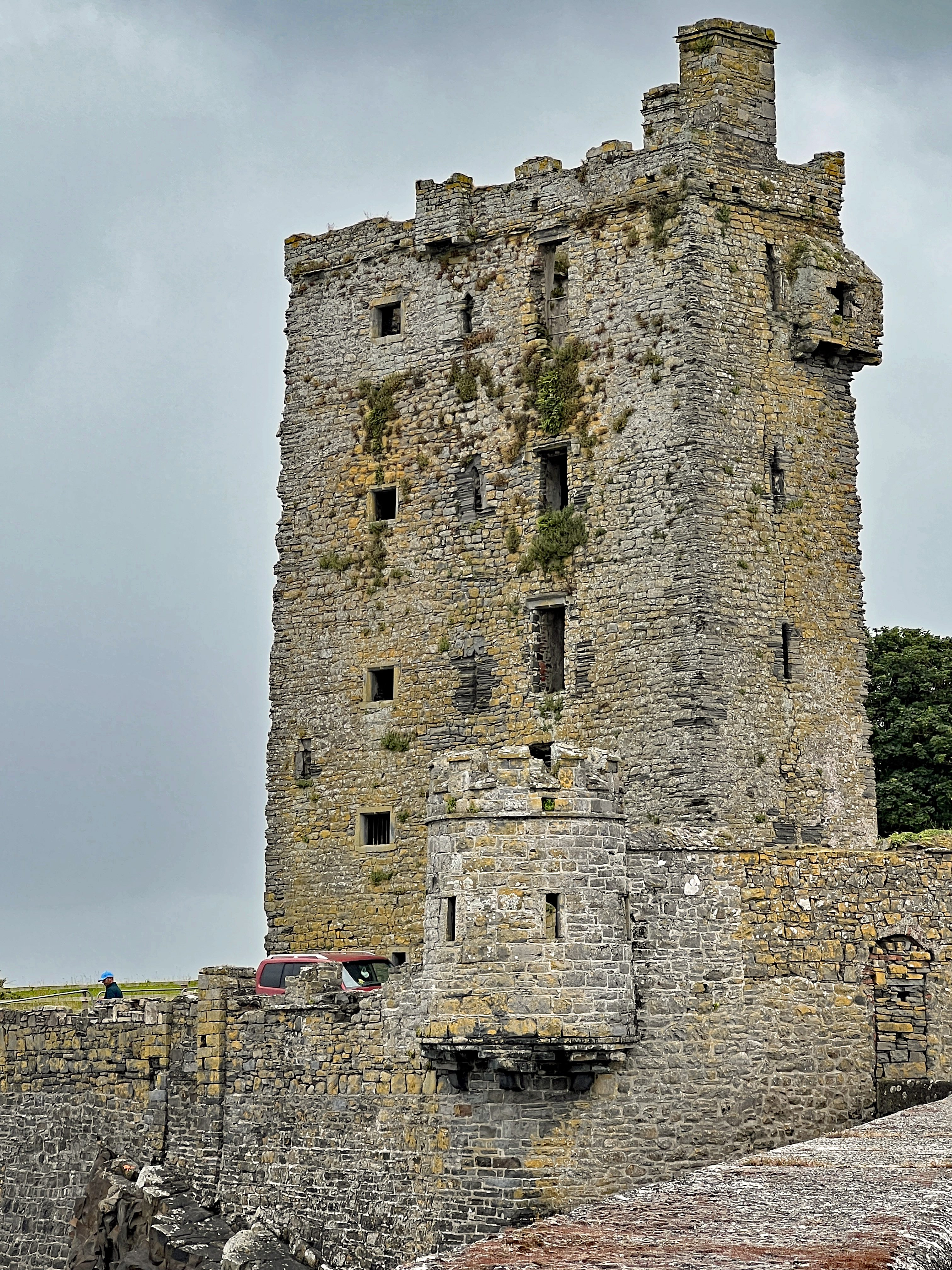
    The countryside of western Ireland is littered with castles. This is Rahinane Castle, County Kerry, built in 686. Like most of the castles we saw in Ireland, it was abandoned and allowed to deteriorate.

    The castles we saw tended to differ from the castles of Italy in several ways. Italian castles were built around a central square that was a hub for village economic activity, while Irish castes tended to be towers. Italian castles were built on a hilltop and surrounded by a moat…while Irish castles were right on the shoreline, designed to protect the coast.
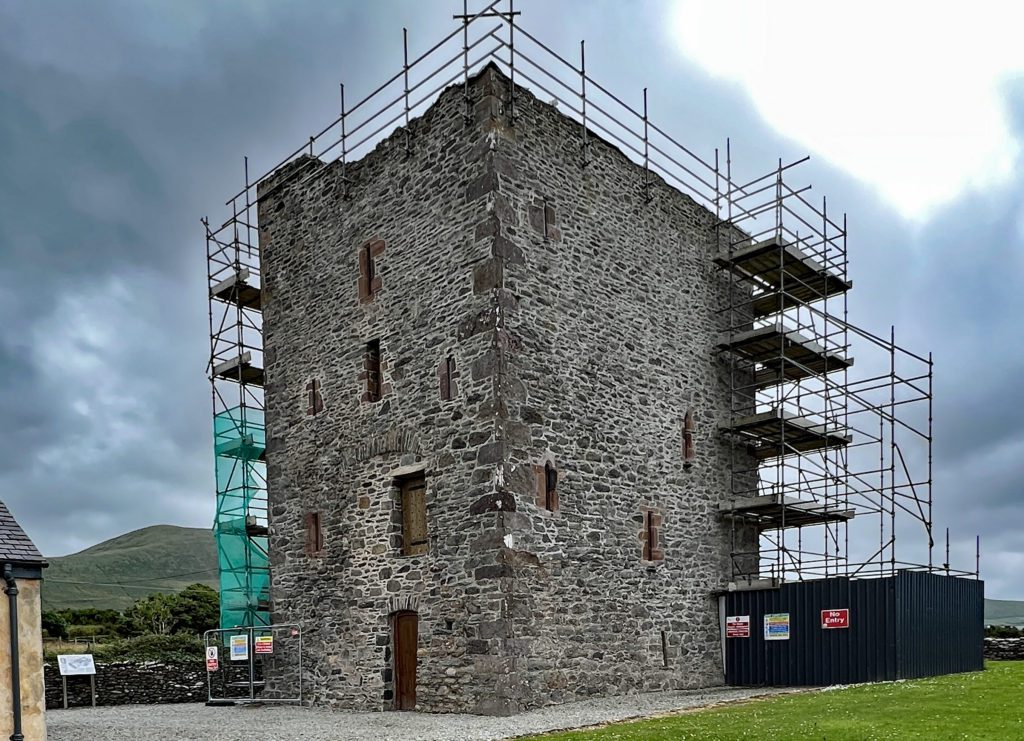
    A few of the castles we saw…like this Norman tower in Gallarus, County Kerry…were undergoing restoration. Sadly, most were not.

    The exception that proves the rule is Kylemore Abbey in County Galway. It was built by the Benedictine monks during WW I to house Belgian nuns displaced by the war. It still operates as a monastery today.

    Even Ireland’s most famous castle…Blarney Castle, just outside of Cork…was in a state of deterioration. Built in 1446 as the home of the McCarthy clan, it sits on expansive grounds with beautiful gardens and fully restored out-buildings.

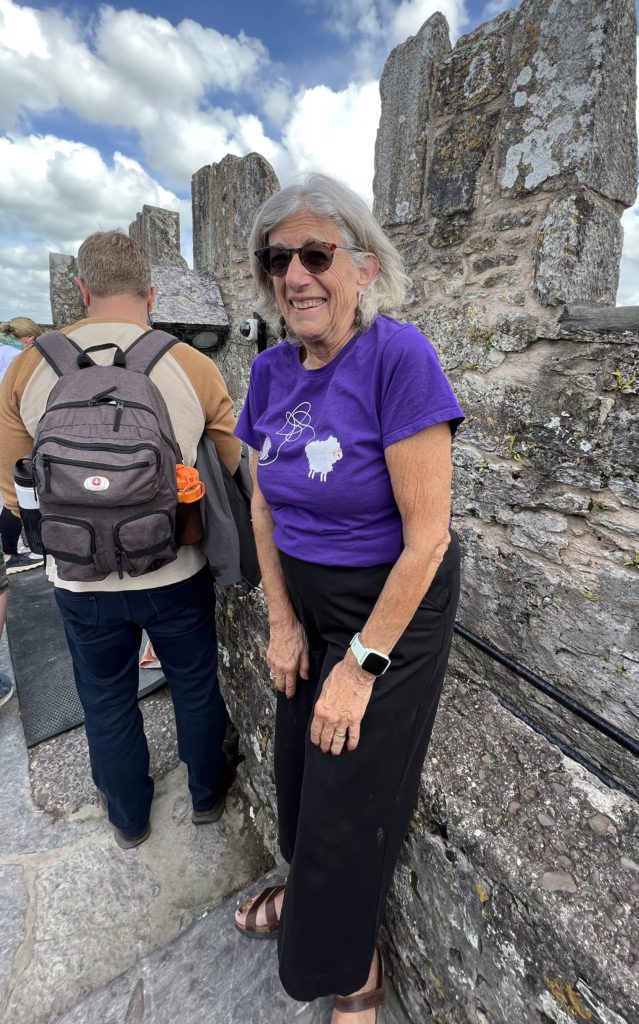
    And for a fee….one can climb to the top of the castle and kiss the Blarney Stone.

    Ireland certainly has its share of beautiful churches…like the Cork Cathedral.

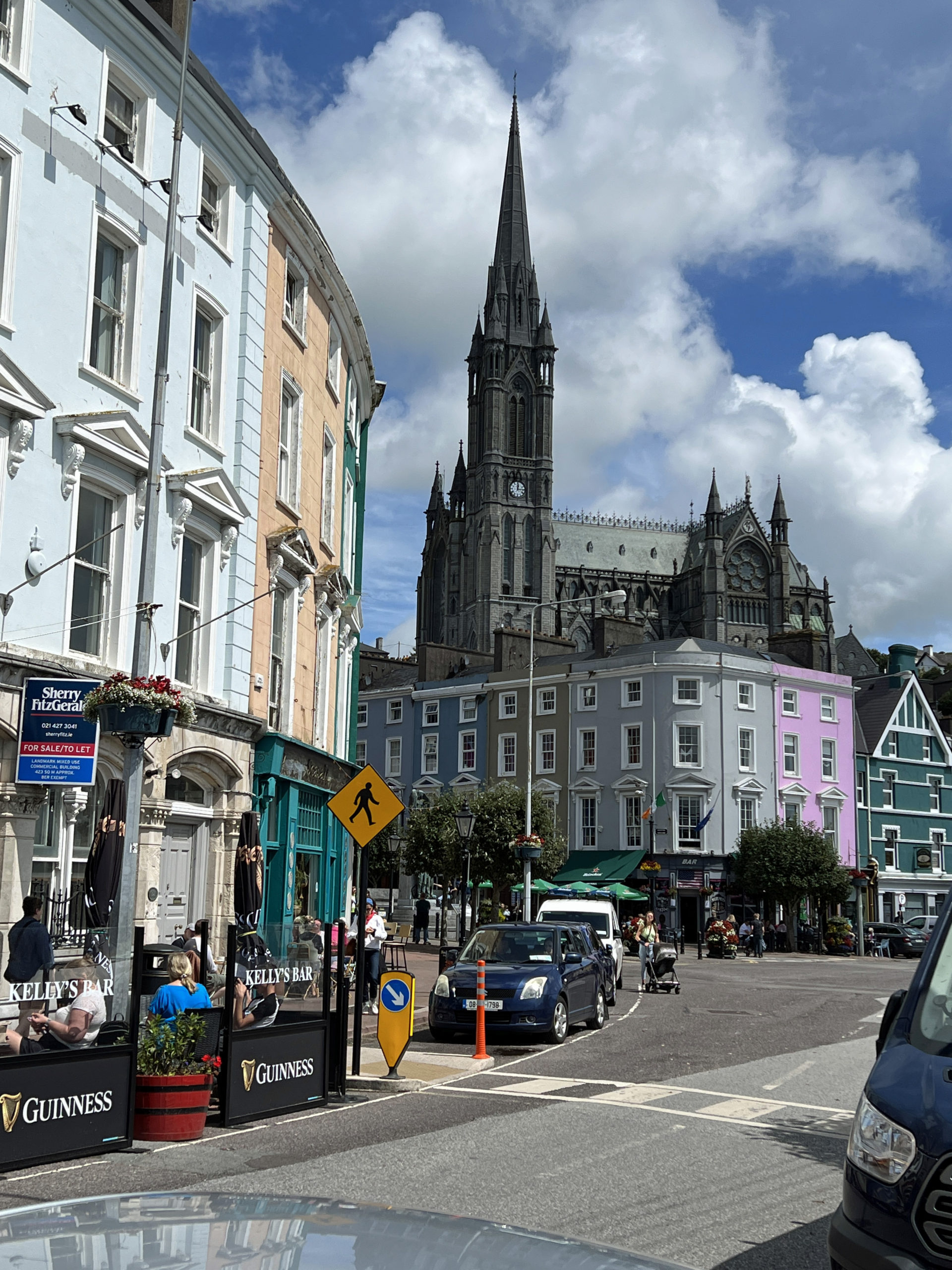
    Or the stunningly vertical Cathedral in Cobh.
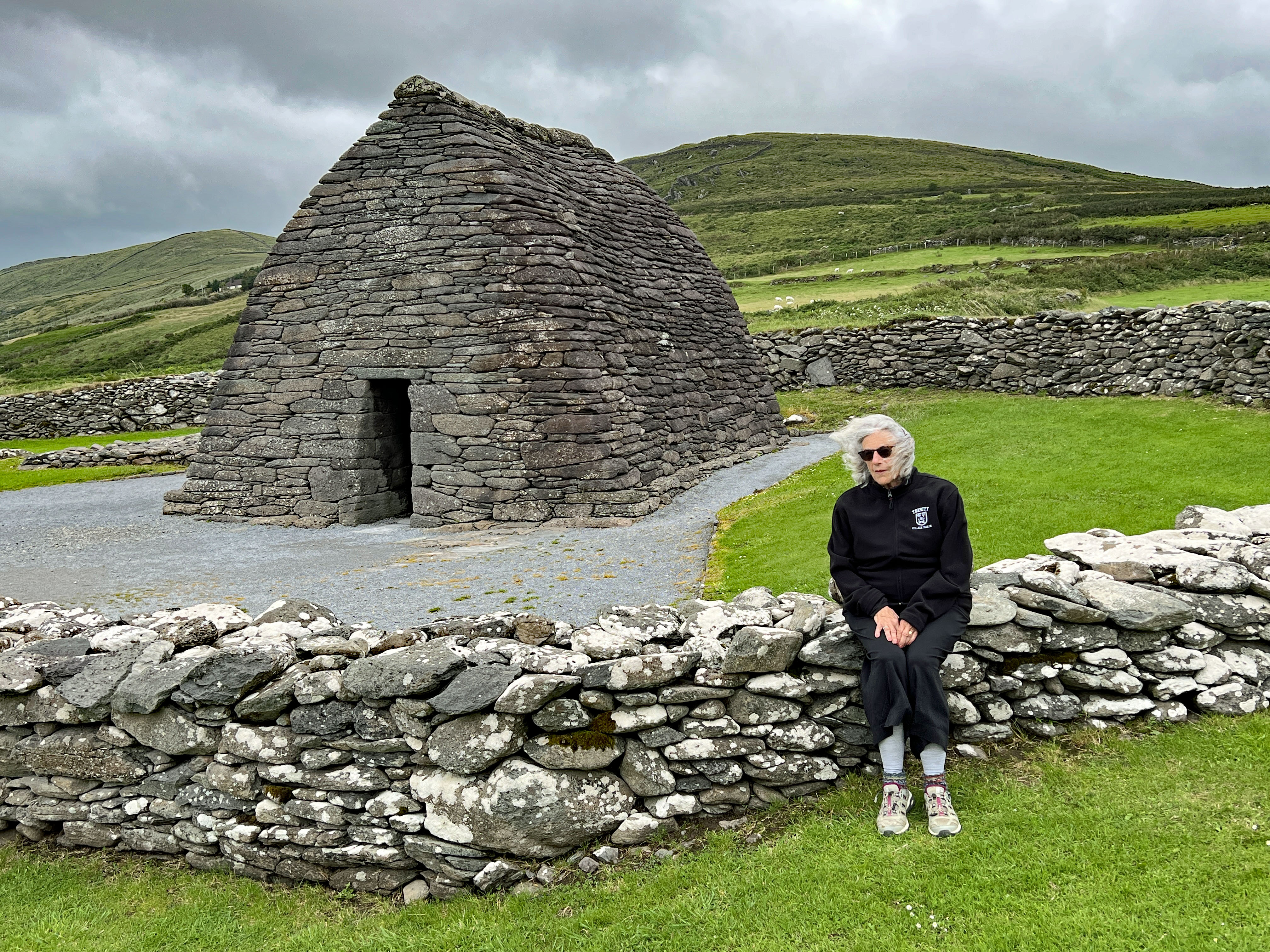
    The most primitive church… the Gallarus Oratory…was in County Kerry. It’s a national archeological site because of its unique sloping-walled, corbel architecture.
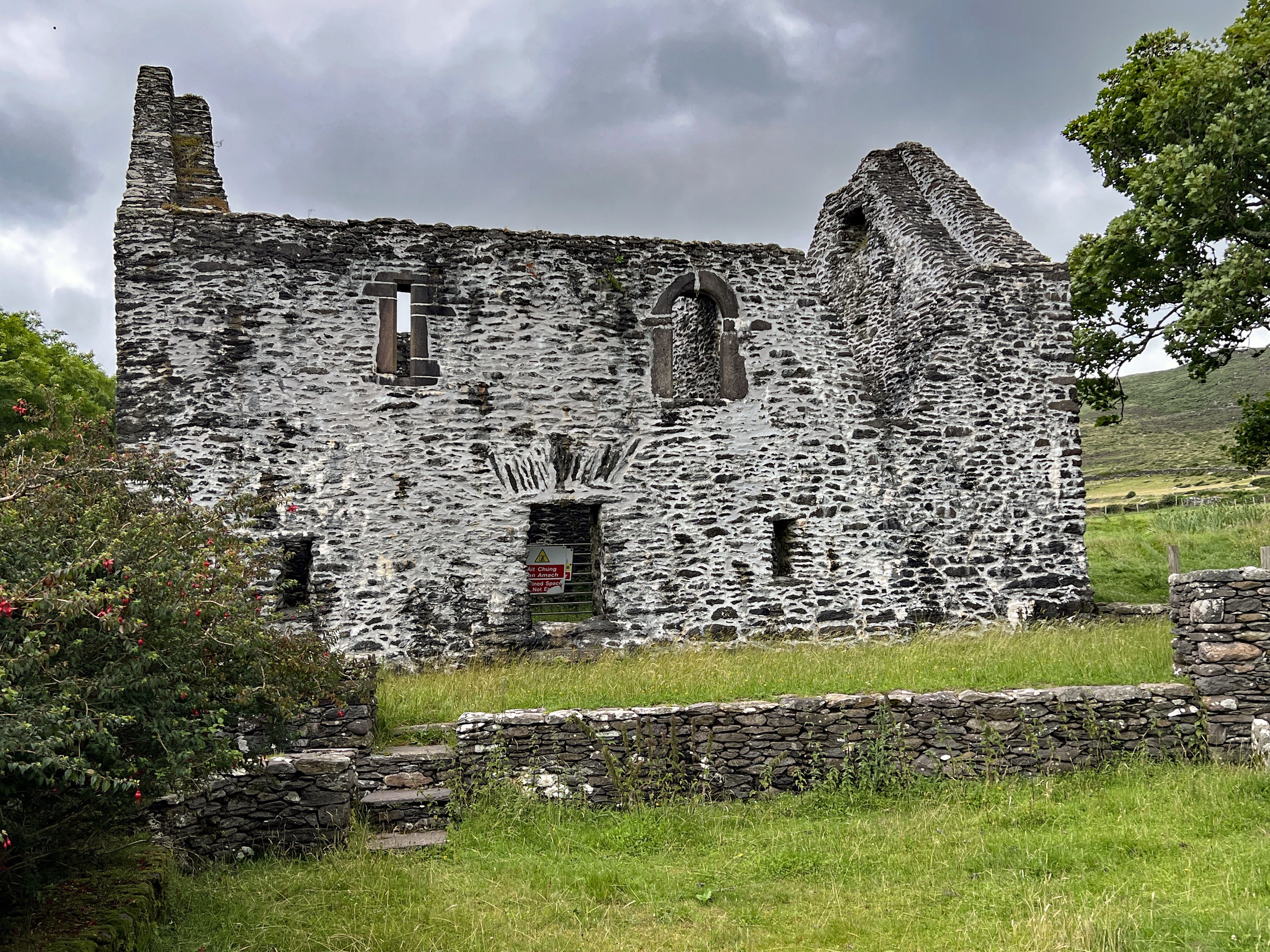
    The church in Kilmalkedar was first built in 636. It’s been long abandoned, though the graveyard contains the bodies of local folk recently deceased.

    Roger’s favorite church, however, is known as the home of St. Brendan the Navigator. Local legend says Christopher Columbus visited County Kerry in 1477, learned that St. Brendan had sailed from Ireland to Newfoundland in the 6th century CE…which planted the seed for Columbus’ “discovery” of the New World in 1492.

    In western Ireland, sheep are everywhere. Sheep in the pastures…

    …Sheep who wander onto the roads…

    Carol even got to feed a baby lamb.

    But yarn….to Carol’s surprise…was much harder to find. Wool Shops were everywhere. Most sold mass-produced Irish-knit sweaters aimed at tourists. After disappointing visits to 8 shops across Ireland…

    Finally, in Kilkerry, Carol finally hit pay-dirt. She found Kerry Mills, one of the few remaining mills that produces everything from fleece to sweaters…

    …and she left a happy camper.

  • A Weekend with the Etruscans

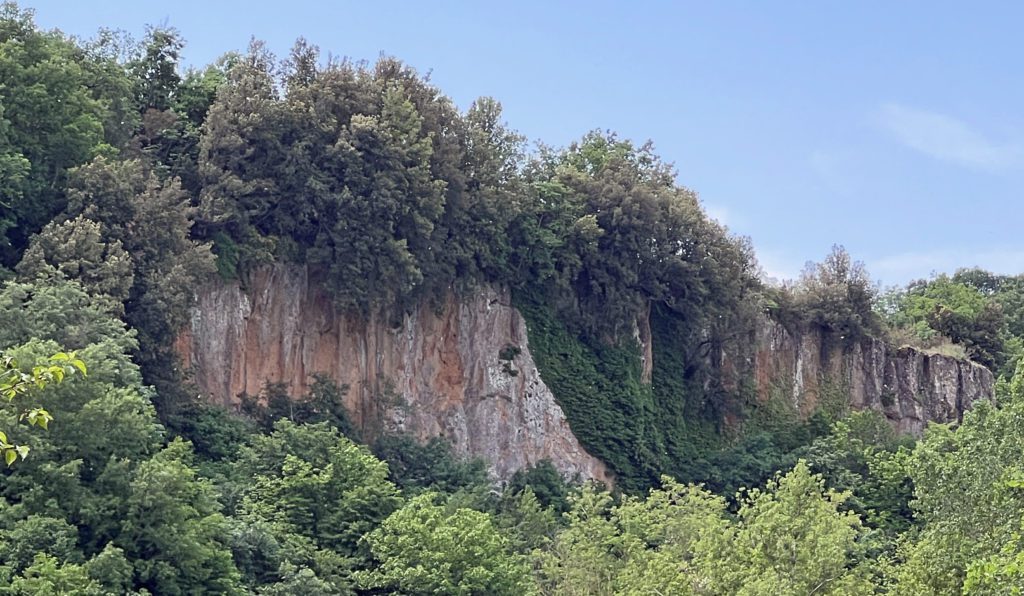
    About 70 km southwest of Pienza lies the town of Sovana in a landscape of deep gorges and steep cliffs. The scenery is stunning, but that’s not the reason most people come to visit.

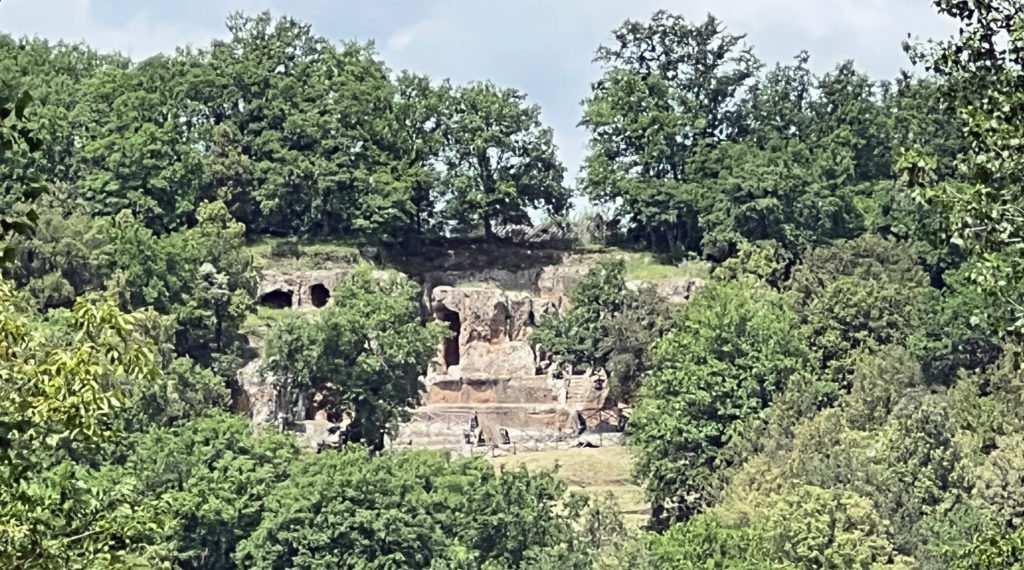
    At one set of cliffs lies an archeological park called the “Citta del Tufo,” named for the type of rock in which the Etruscans carved their tombs.

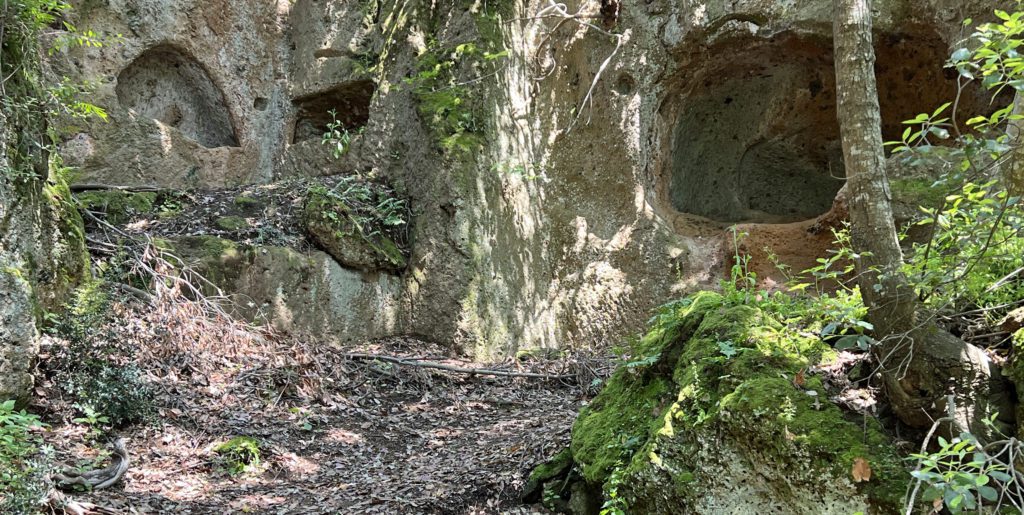
    The park is riddled with man-made caves that served as tombs for the Etruscans, the people who once lived here.

    (Legend says the Etruscans were the descendants of Aeneas and his men, who fled Troy when the Greeks over-ran the city. (See the April 2014 post “Before the Romans“)

    Many of the tombs are accessible to visitors, though their contents were either looted centuries ago or moved to museums.

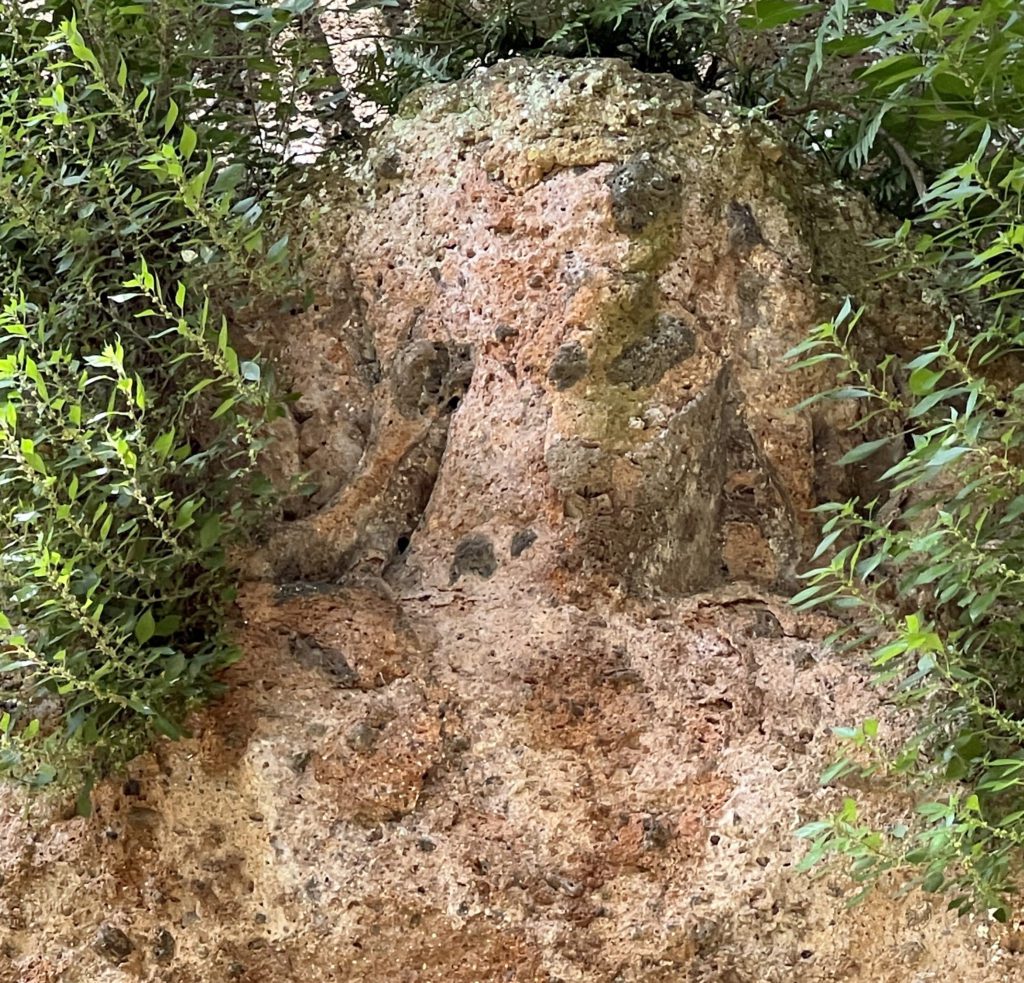
    One of the more notable graves is called Tombe Tifono…named after the mythical sea monster who the Etruscans believed caused typhoons.

    The weather has been hard on the tomb over the past 2,500 years, but if you look closely, you can still see…

    The remains of the face of the god Tifono, whose image was carved above the entrance of the tomb.

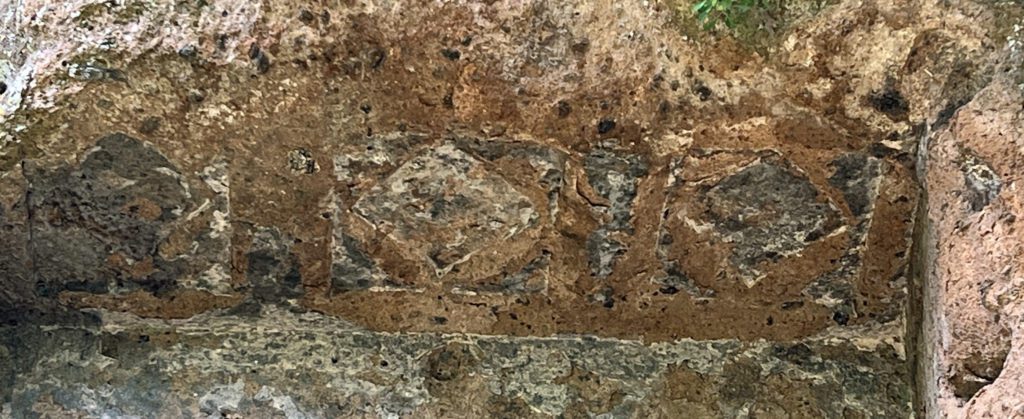
    The remains of frescoes that had been painted on the ceiling of the tomb. And..

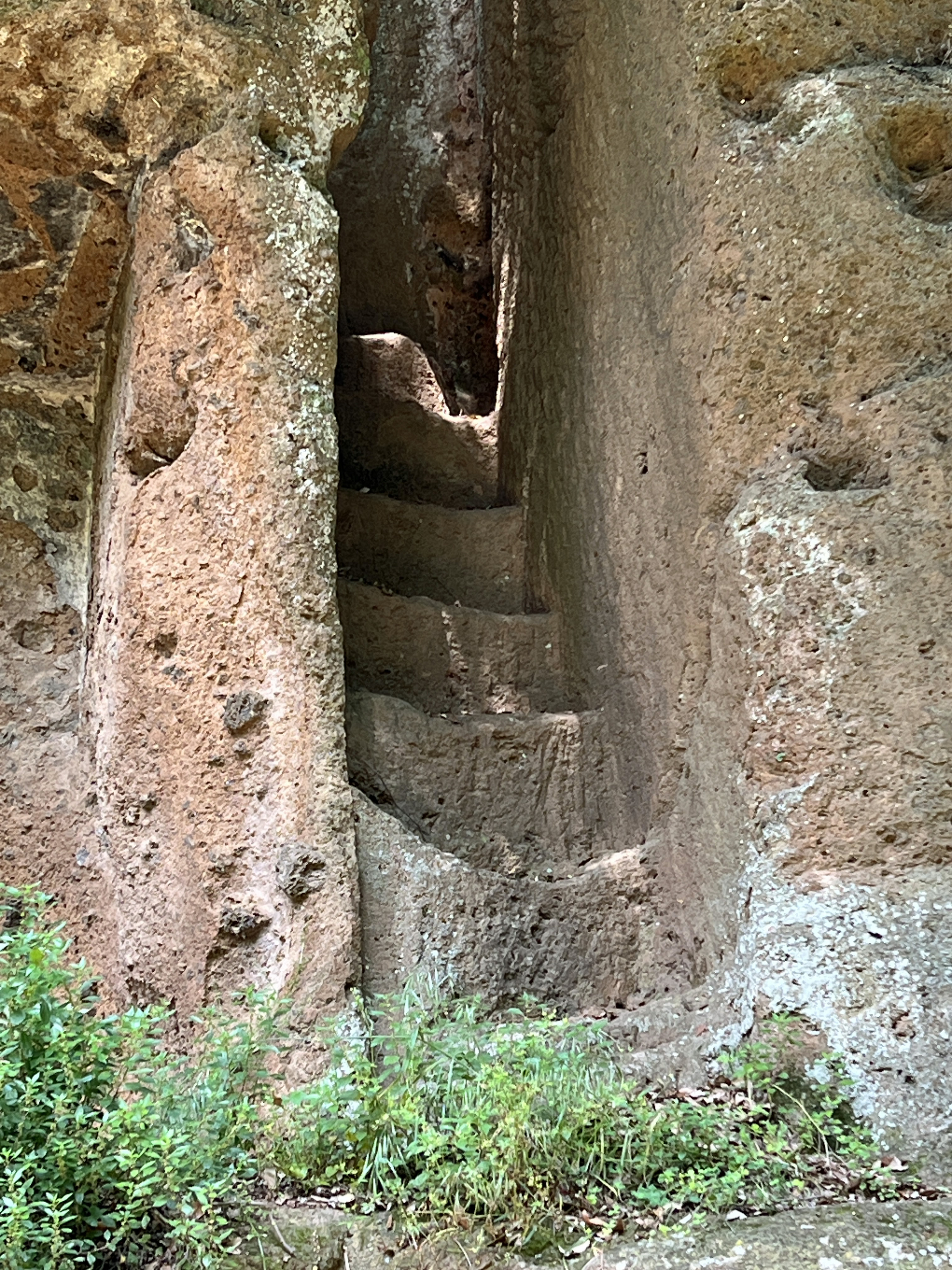
    The steps the Etruscans built, so they could climb to the ledge above the cave…a place where archeologists found the burnt remains of sacrifices the ancients made to Tifono.

    The archeologist Ranuccio Brandinelli was responsible for most of the excavations around Sovana.  He worked from the 1920’s through the 1950’s discovering, documenting, restoring, and then archiving what he found at Citta del Tufo.

    Most of what he found is today displayed at the Museo Mamiliano a few kilometers away in the town of Sovana…

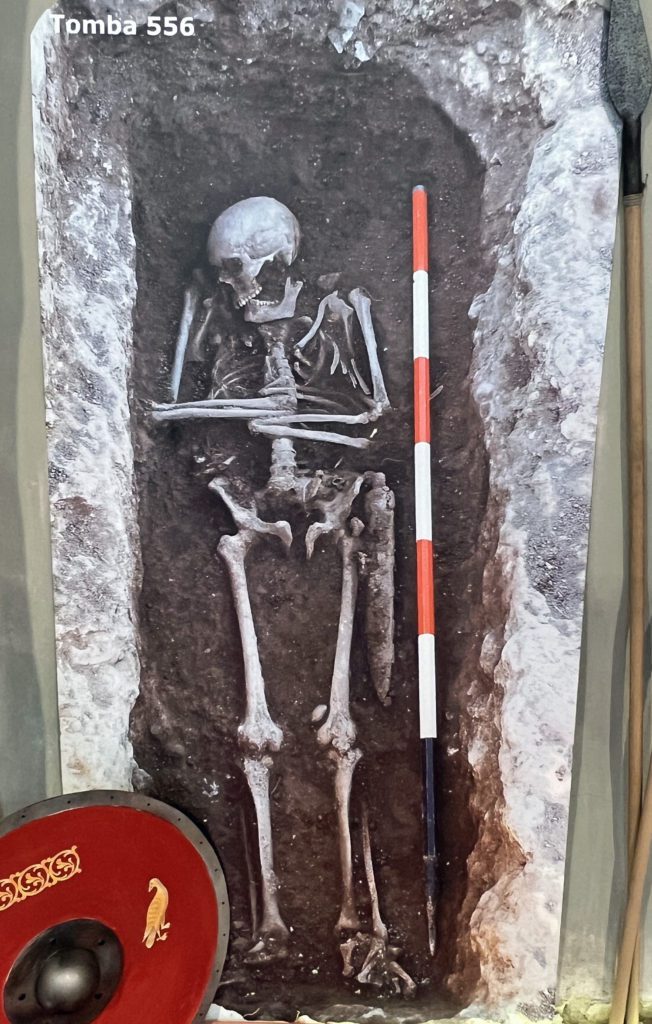
    …including a photo of the remains of one of the people buried in one the graves.

    Perhaps the single richest source of artifacts in the museum came from the Tomb of Hildabrandt, which…when we visited it…had clearly had all its artifacts removed.

    While the cave today is a barren cube hewn out of solid rock…

    …it was once decorated with a complex terra cotta façade.

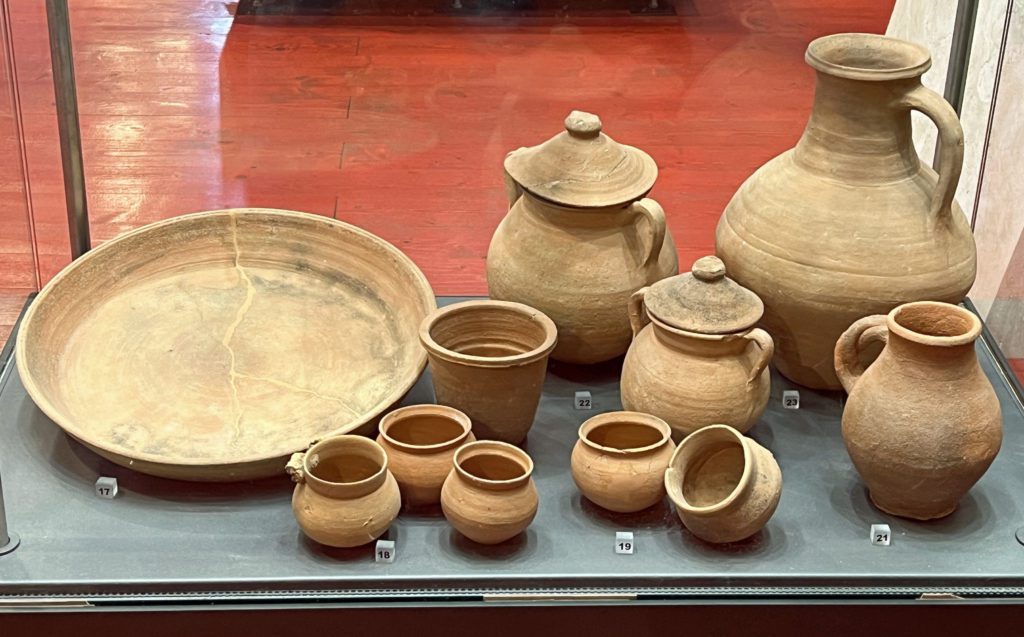
    It contained mementos of earthly life…so the deceased’s spirit would have company in the hereafter.
    …including household items…

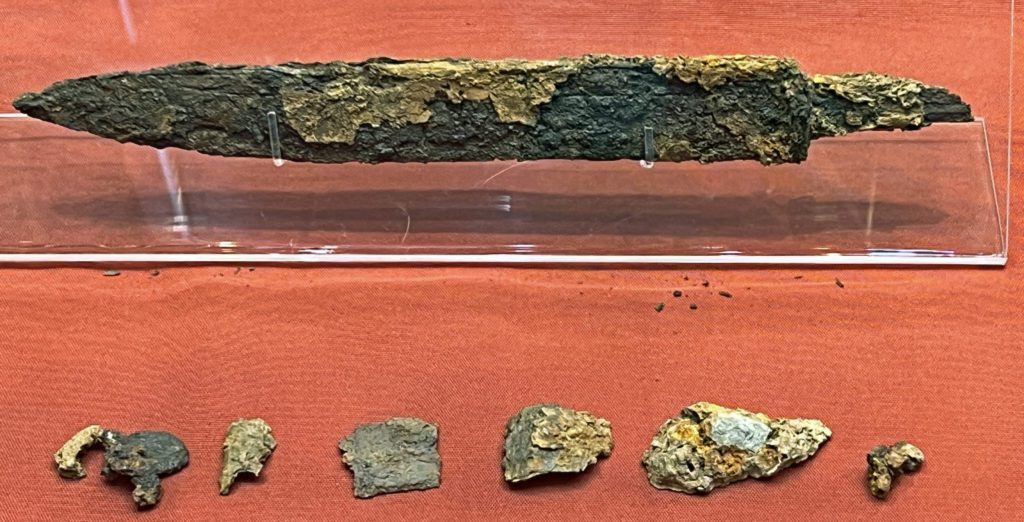
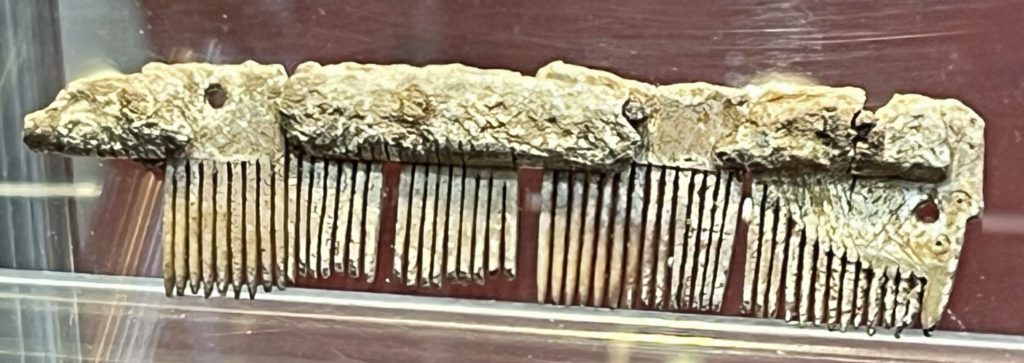
    …all 3 millennia old…

    …like this bronze knife…

    …and bronze comb.

    Some things never change…

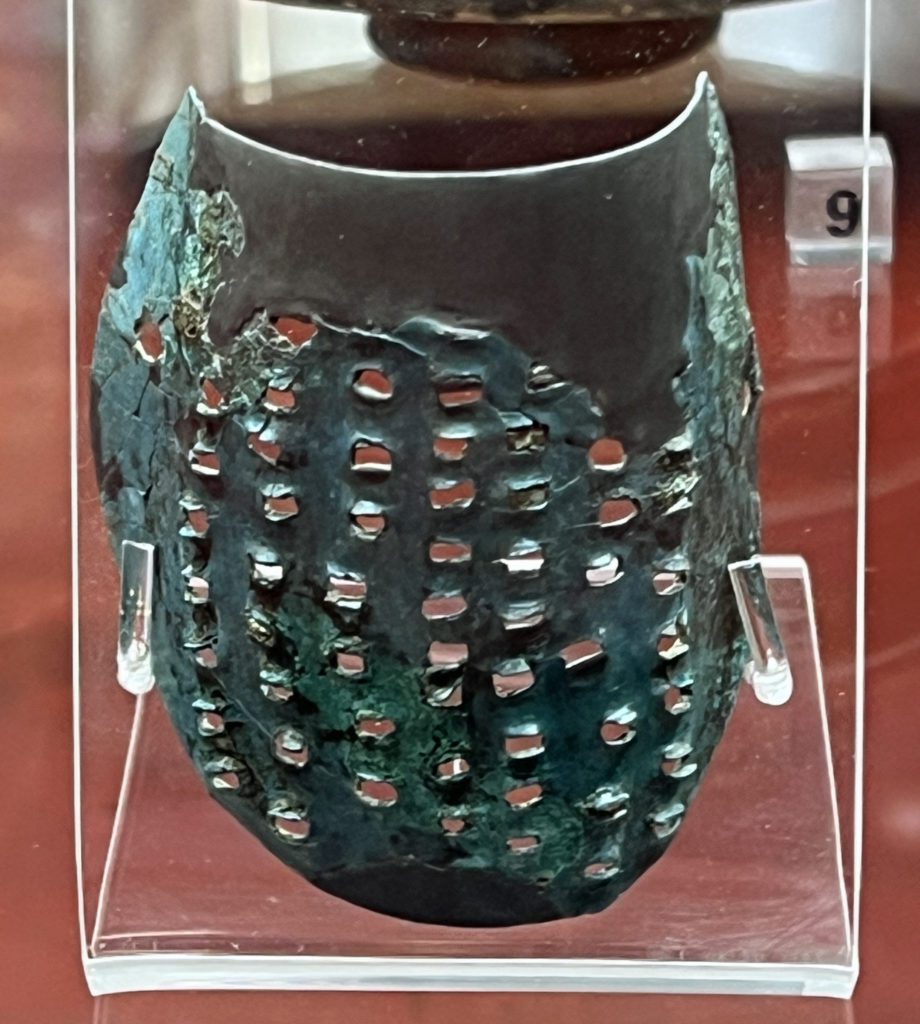
    Even 3,000 years ago, the Etruscans needed to grate their cheese.

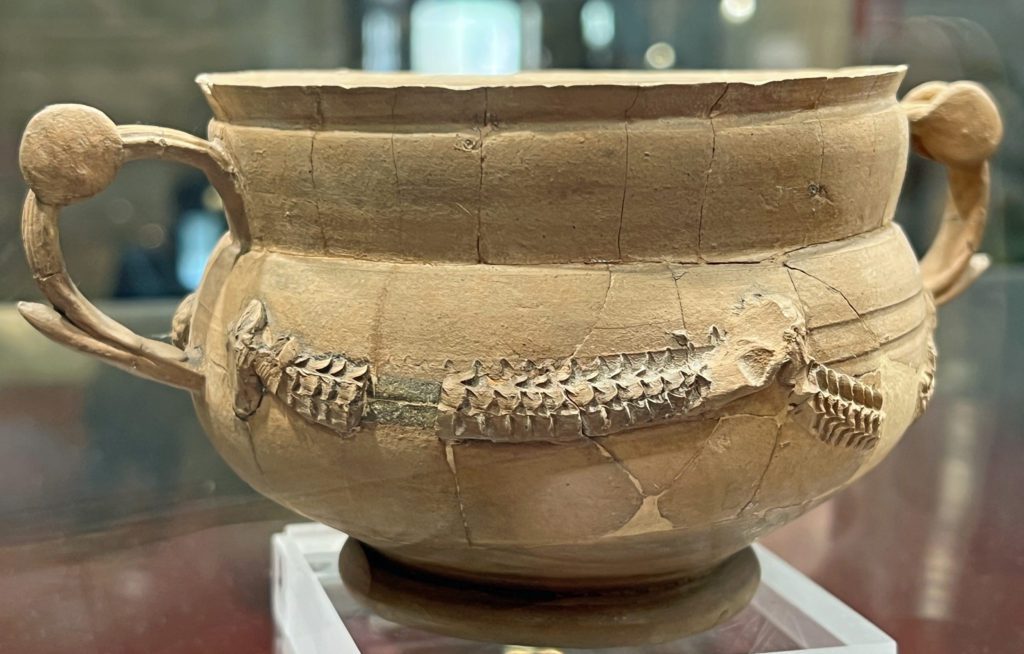
    Most of the pottery was found as shards and meticulously pieced back together.
    Look closely and see how the archeologists rebuilt this wine bowl.
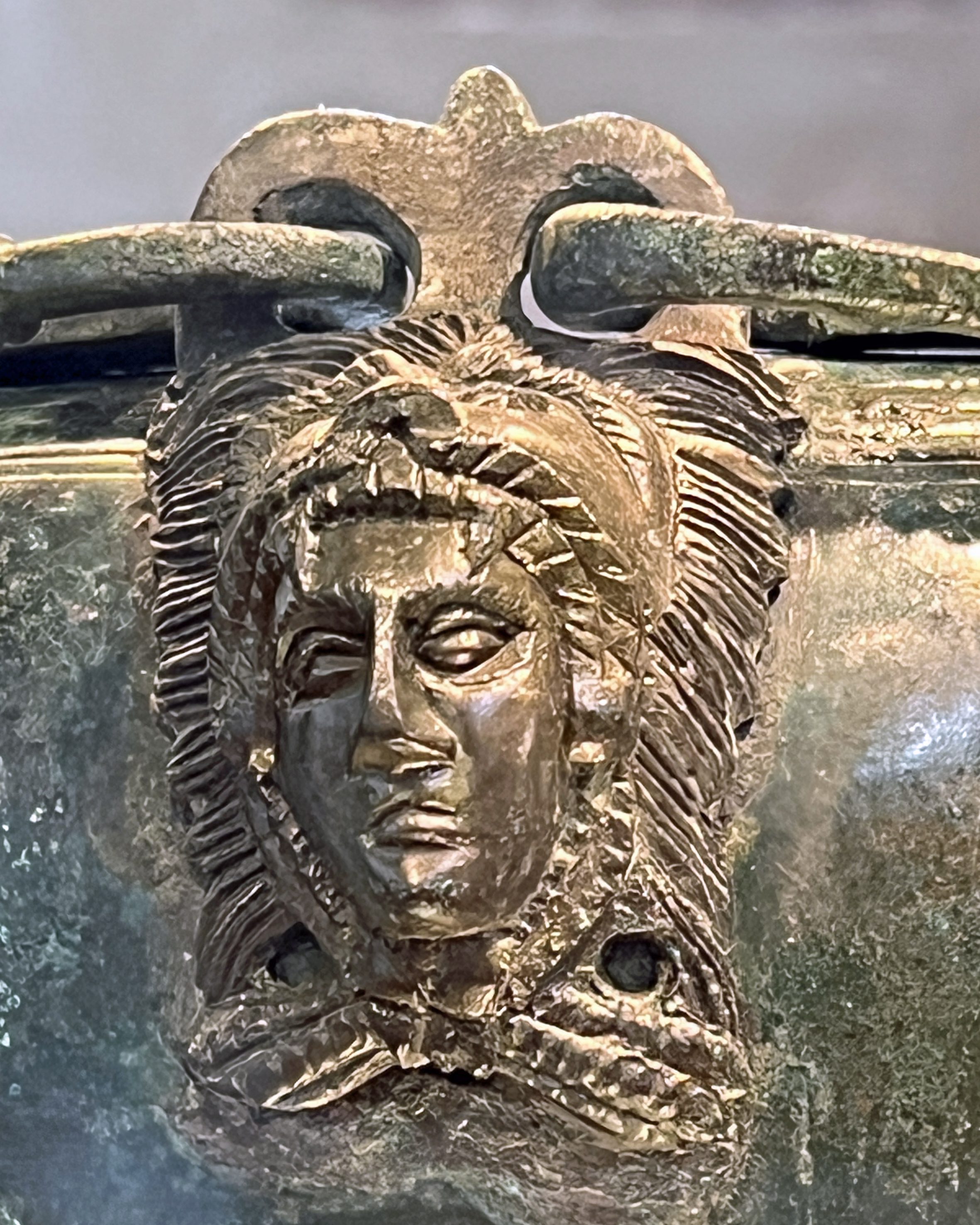
    Some of the metal pots show remarkable sophistication and detail for something produced in the prehistoric Bronze Age.

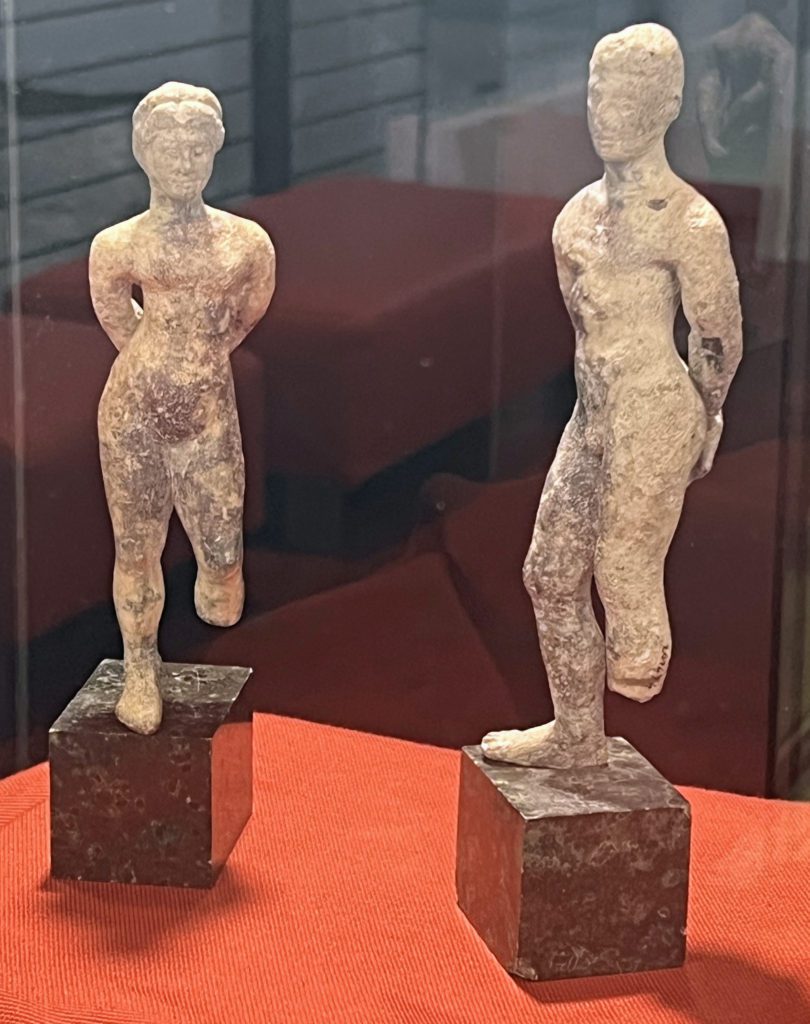
    But the real star exhibit in the museum is these two figures.  They were cast in lead and show remarkable realism for figures manufactured around 300 BCE.

    They are part of a curious mystery.  The tomb in which they were found dates to four hundred years before these figures were produced.  Whoever made them, broke into that tomb and placed them next to a grave without stealing or disturbing any of the other items.  Archeologists have no idea why.

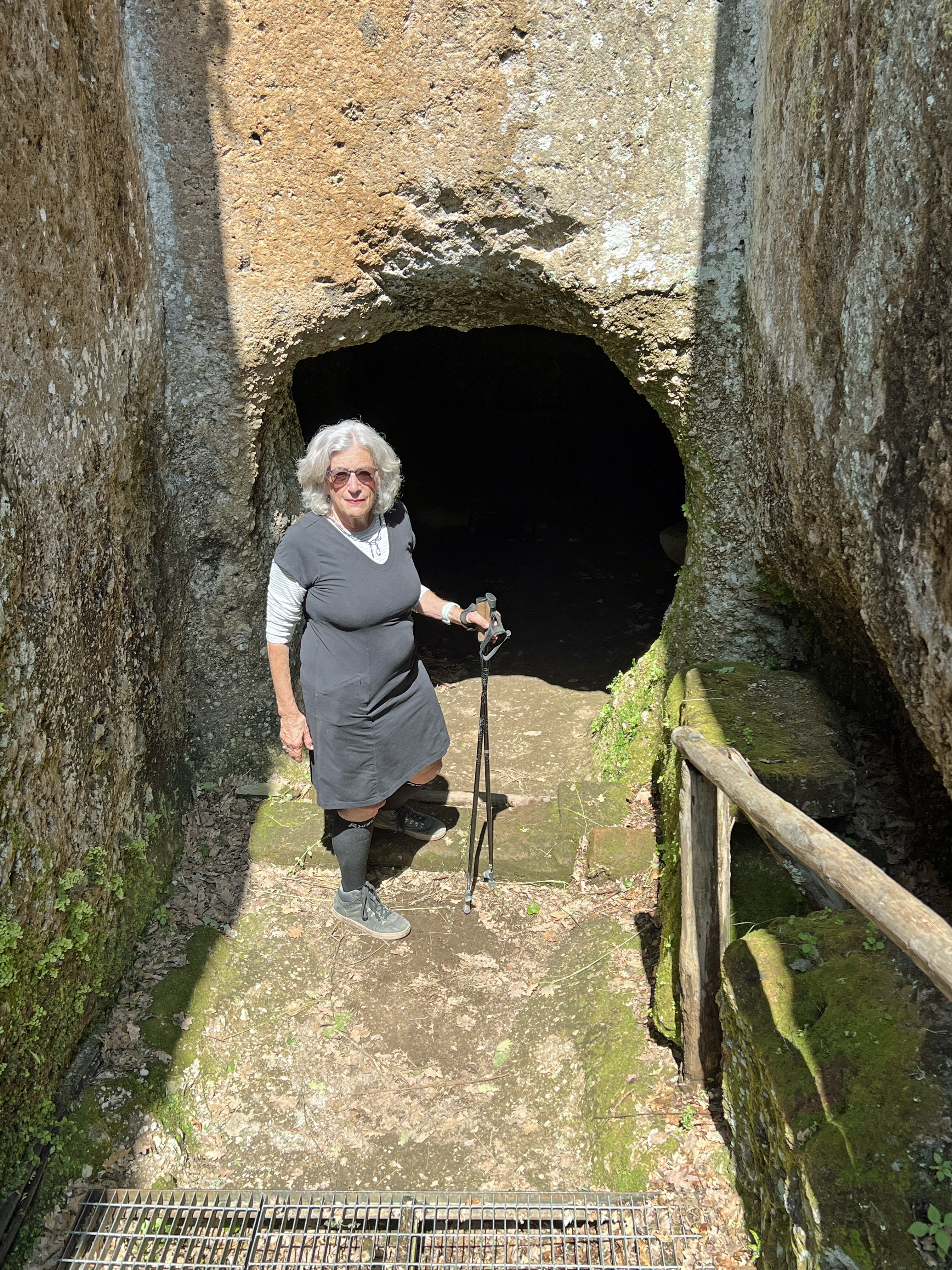
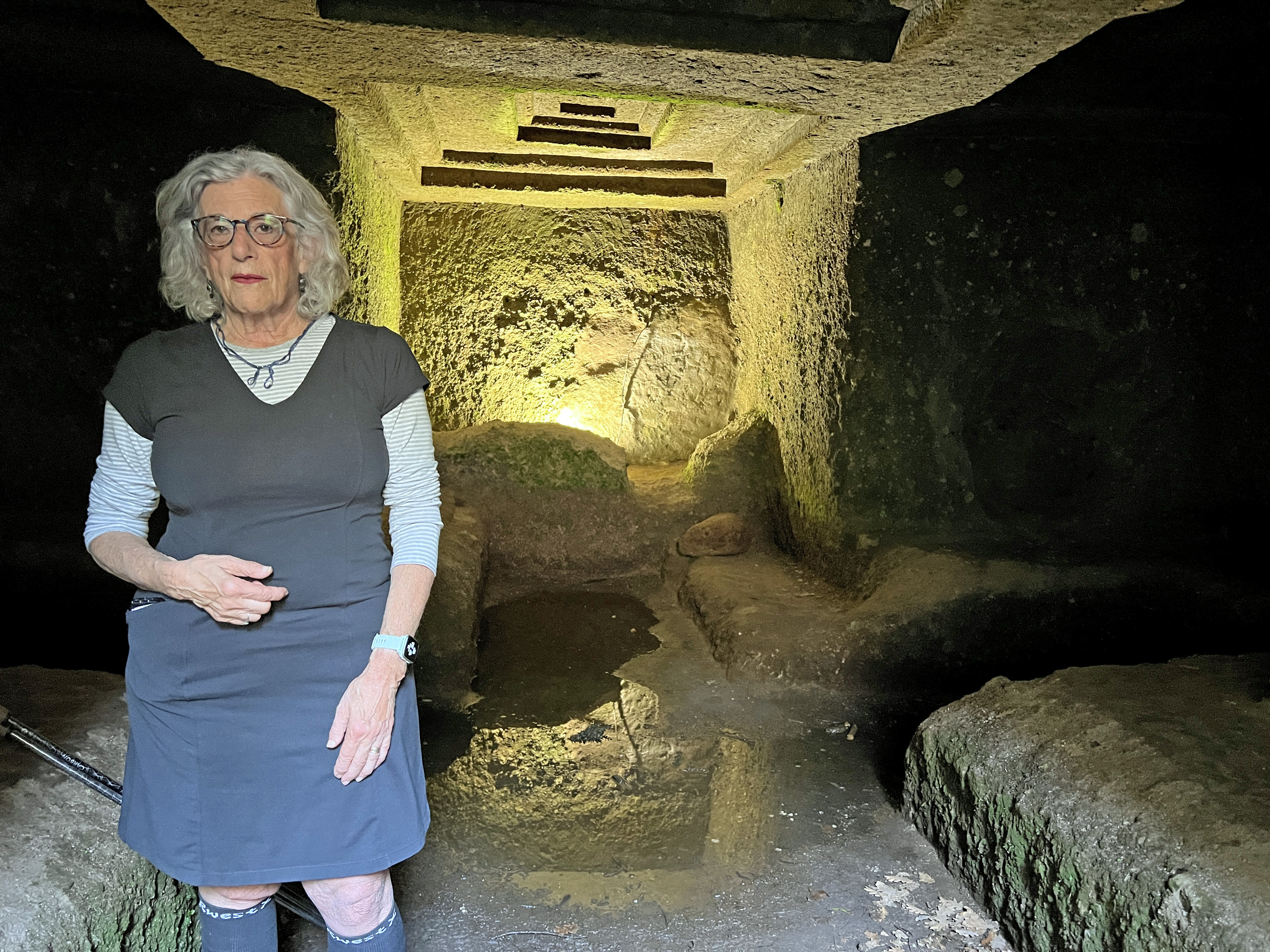
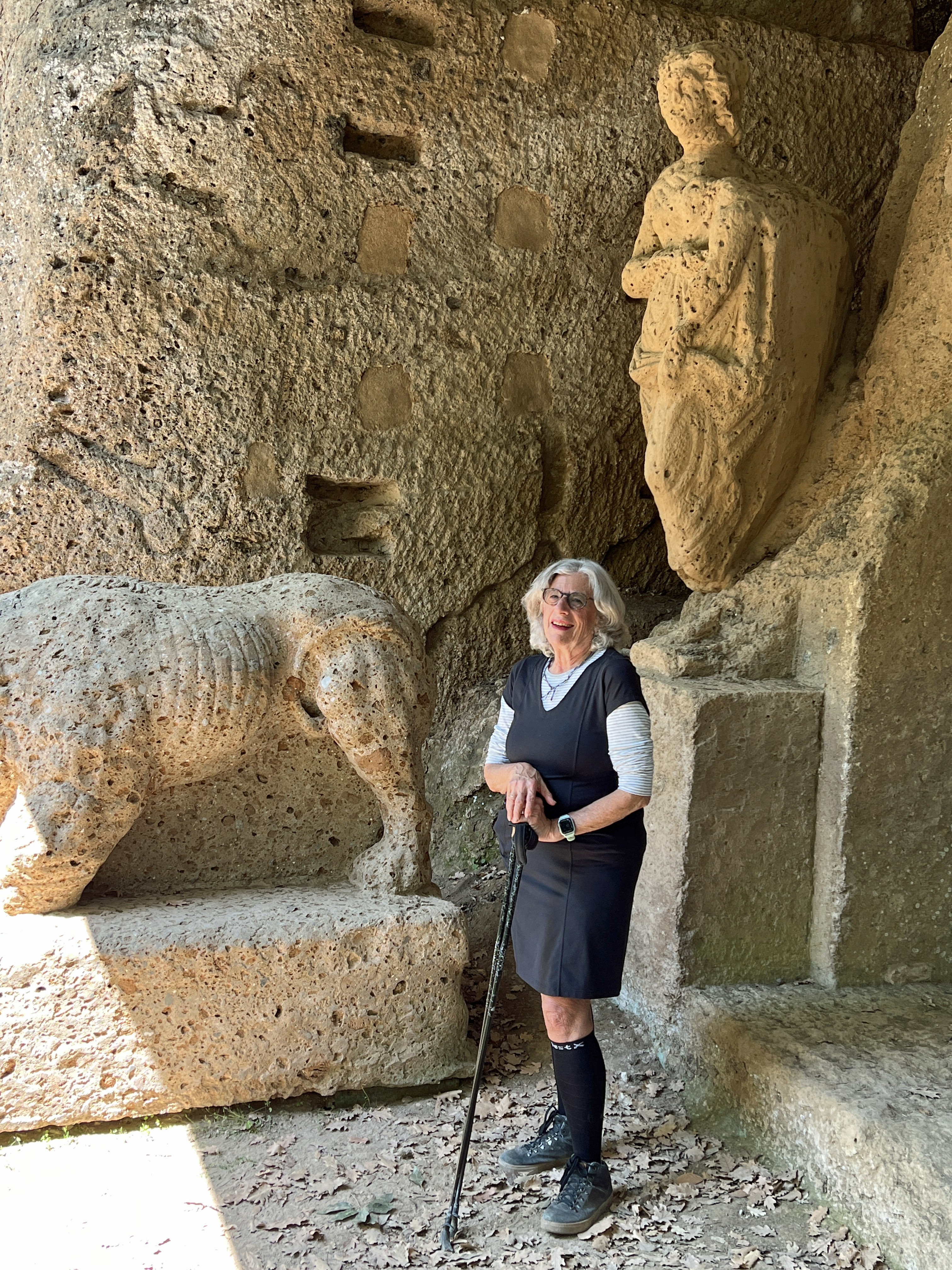
    Not all of the tombs at Citta del Tufo were discovered a century ago.  In this picture, Carol is standing at the mouth of one of the largest tombs at the park.  It was only unearthed in 2004. 

    Beside the large statue of a woman guarding the entrance, there is another of a headless animal…

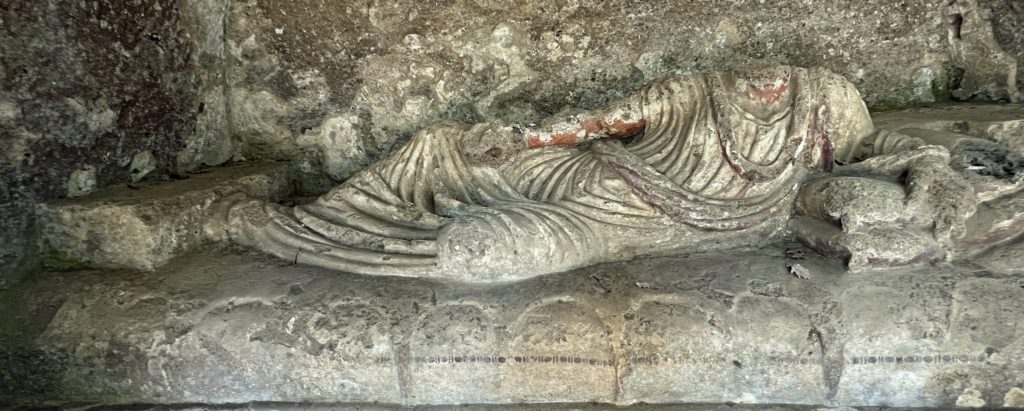
    …and inside the tomb a reclining woman…

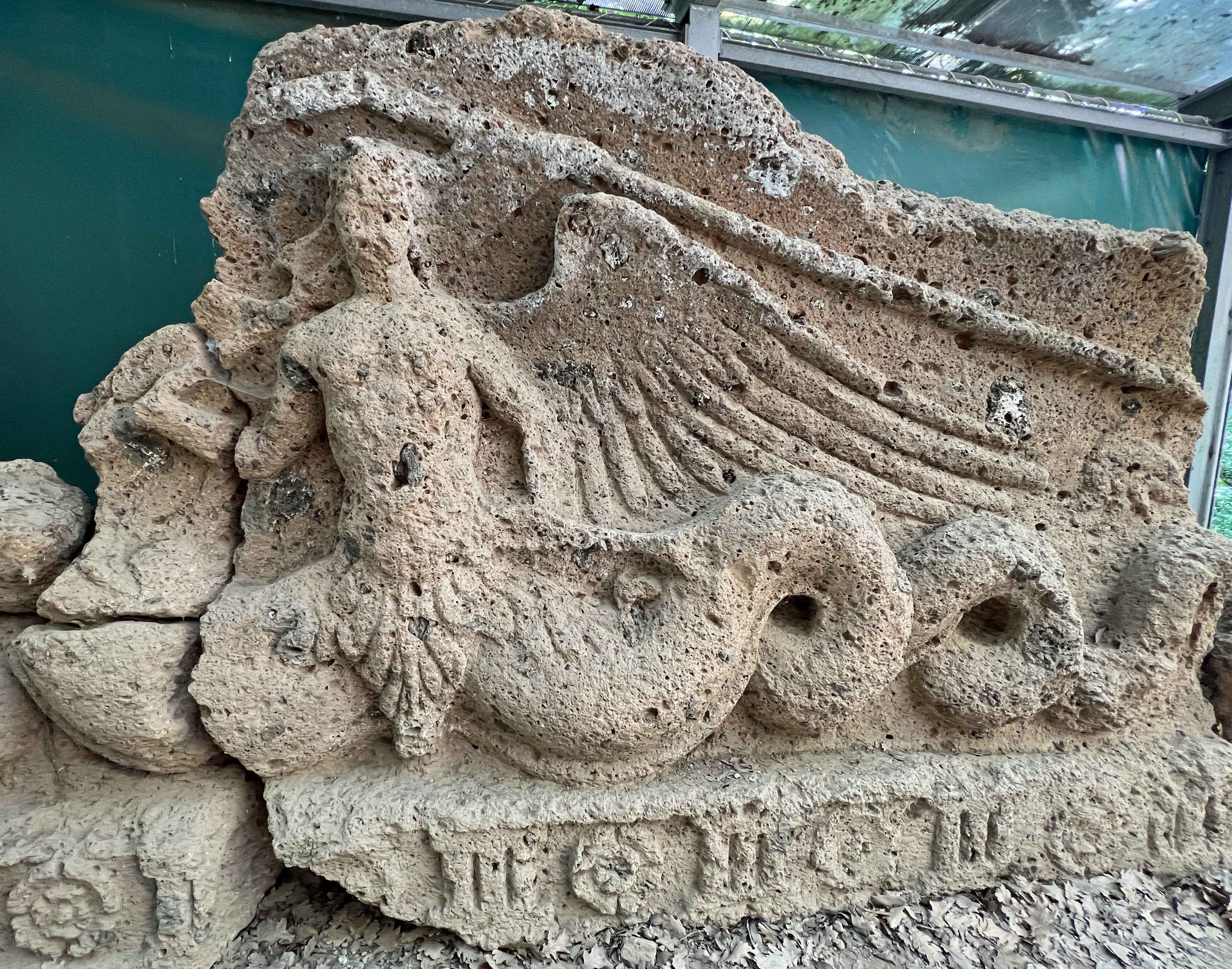
    It is named the Tomb of the Winged Demons, after this figure.  The winged mermaid with two tails was a recurring theme in Etruscan mythology…and one that endured for centuries…even into the Christian era.

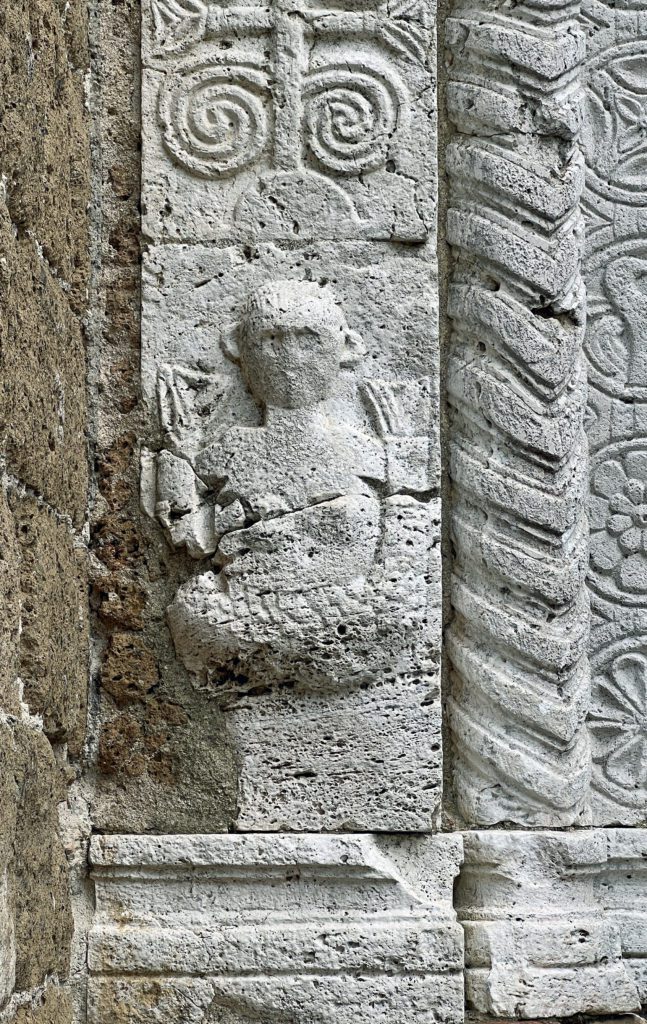
    This same figure appears on the doorway of the Sovana cathedral…and on a Pienza church located adjacent to an Etruscan archeological village…and at the monastery of San Antimo.

    All we saw really blew our minds.  However, the caves and artifacts from the Citta delTufo told archeologists how the Etruscans dealt with death and religion, but not as much about how they lived.

    For that, we had to go 150 km north…to the town of Murlo.

    In the late 1960’s a group of archeologists (some from the University of Massachusetts) began excavating a wooded hilltop next to the town.

    What they found filled in huge gaps in their knowledge.

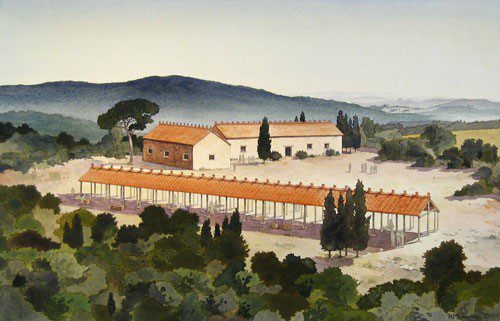
    The site contained the footings for a large home and a nearby workshop.  A fire had destroyed the original house.  The family that lived there rebuilt on the same site several years later, thus providing two sets of artifacts from Etruscan domestic life.

    This picture reproduces what the archeologists learned.  The open-air workshop contained…among other things…a foundry, showing how the Etruscans refined ore and cast their bronze and lead utensils.

    The Murlo museum has tools in metal, stone, and bone taken from the work area.  They tell us how the residents manufactured what they needed for daily life.

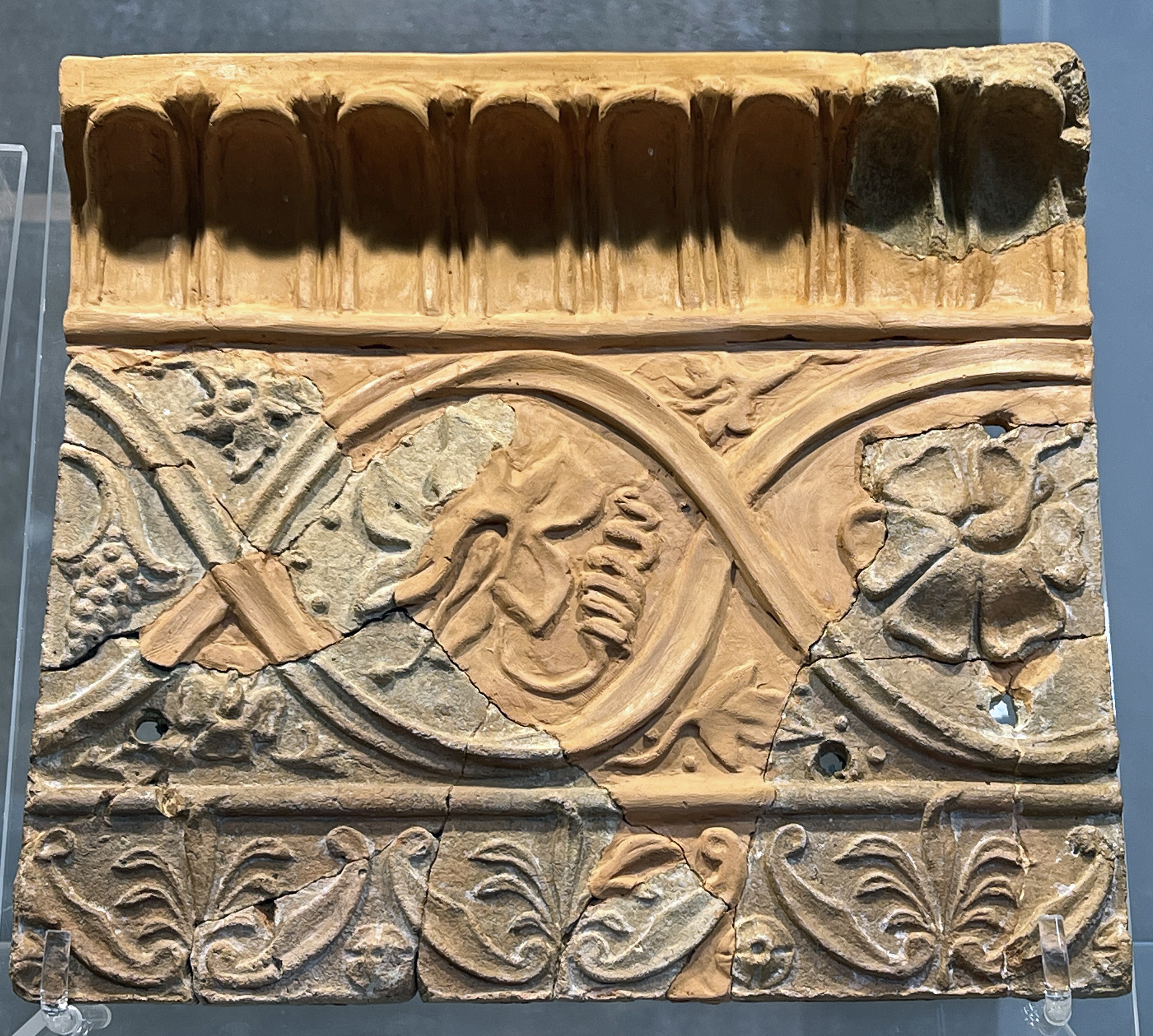
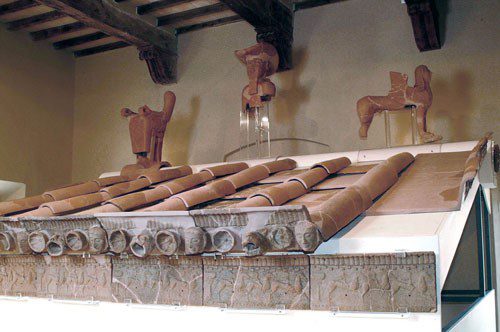
    The archeologists found enough building fragments to piece together the roof of a house…a terra cotta frieze under the eaves of the roof, a terra cotta gutter, and a system of interlocking terra cotta roof tiles that’s still used today.

    In addition, they discovered that these Etruscans placed statuary along the peak of the roof.

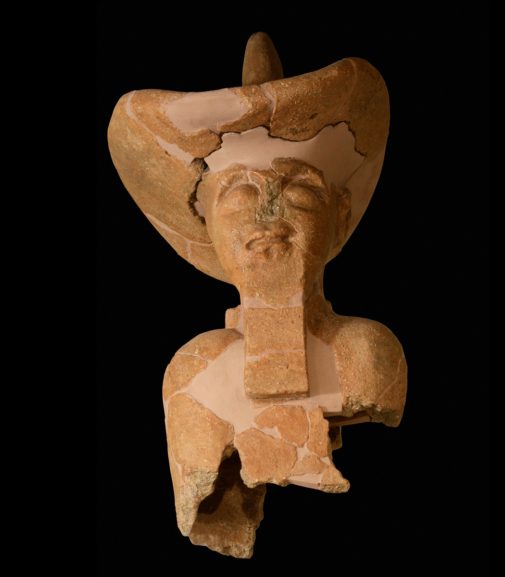
    One of those statues was so unique, he became the symbol of the Commune of Murlo.

  • Sodoma’s Revenge

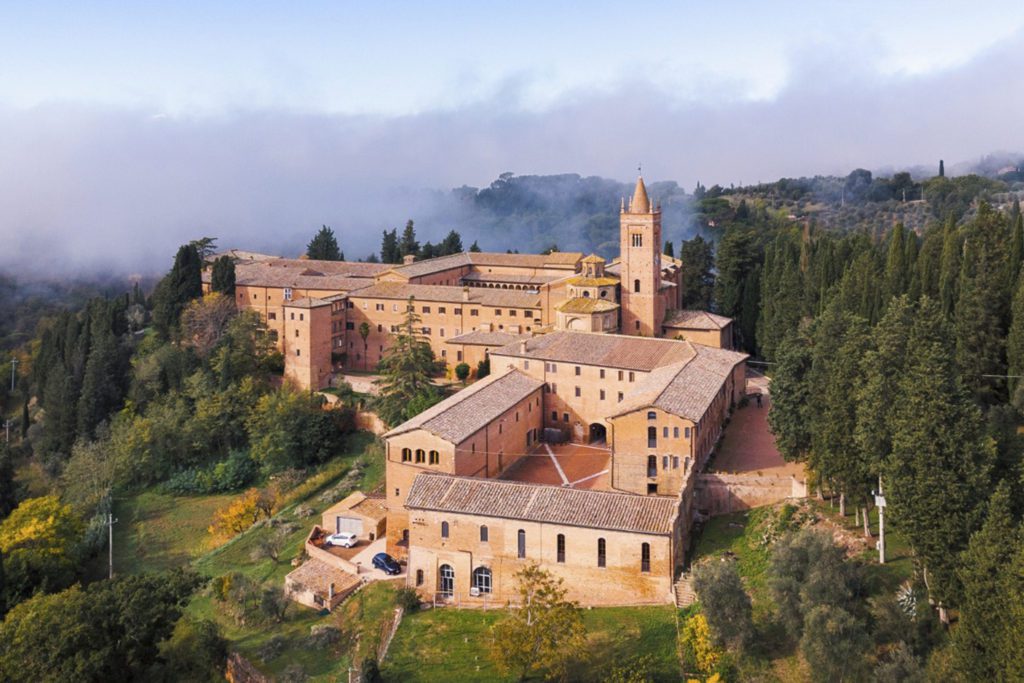
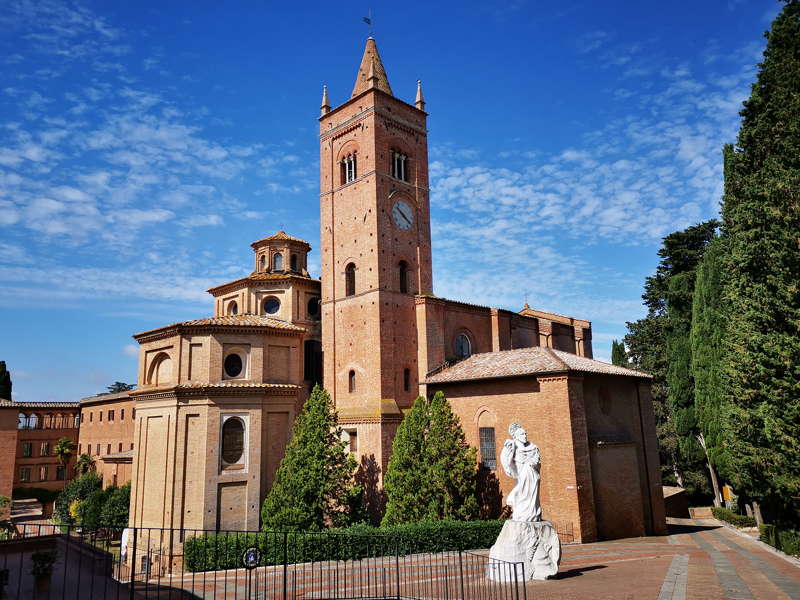
    Our story begins here, at the abbey Monte Oliveto Maggiore, about 34 km northwest of PIenza.

    The abbey was founded in 1313 by the son of a prominent Siena banker. He was looking for the “most desolate place around” to prove that God would provide for the faithful. One of his founding companions was a Piccolomini…an ancestor of the Pope who founded Pienza.

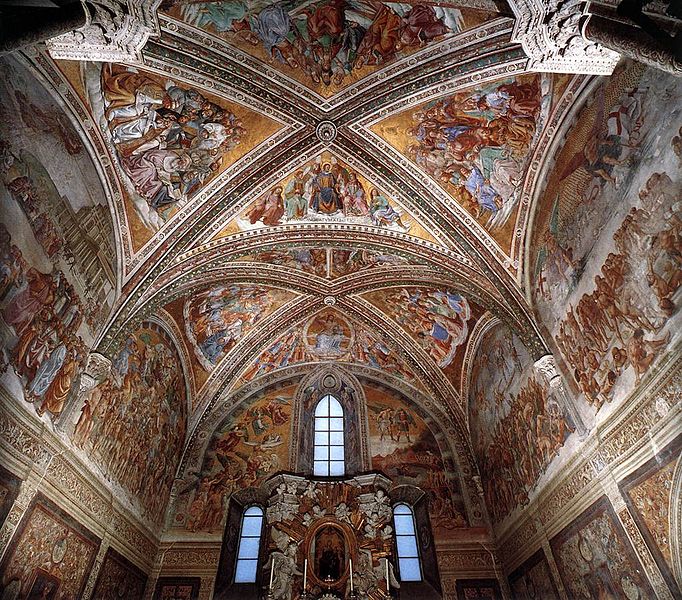
    About 180 years after the abbey was founded, the Benedictine monks hired Luca Signorelli, a prominent artist (he later painted a fresco in the Sistine Chapel), to create a series of frescoes depicting the life of St. Benedict. Signorelli got five of the panels done when he got a better offer…

    …a chance to paint the interior of the duomo (cathedral) in Orvieto. He left the Benedictine monks at Monte Oliveto in the lurch.

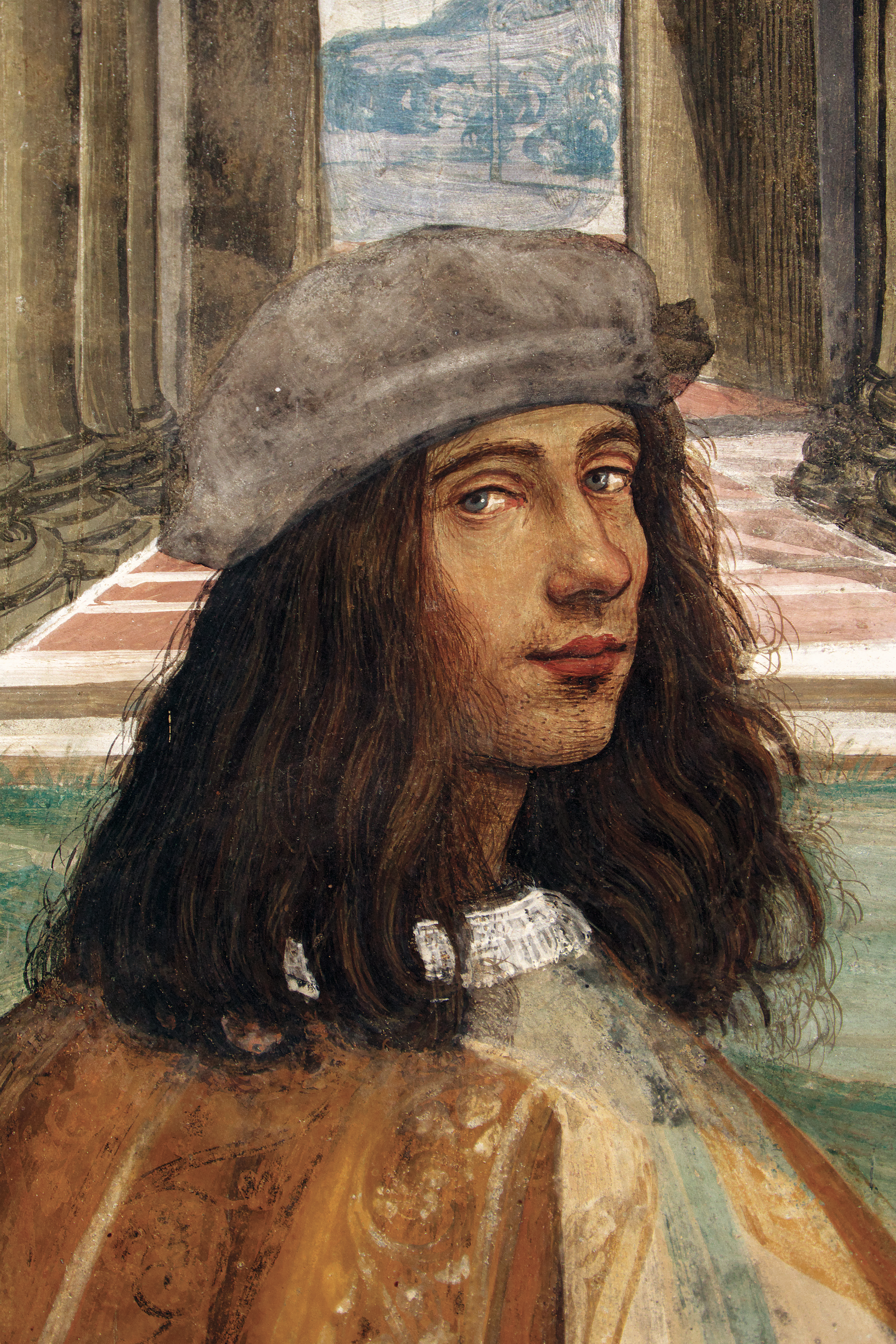
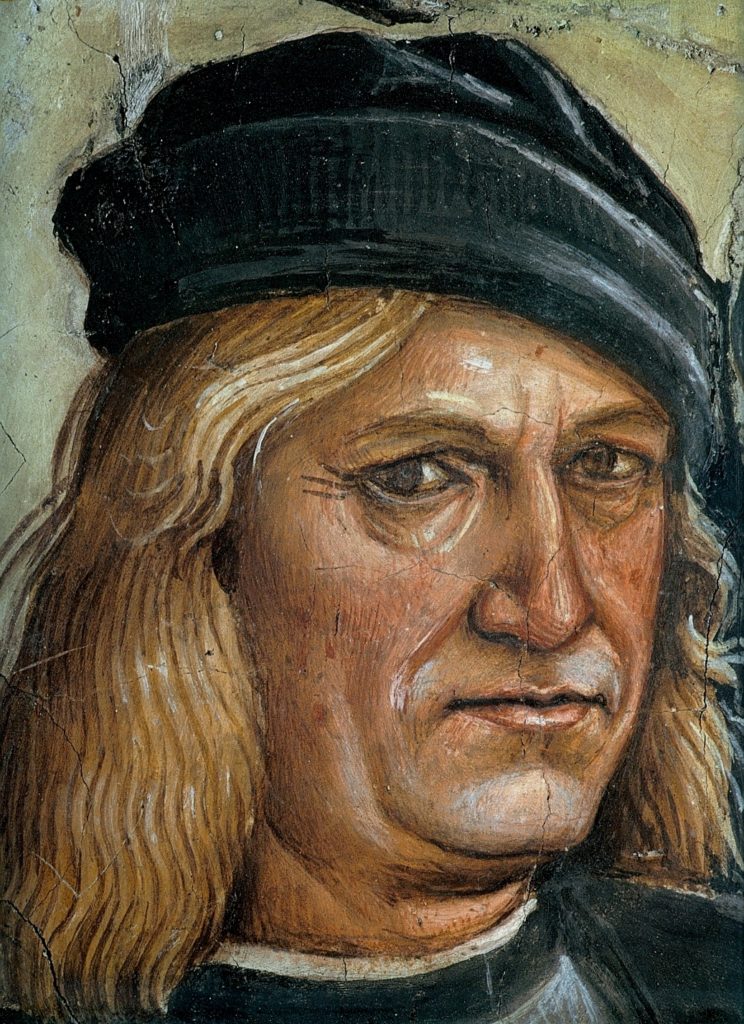
    Enter the protagonist of this story, Giovanni Bazzi…nicknamed Sodoma (Yes, the name means what you think it does).

    The Benedictines hired him to finish the job Signorelli had abandoned.

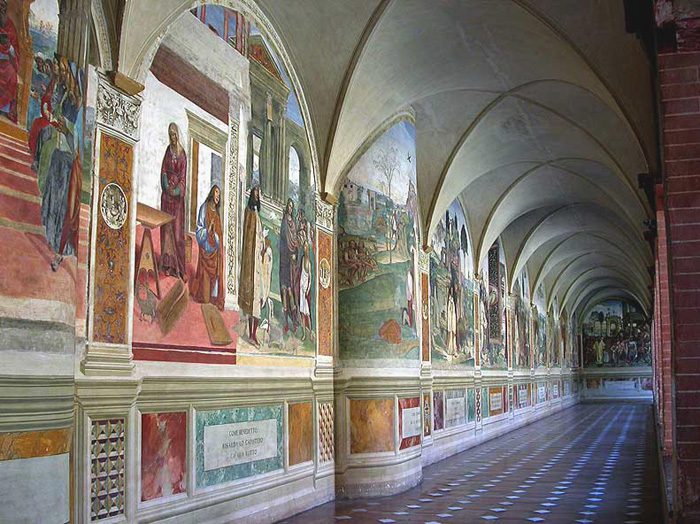
    The frescoes, now 500 years old, line the central cortile of the abbey. Because they are outside, they have been exposed to the weather…

    …and looked somewhat the worse for wear. Fortunately, they have been recently restored.

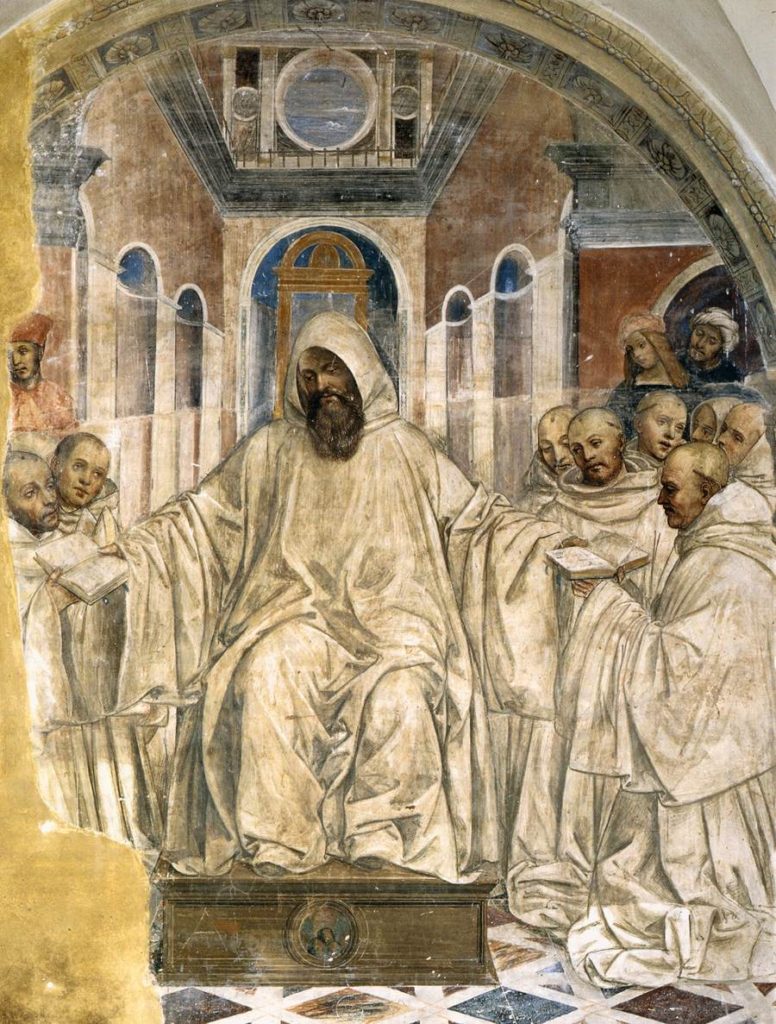
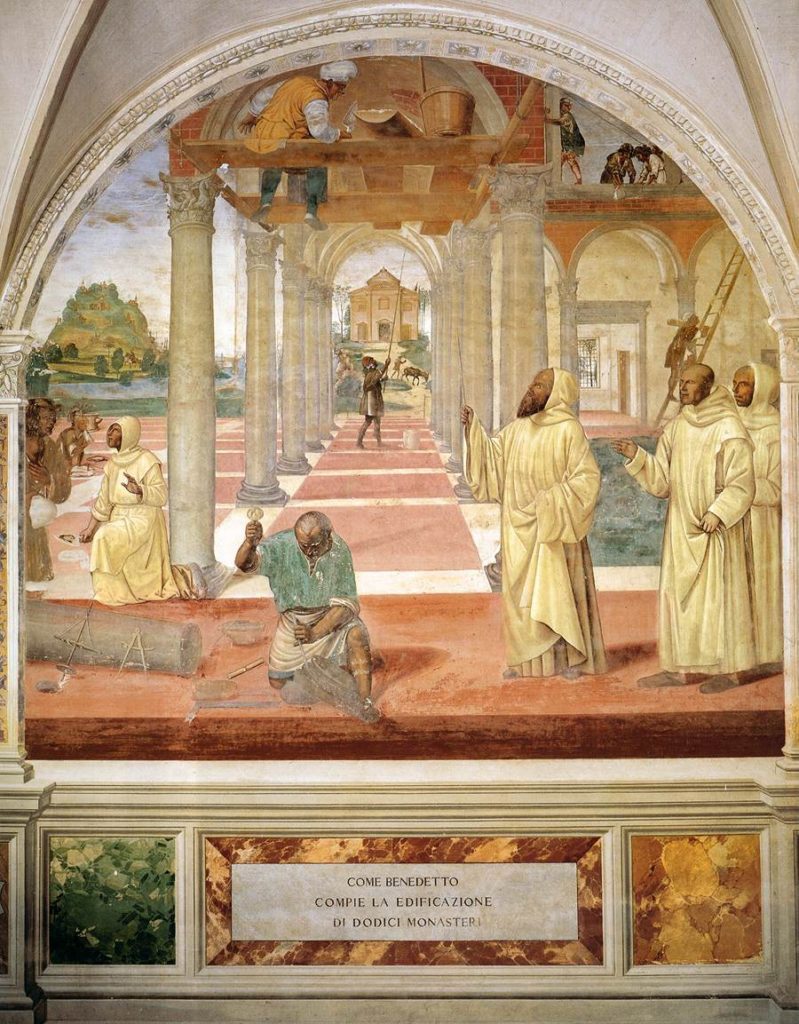
    Some of the panels depict actual events from the life of St. Benedict….

    …like the 12 monasteries he is credited with building in his lifetime…

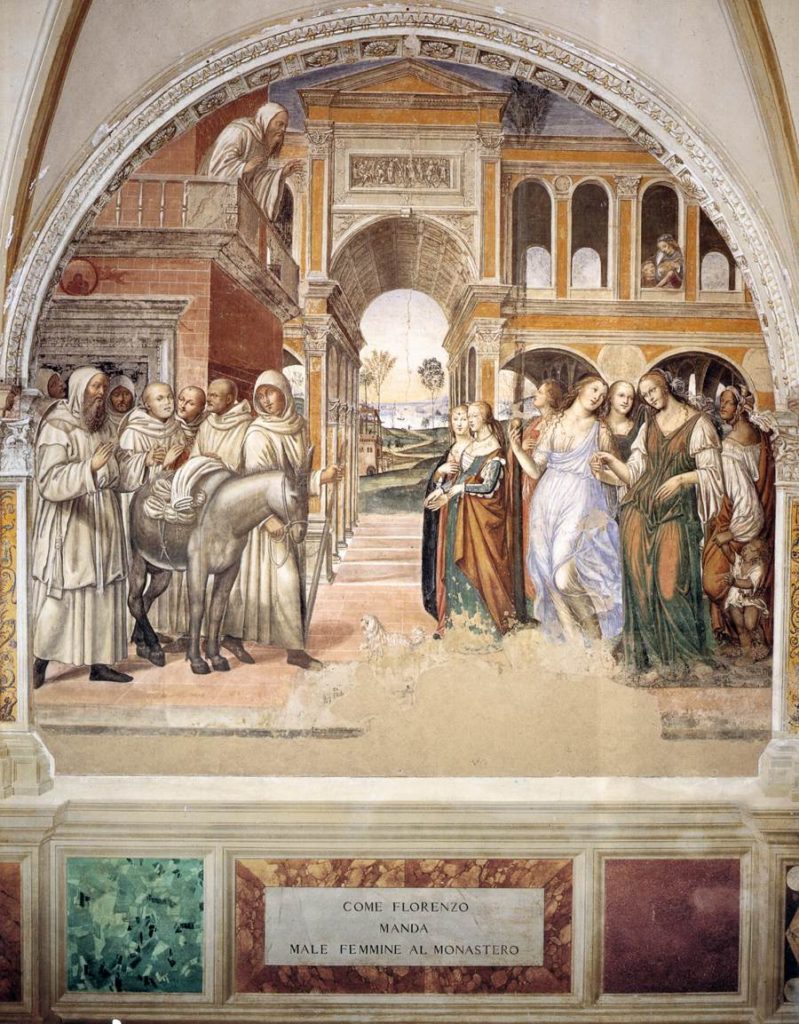
    …or when he drove a group of harlots out of one of his monasteries.

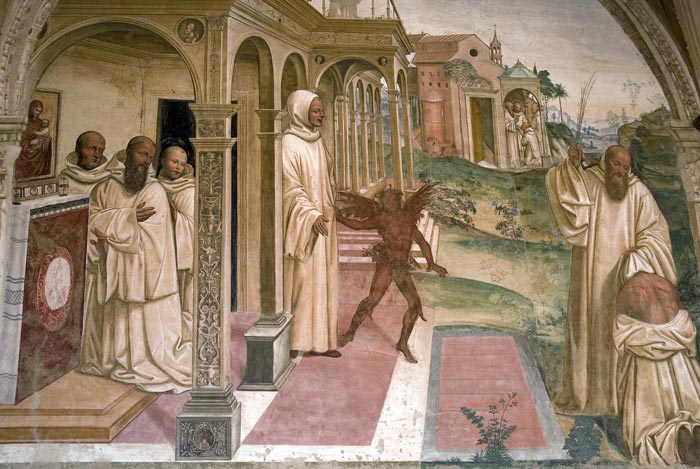
    Others dealt with the miracles with which he is credited…like this panel where he beats one of his monks to exorcise the devil from his soul.

    Apparently, the monks at Monte Oliveto were happy with his work…

    …because they recommended him to paint another series of frescoes at another Benedictine monastery, Santa Anna in Comprena (about 7 km north of Pienza).

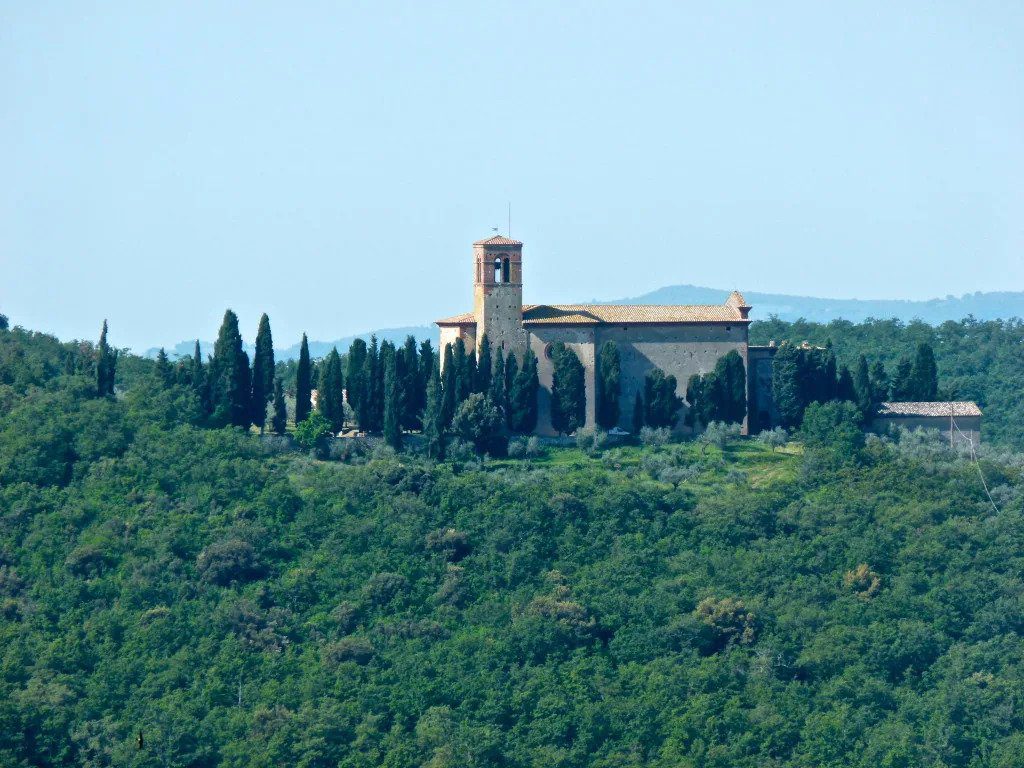
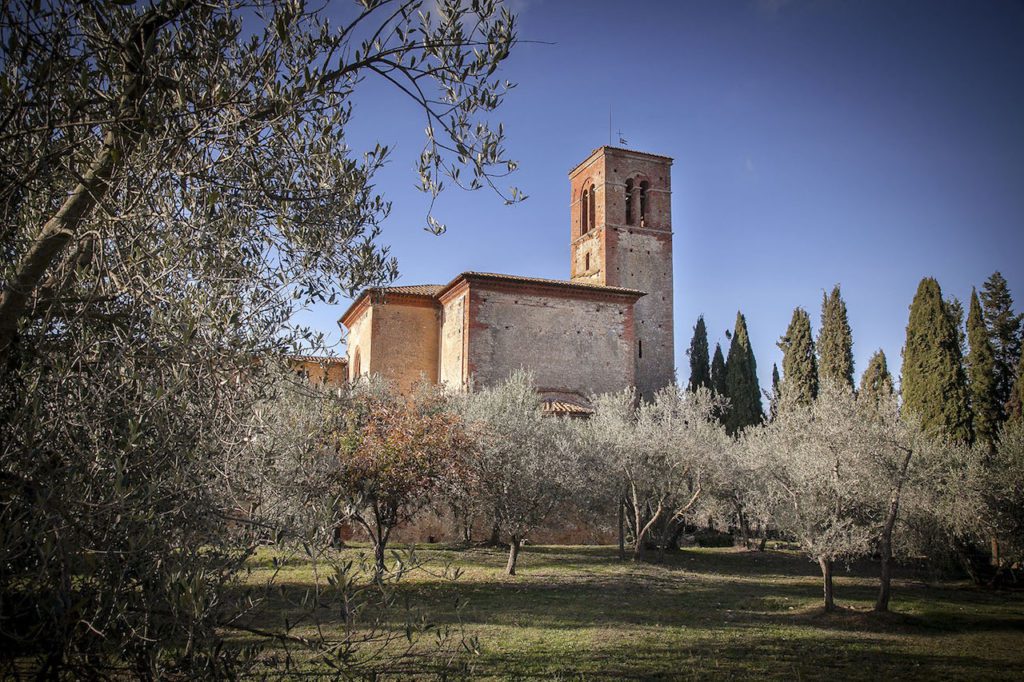
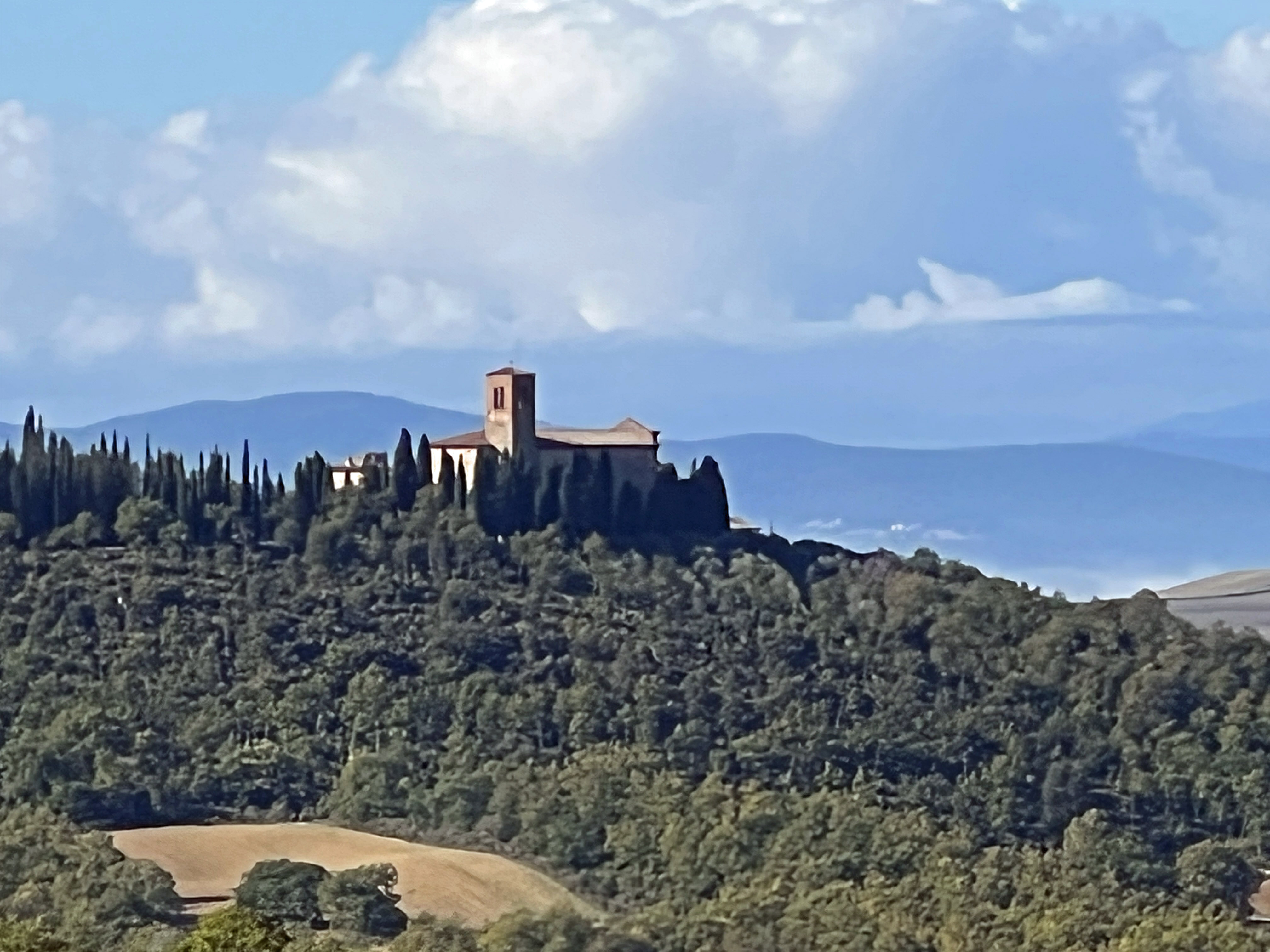
    This is the monastery we can see when harvesting olives. It was the location where The English Patient was filmed.

    It has been retired as a monastery and is now an upscale bed and breakfast.

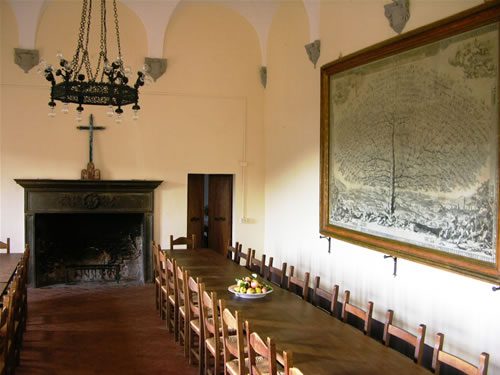
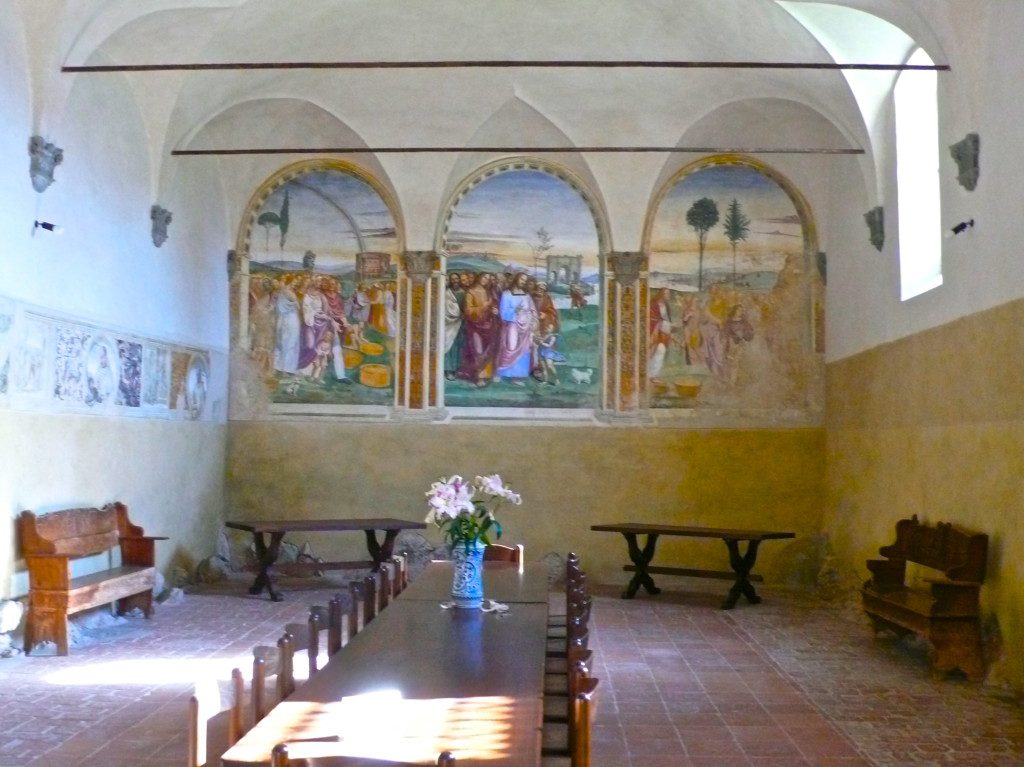
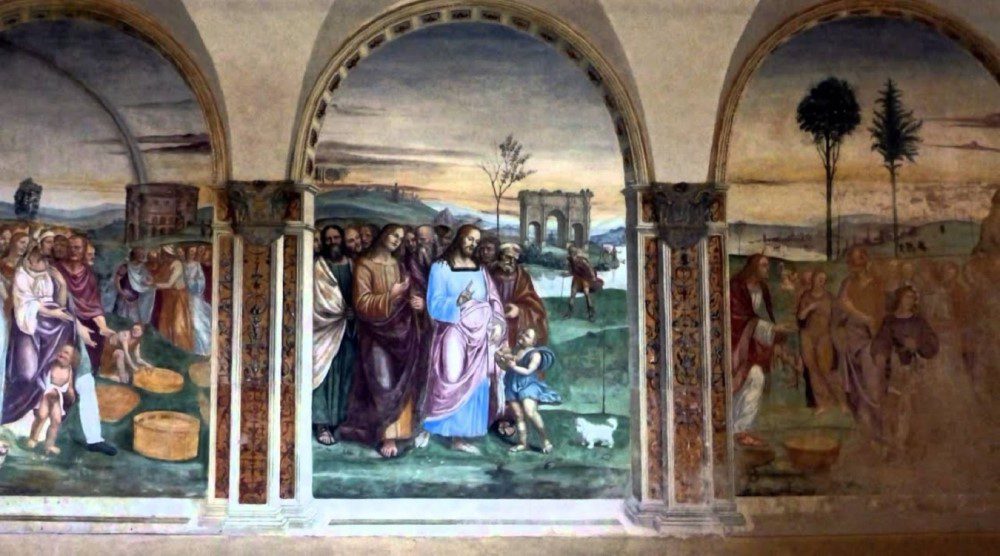
    On our first trip to Italy, Carol and Roger had the privilege to eat dinner in what had been the abbey’s dining room. It’s where Sodoma’s second set of frescoes are.

    Legend has it that after Sodoma finished his work at Monte Oliveto Maggiore, he got into a dispute with the monks there over what he should have been paid.

    The dispute was not settled to his satisfaction, so he took out his revenge on the Benedictines at Santa Anna in Comprena.

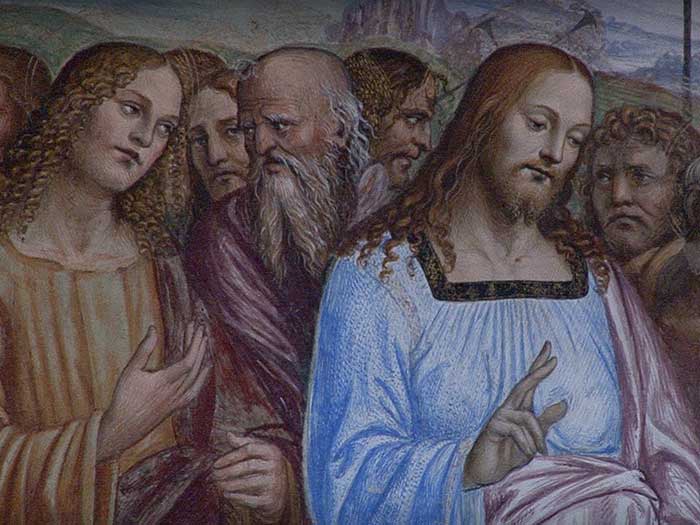
    Take a close look. Sodoma painted Jesus with a woman’s breasts. This may not seem shocking today, but it was scandalous in that era.

    That was Sodoma’s revenge.

  • Un Bel Tramonto (A Beautiful Sunset)

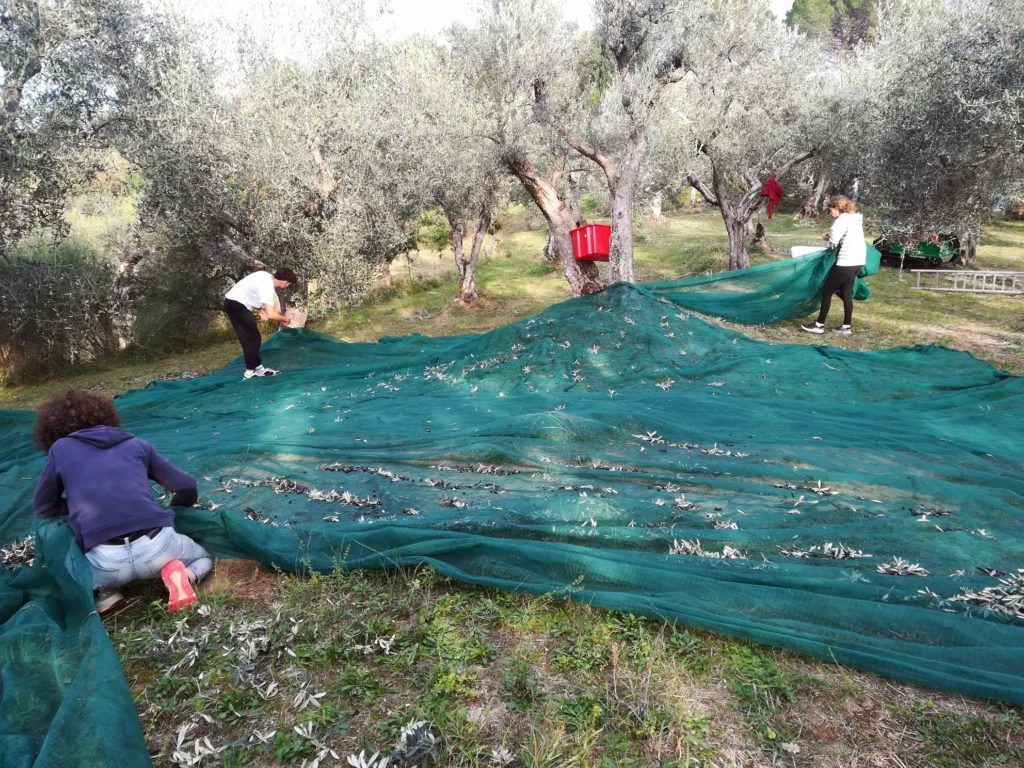
    This year’s Tuscan olive harvest is in full swing.

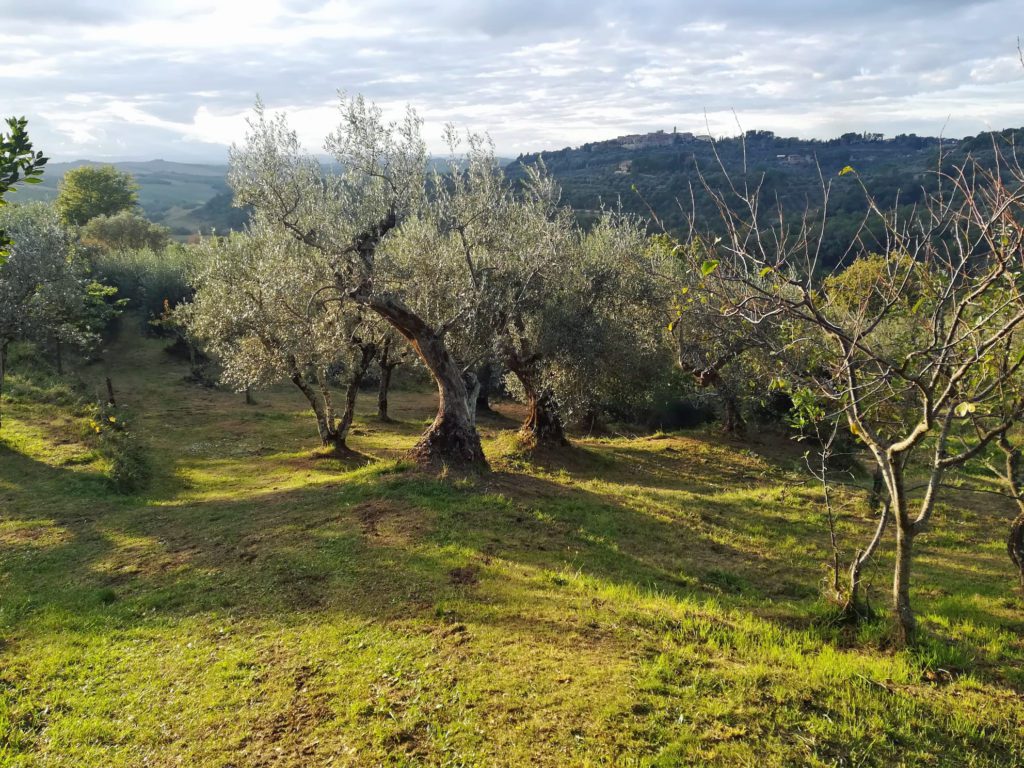
    From the orchard where Roger is helping with the harvest, there is a spectacular view of the historic abbey of Santa Anna in Comprena…the setting where the 1996 Oscar-winning movie The English Patient was filmed. (The abbey holds an interesting footnote in art history, but that’s a story for another day.)

    It’s been an unusually dry year, so the question was, how good would this year’s harvest be?

    For a primer on the local olive oil industry, see our blog post https://rbergson.org/olive-oil/

    For a look at how the olive harvest can vary from year-to-year, see https://rbergson.org/after-the-pestilence/

    Last year was a bad year for olive oil. Four days’ work harvesting produced only seven liters of oil.

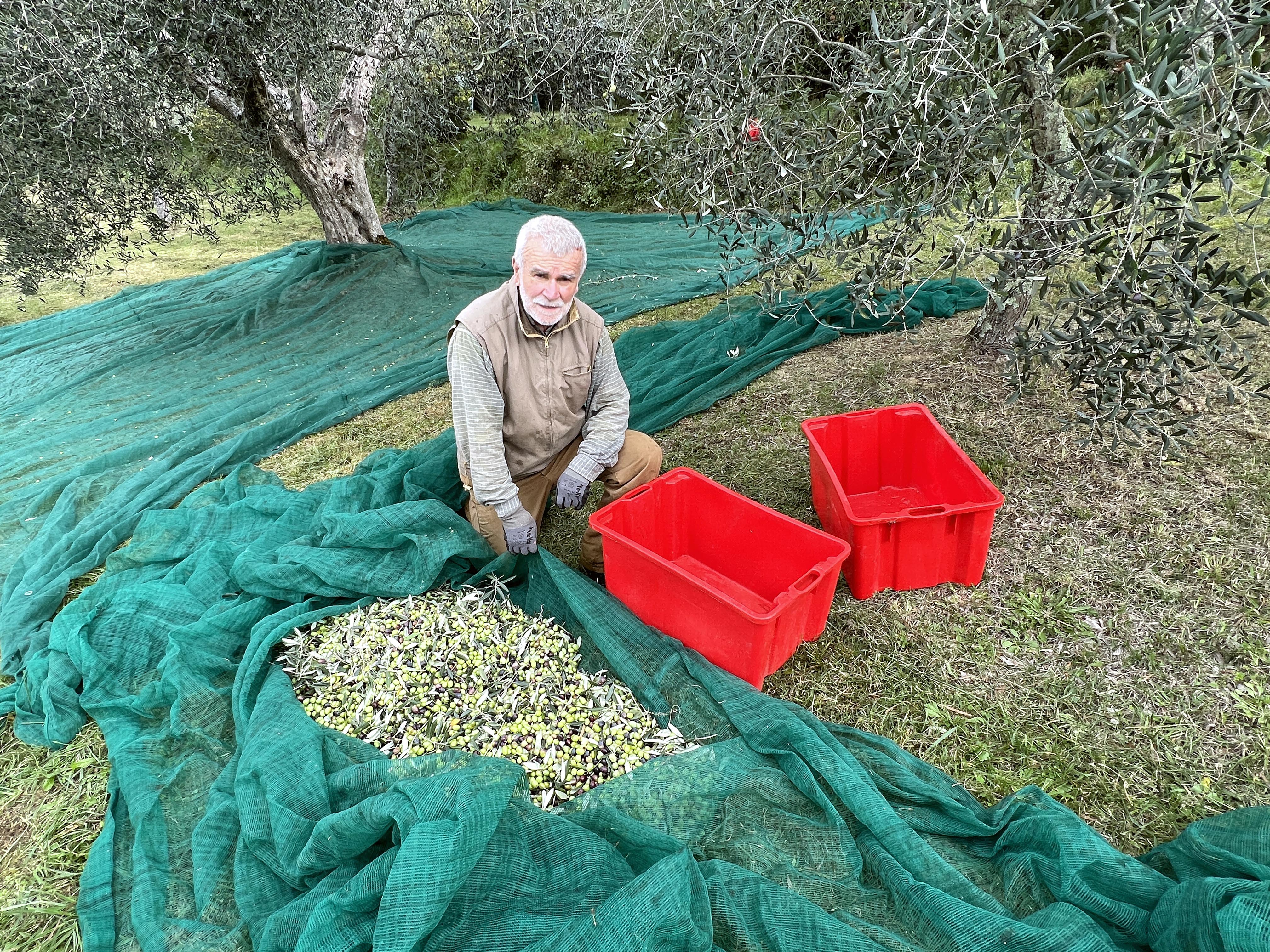
    This year was much better. This photo shows the yield from the first tree.

    We harvested 800 kg of olives this year (1,800 lbs)…enough to produce a total of 130 liters of oil. (In case you don’t want to do the math, that’s almost 20 times as much as the year before).

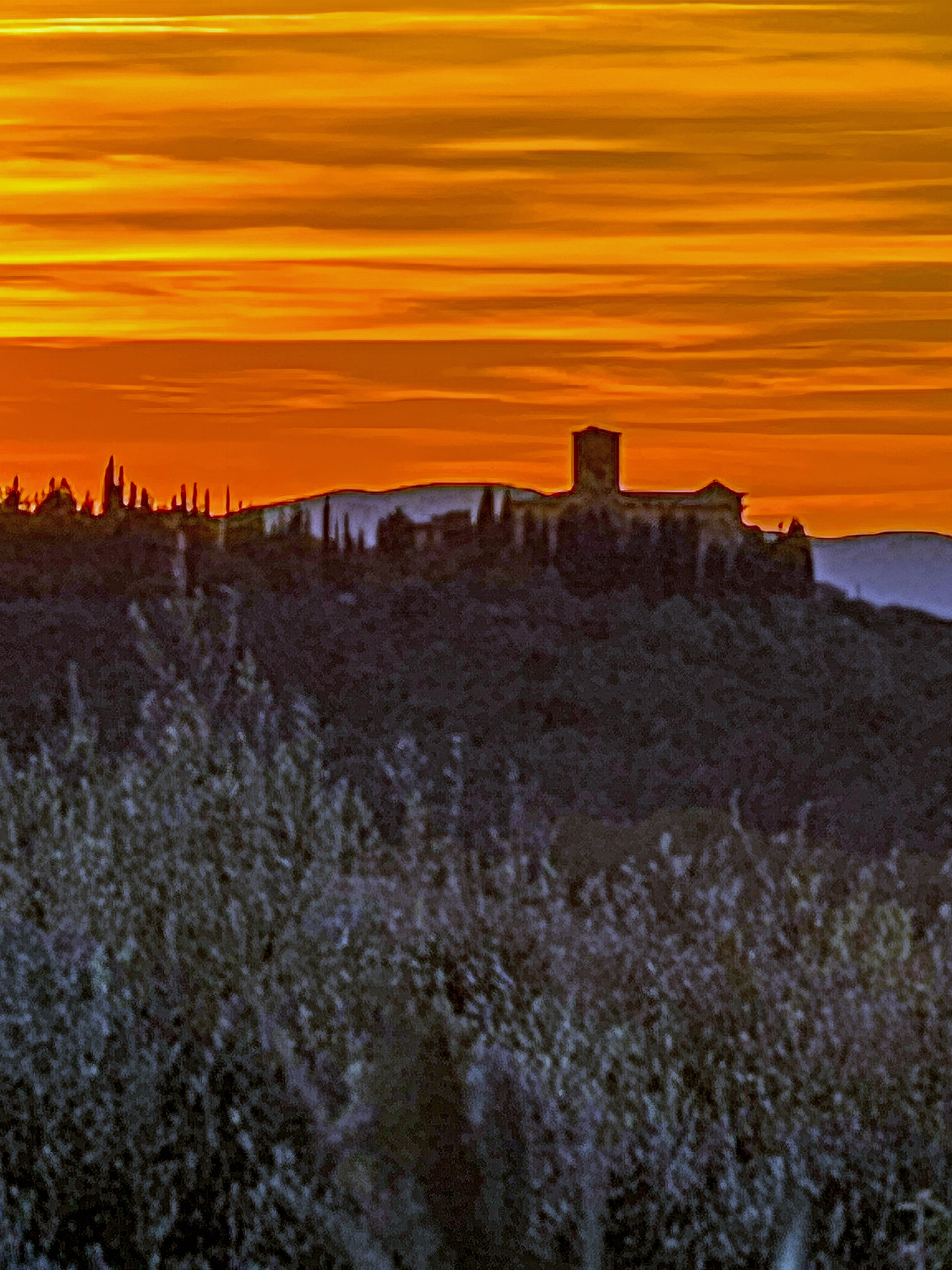
    But just as rewarding as the size of the harvest was seeing the sun set at the end of each workday over Santa Anna in Comprena.

  • A Living Legend

    A year ago, we went to visit Rosa Moretti and her husband Francesco Iovino in Calabria (the toe of the Italian boot). This year, it was their turn to return the favor.

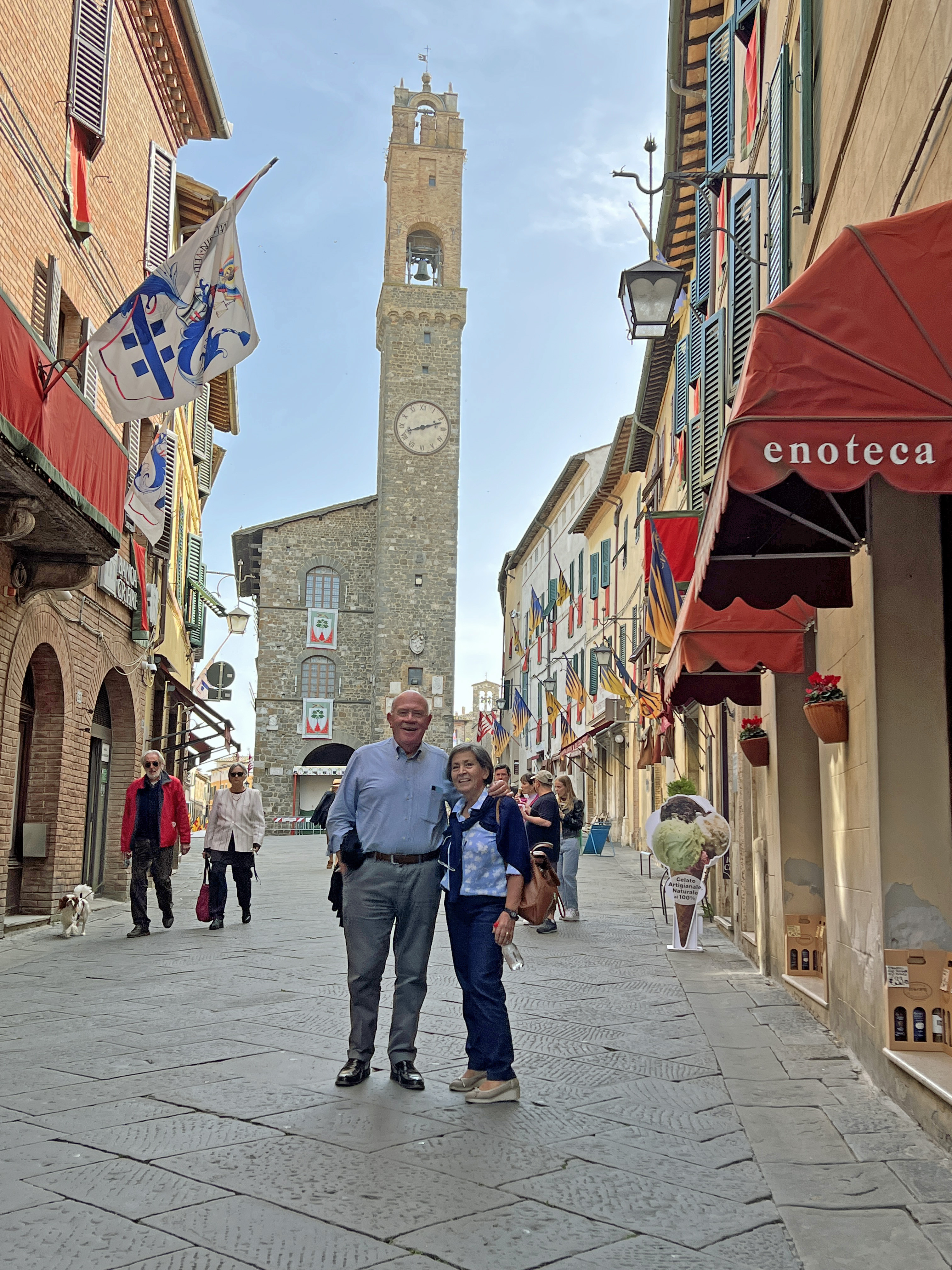
    We spent a day in and around Montalcino (in this photo, they are standing in the city’s main piazza) visiting an abbey built by Charlemagne, walking around the historic city center, and…since it’s Montalcino…tasting wine.

    Carol and Roger try to avoid large corporate wineries who sell in the USA. Instead, we prefer small family-owned wineries, not well-known in America.

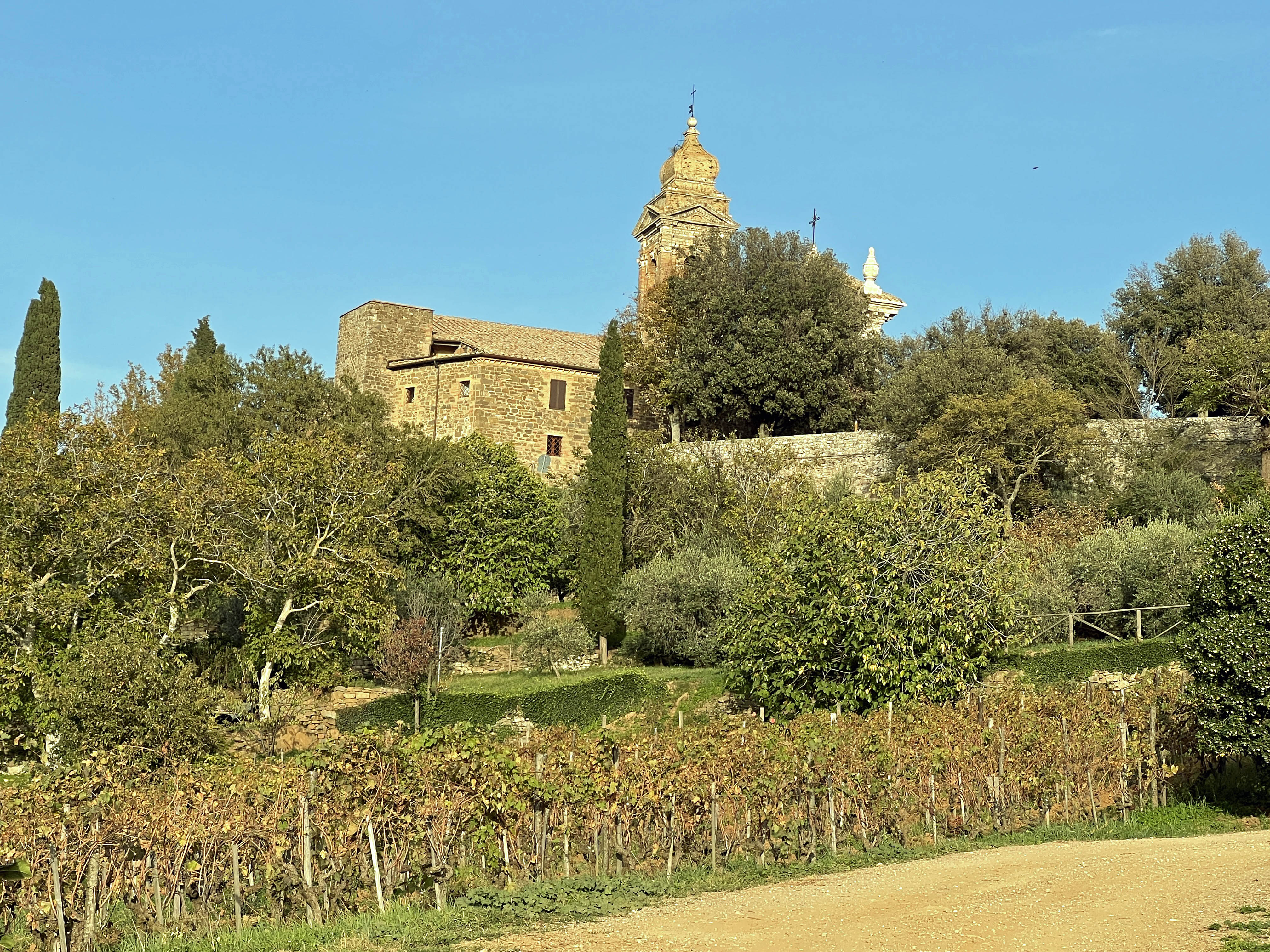
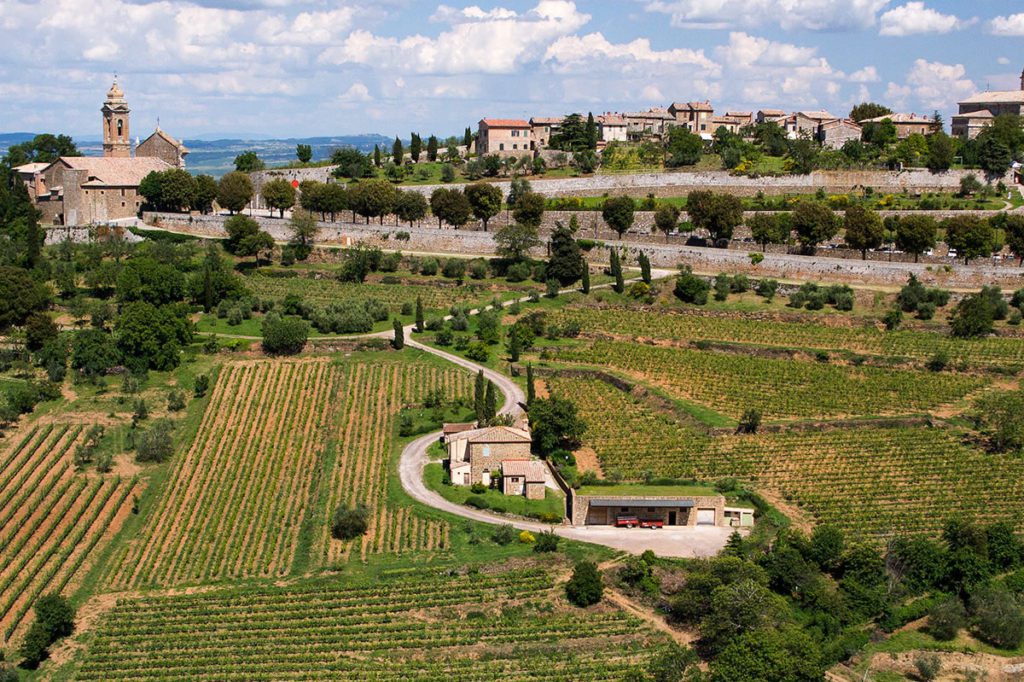
    We found one literally under the 14th century walls of the centro storico (historic city center), tucked behind the church of the Madonna of Soccorso.

    Little did we know what was in store for us.

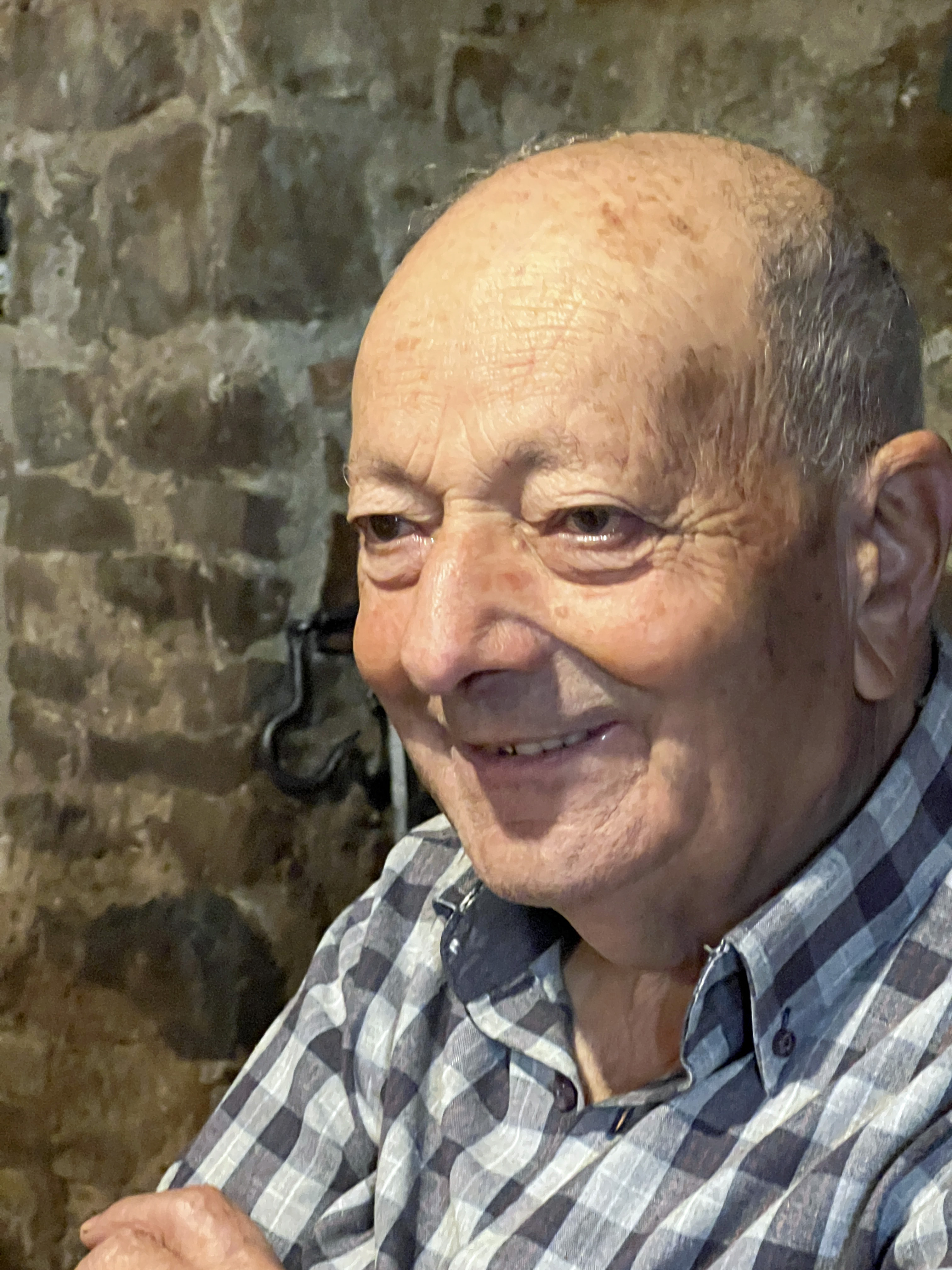
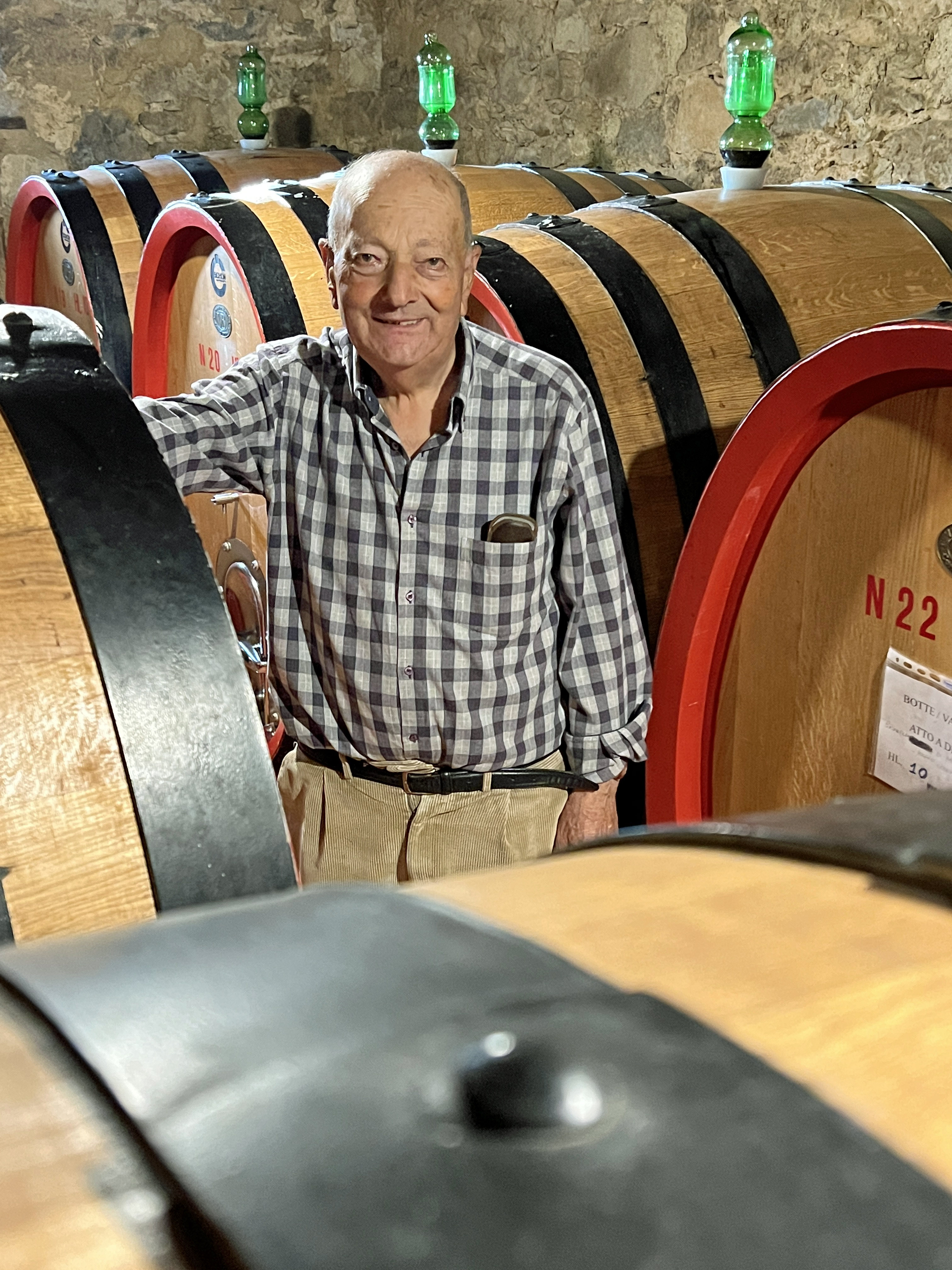
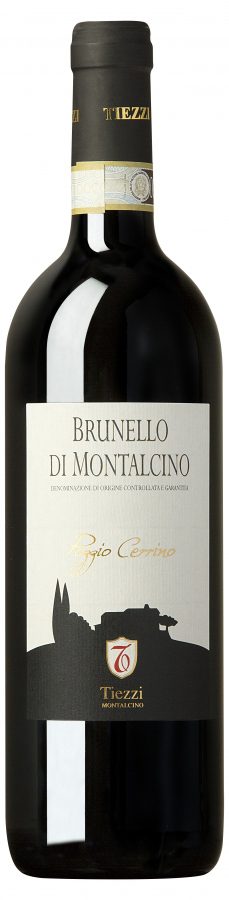
    We were greeted at the door by a man who is a living legend in the Montalcino wine business…Enzo Tiezzi.

    Born in the 1930’s, Enzo started working in wineries while still a teenager. He told us he’s been making Brunello for 60 years. (That’s not a typo…sixty years!)

    But his longevity in the business is only one point on his long list of credentials:

    • He has a PhD in Enology (winemaking) from the University of Firenze.
    • He’s a visionary. His 1977 doctoral dissertation “Brunello di Montalcino and Its Future Prospects,” predicted how Brunello could become one of the world’s great wines, much to the disbelief of the faculty on his review committee.
    • He’s considered the father of Rosso di Montalcino, Brunello’s younger sibling.
    • He was president of the Brunello Growers’ Consortium during turbulent times. Other long-time members tout his respect for the tradition of the wine and his patience resolving heated disputes.
    • And finally, as an enological consultant, he advised many of his competitors…helping them improve their wine.

    Why would a winemaker share his considerable expertise with his competitors? Why would he help his rivals improve their wine? This is a key difference between the Italian and American business models. The Brunello Growers Consortium limits the number of hectares (acres) authorized for production. The rules limit the yield per acre. This effectively caps the quantity of wine produced each year. You can’t increase profits by selling more wine, but you can improve the image of the brand and thus the chances of selling your product for a premium price.

    For 30 years, Enzo worked at other wineries, eventually becoming manager of Col d’Orcia…one of the bigger producers.

    But he yearned to have his own winery.

    Finally, in the 1980’s, his opportunity came.

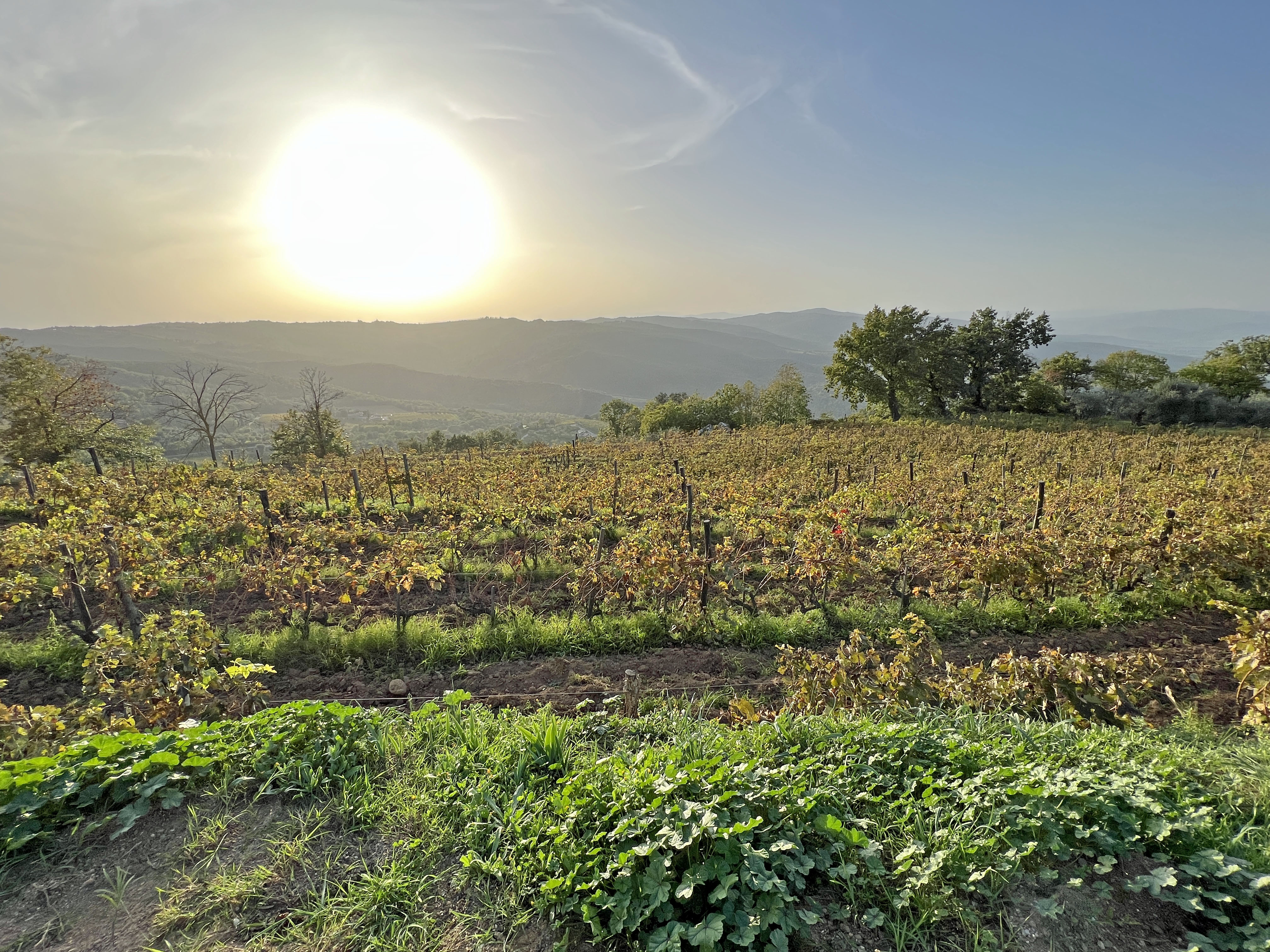
    He purchased two small vineyards about three km north of Montalcino…along the Brunello Road.

    A few years after that a special opportunity presented itself.

    Podere Soccorso, the vineyard below the church, became available.

    With the vineyard came history and tradition.

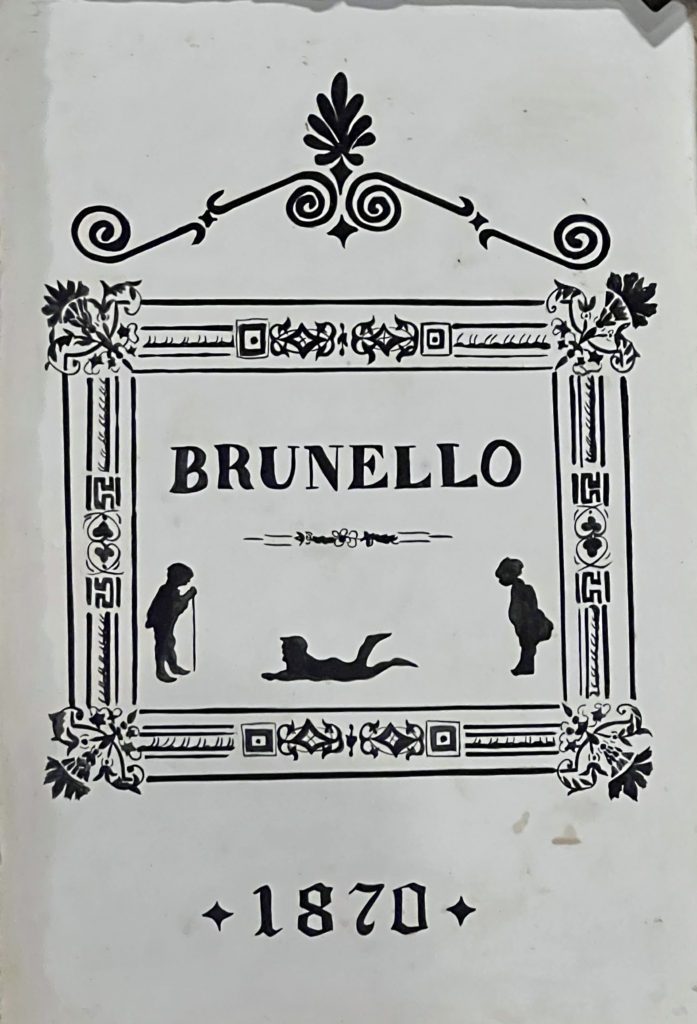
    Riccardo Paccagnini started producing a wine he called “Brunello” from this vineyard in 1870…more than 100 years before the name became official.

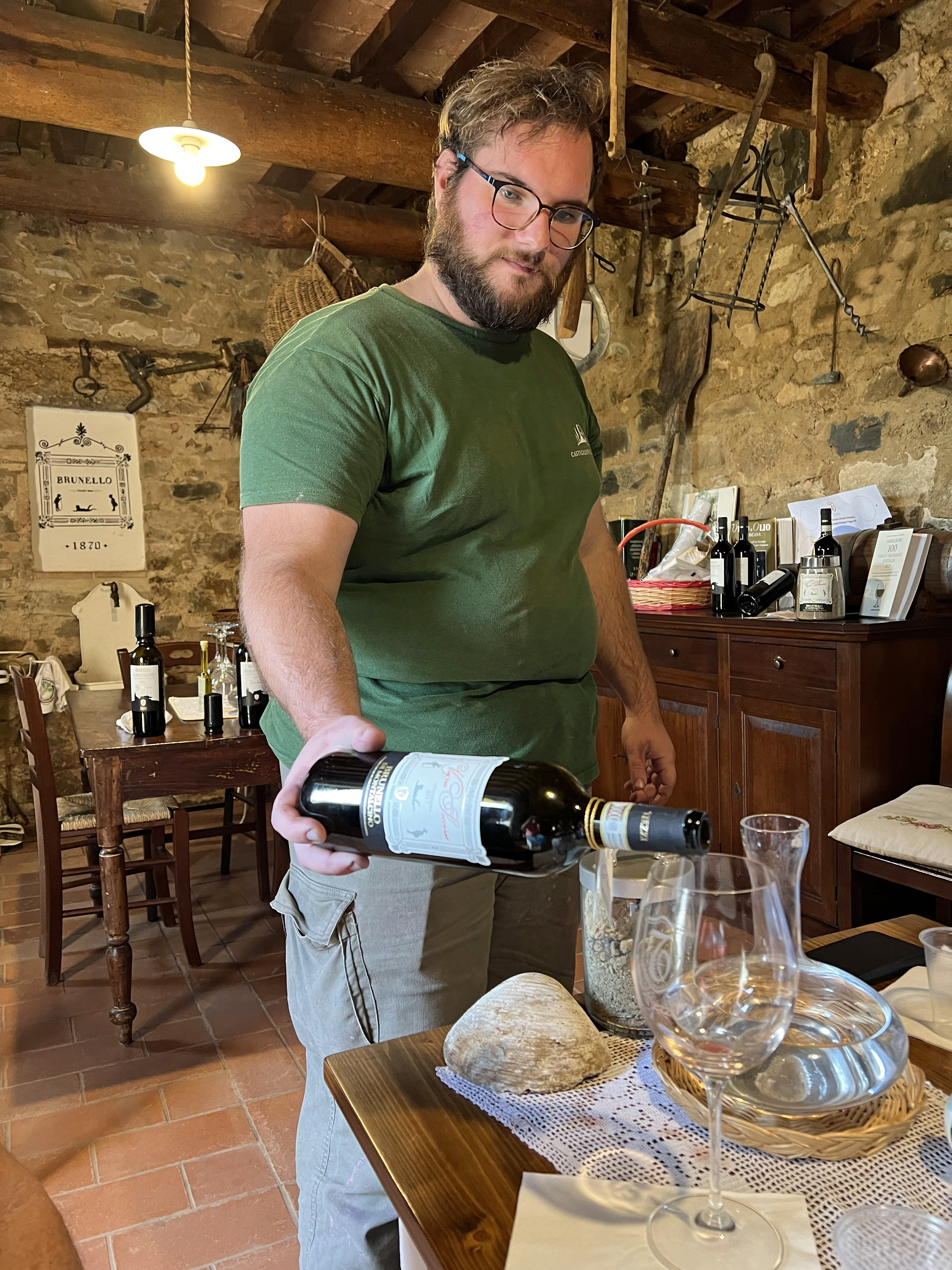
    Our tour of the winery was led by Matteo Tommasi. We immediately knew we had come to the right place right as soon as he introduced himself. As he greeted us, we saw his hands were stained purple from the grape crush. This was somebody who made the wine he would have us taste.

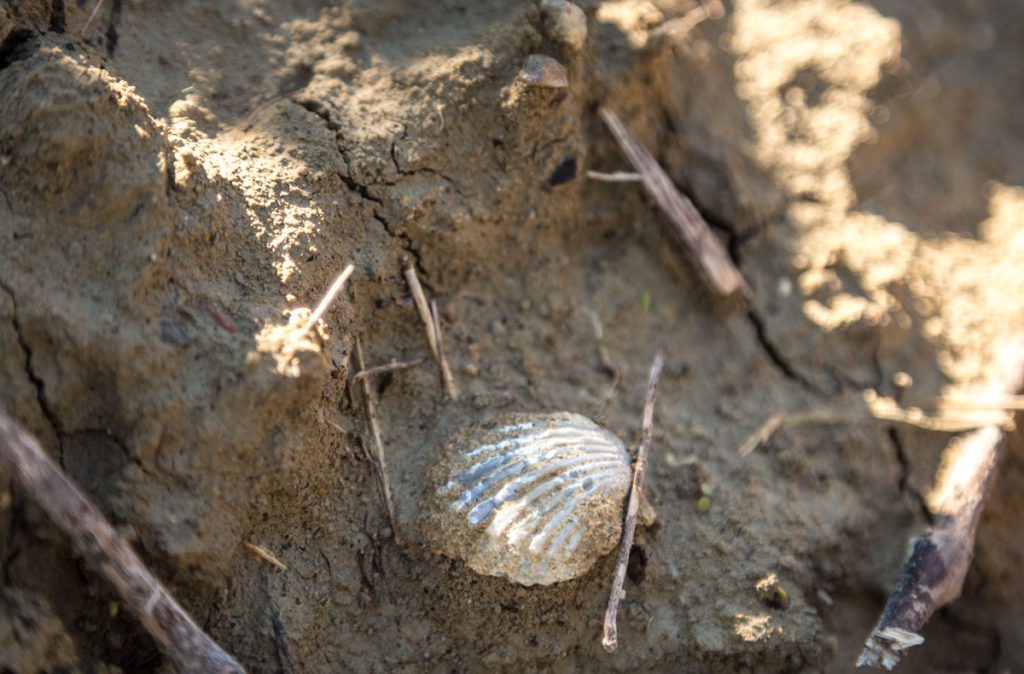
    So now Enzo Tiezzi produces two different Brunellos from vineyards about two miles apart. Both taste good…but very different from one another. It’s because of the dirt.

    If you could look closely enough at the dirt in the jar on the right, you would see bits of sea shell…like this photo of the dirt from the Soccorso vineyard.

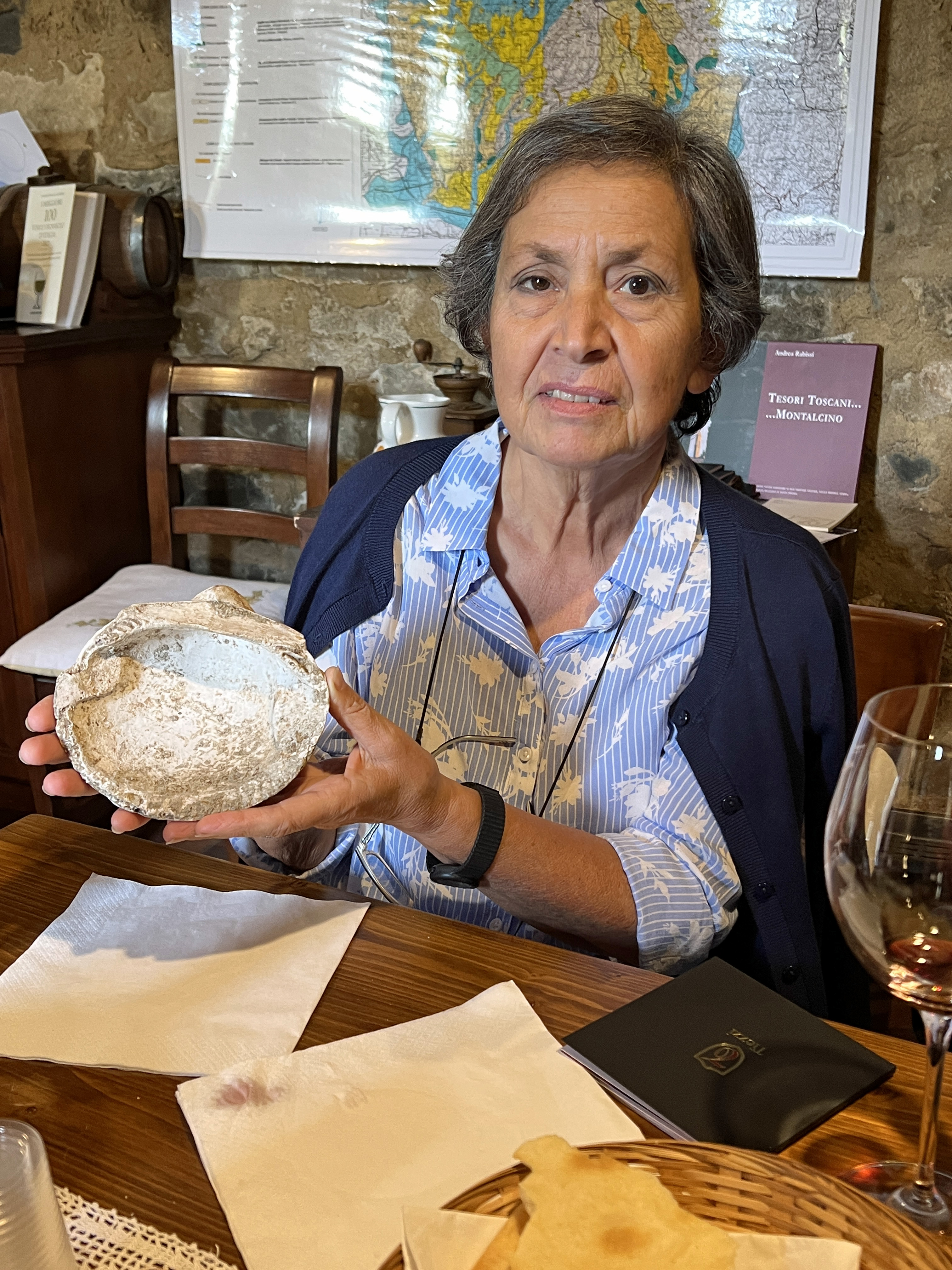
    Rosa held a shell from the vineyard in her hand but still seemed skeptical. After all, today Montalcino is 100 km from the Mediterrean.

    So, just how good is Enzo’s Brunello?

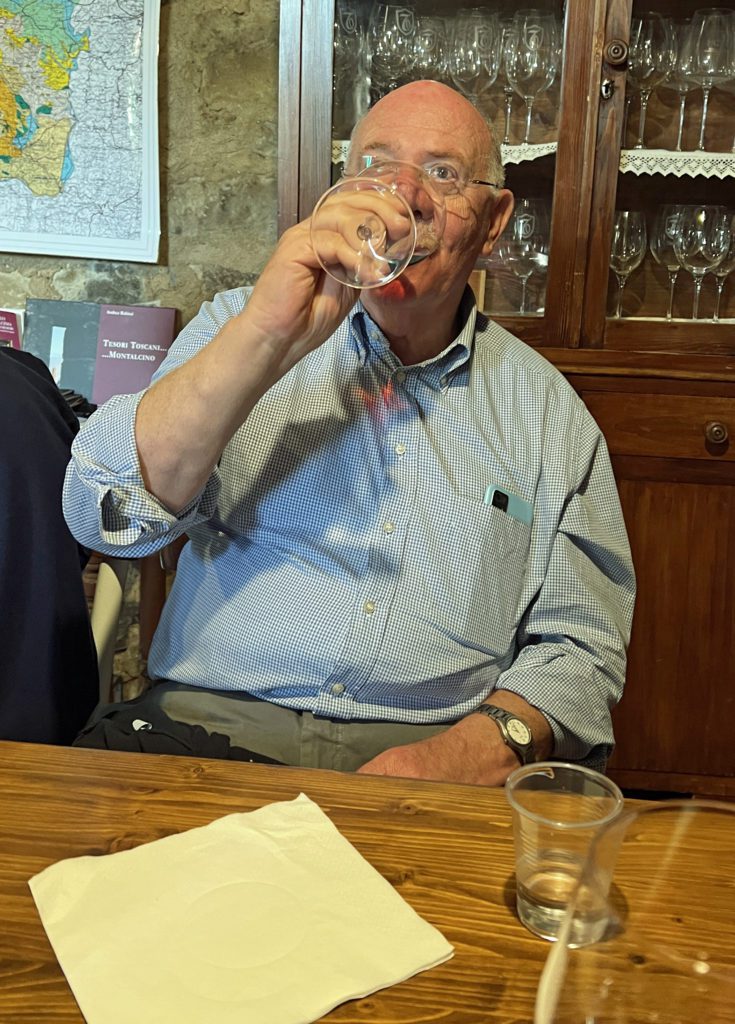
    Well, Francesco certainly appreciated it. But he is hardly alone. Wine magazines consistently rate them in the 90’s, and one publication included Enzo’s 2017 Brunello in the 100 best wines of Italy.

    But as it turns out, the wine was not the best part of Francesco’s visit to Tiezzi.

    While Enzo Tiezzi was writing his doctoral dissertation at the University of Firenze, Francesco was also doing his graduate studies there in Agronomy. They didn’t know one another then, but they shared many of the same faculty and many of the same memories, It was like a 50th reunion for both of them.