Author: Roger Bergson

  • Pienza Opera Redux

    For the twelfth year in a row, the opera competition returned to Pienza. (For the description of how the competition works see last year’s post: https://rbergson.org/the-opera-festival/)

    The two women below participated in last year’s competition. Arianna Giuffrida returned to compete this year…and the woman on the right won the lead role this past Summer in Pienza’s production of Tosca. When we showed them our blog post from last year, they couldn’t help themselves…


    This year’s festival attracted 72 entrants from 22 different countries…whittled down to 16 for Saturday night’s finals. Each contestant submitted five pieces to sing, and the judges chose what they wanted to hear in the finals. There was a wide variety of music…with Wagner noticeably absent…and some predictable numbers:

    Jongwoo Hong sings from Puccini’s La Boheme:

    And Viola Sofia Nisio sang a soprano’s aria from the same opera:

    Like Olympic diving, the judges give extra points for degree of difficulty. Matteo Mancini won a coveted prize…an audition with the Berlin Opera Company…for this aria from Rossini’s Barber of Seville:

    For degree of difficulty, Mancini was outdone only by Siberian soprano Maria Kokareva, singing from Motzart’s The Abduction from the Seraglio (for which she won three prizes):

    After her performance, the judges adjourned to decide who would go home with honors. This is when the real fun began. To fill the hour they were away, the performers got a chance to strut their stuff.

    Carol and Roger were blown away by the voice of South African Lulama Taifasi:

    And Spanish tenor Gillen Munguia brought down the house with the 1932 classic Grenada:

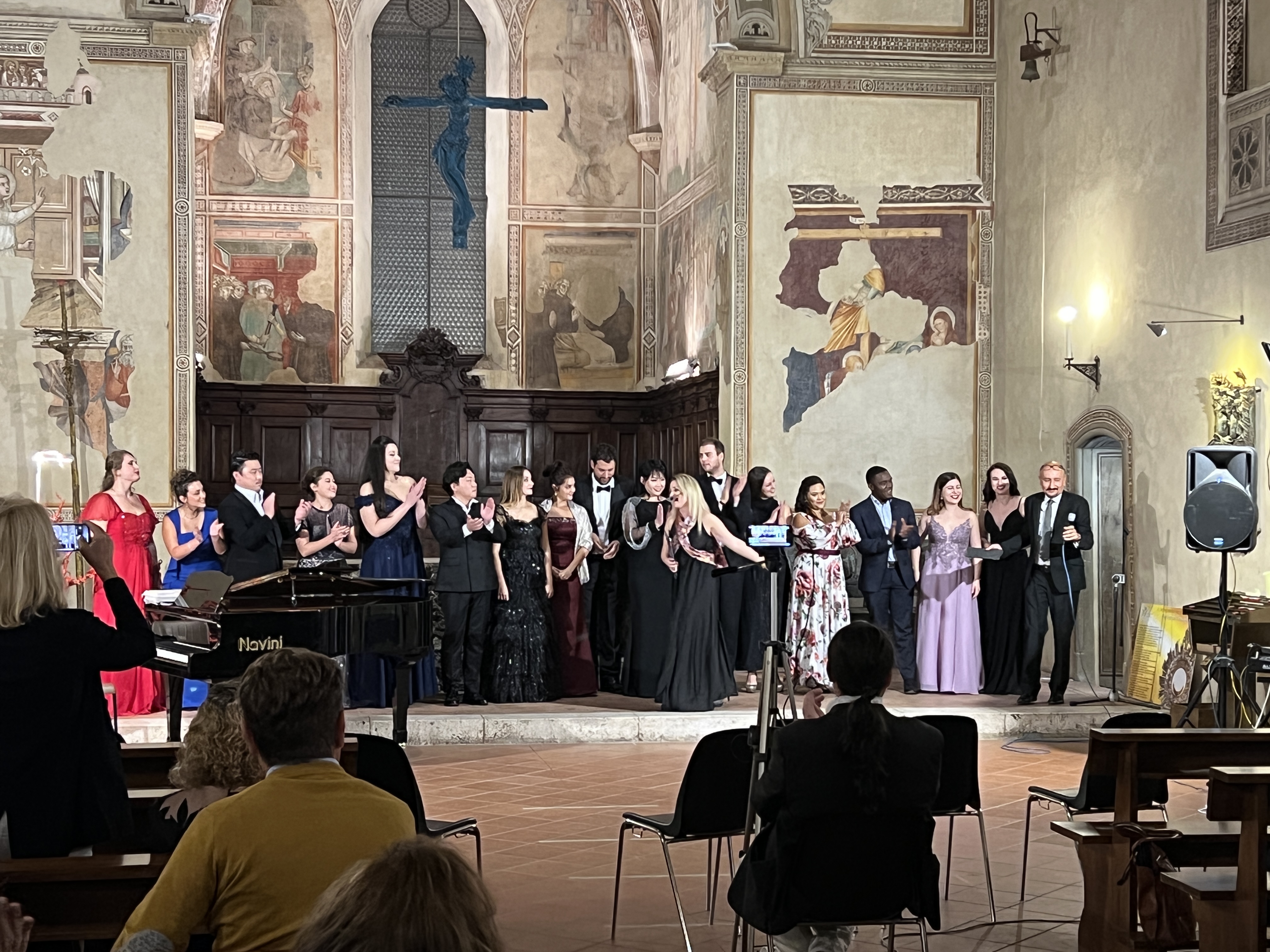
    Then came the moment everybody was waiting for. The entire cast assembled on stage, and after the first three notes of introduction…before a single word was sung…the audience burst into applause for Verdi’s Calice from La Traviata:
  • The Fiat 500

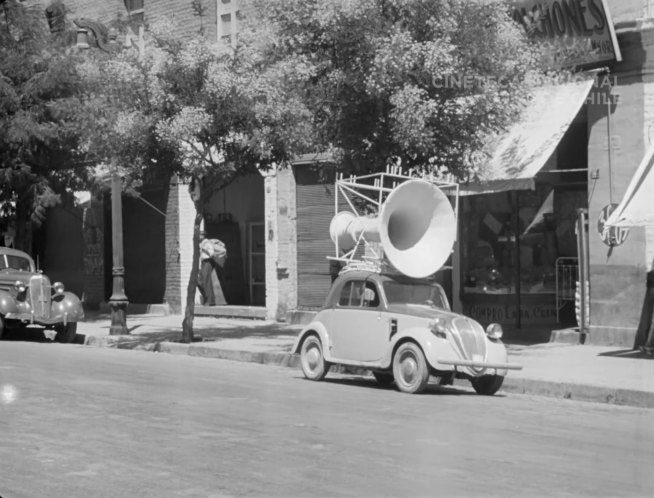
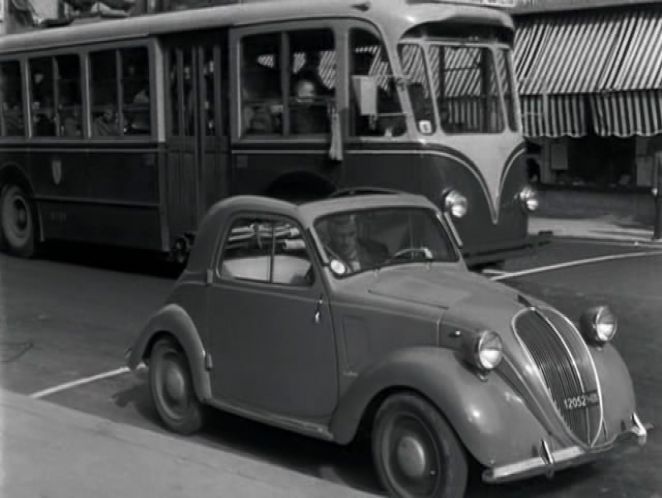
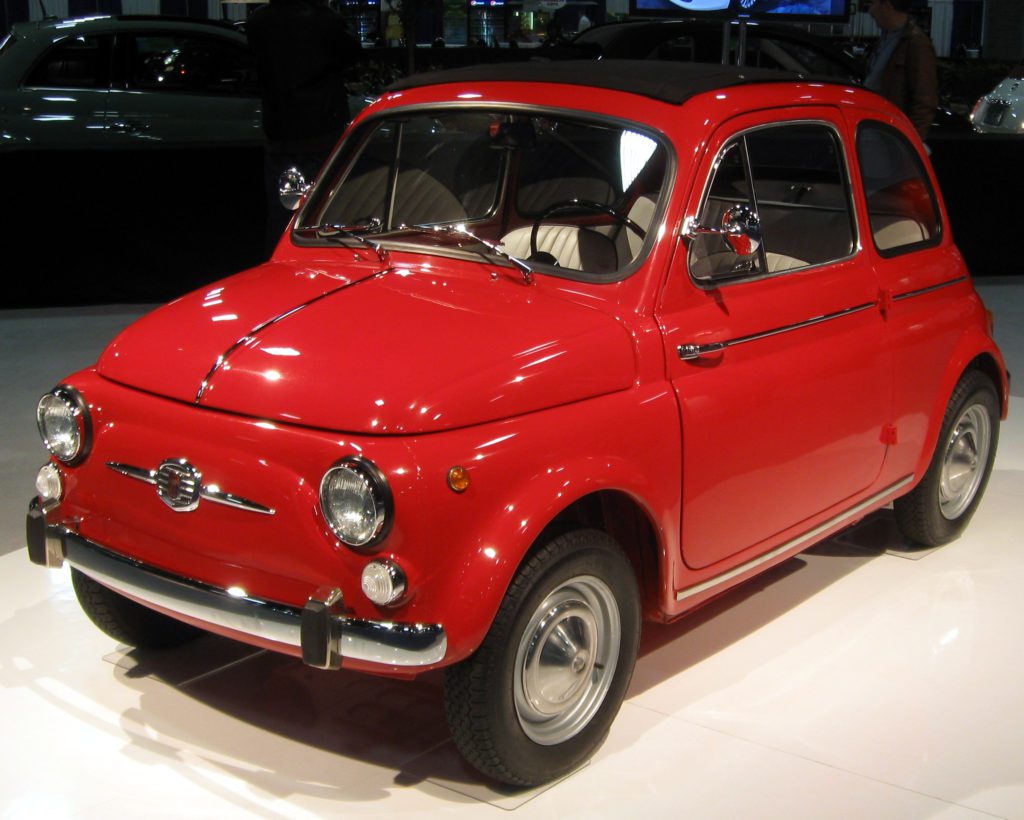
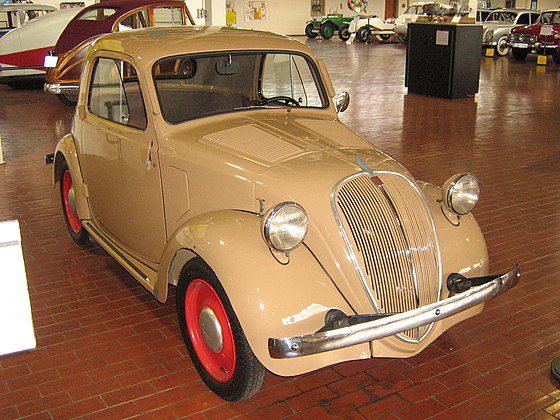
    When you think of small cars…really small cars, what comes to mind in Italy is the Fiat 500…or Cinquecento.

    The car was first produced by Fiat in 1936 and was soon nicknamed “Topolino”…”Little Mouse”…because of it’s diminutive size.

    Immediately after World War II, the car was in high demand. It was cheap, easy to maintain, and easy on steel…which war-ravaged Italy had a hard time producing enough of.

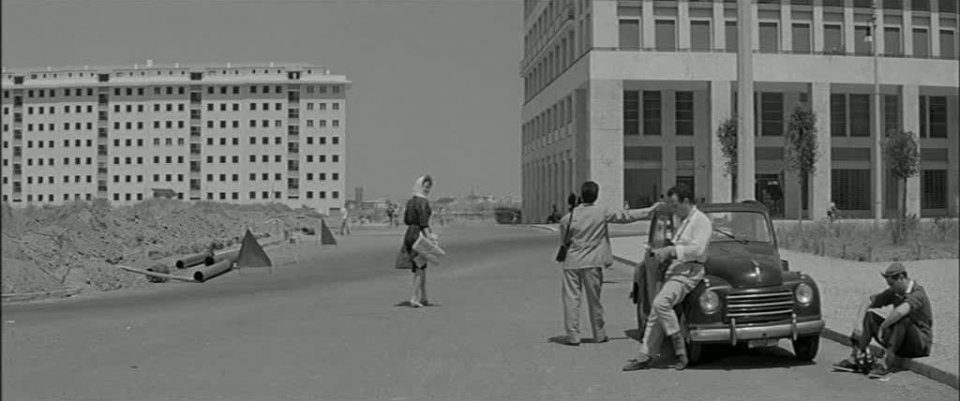
    The car had enough personality that it was featured in numerous Hollywood movies. Gregory Peck drove one in Roman Holiday (1953).

    And Toto drove one in Frederico Fellini’s 1960 classic La Dolce Vita.

    The Cinquecento is still produced today. In fact, Carol and Roger recently rented one on a visit to Firenze.

    We could barely make it up hills, but the car is easy on fuel. We drove 500 km (300 miles) on little more than 6 gallons of gas.

    In Firenze, the narrow streets and scarcity of parking spaces make the car’s small size an asset.

    Please note how close the car is parked to the wall on the driver’s side…

    …which makes it a challenge to get into…

  • Monte Amiata

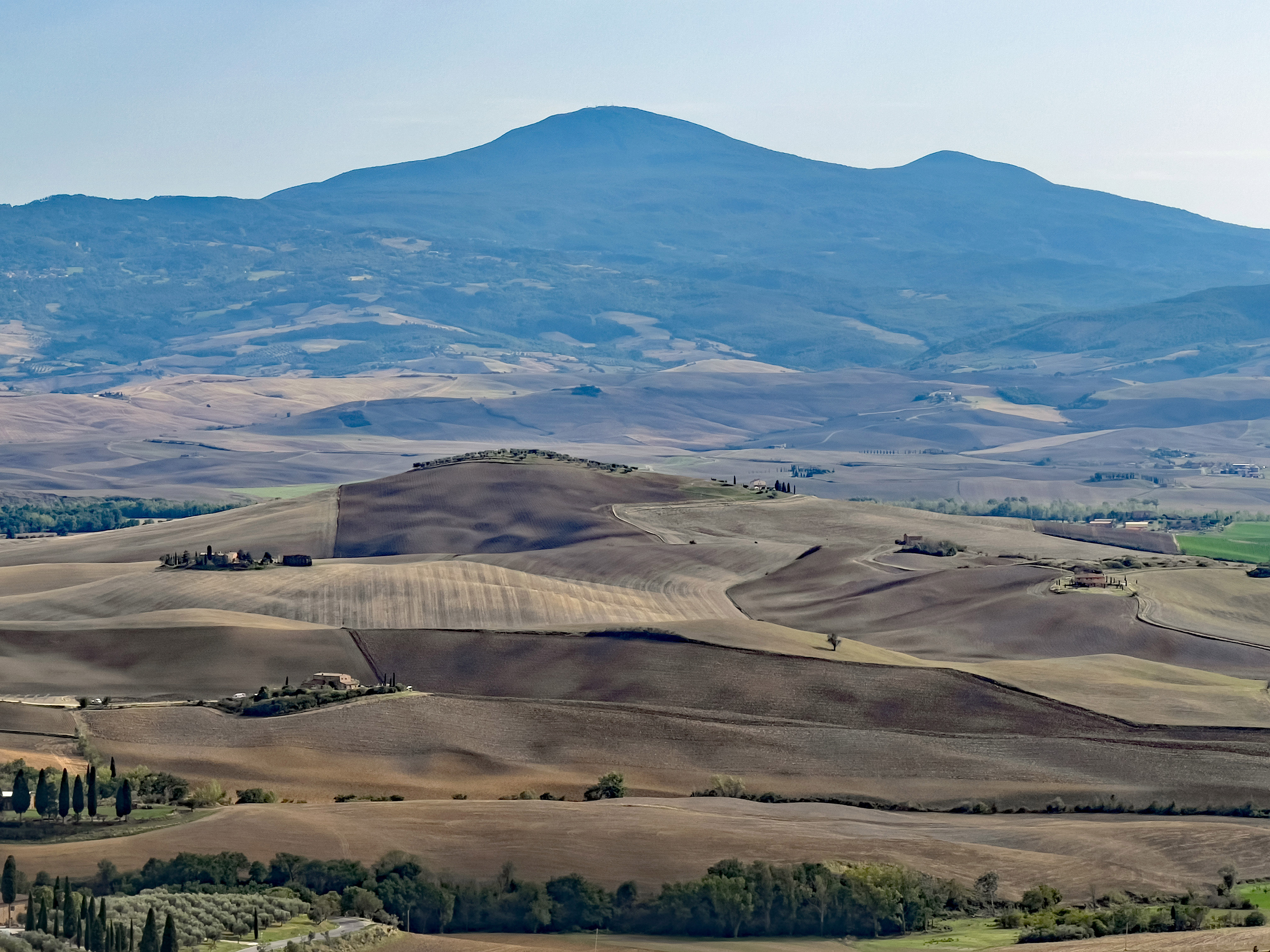
    When you look across the Val d’Orcia from Pienza, the skyline is dominated by Monte Amiata.

    Monte Amiata is Italy’s second tallest volcano, though unlike its bigger cousin, Mt Etna, it hasn’t erupted for the last 180,000 years.

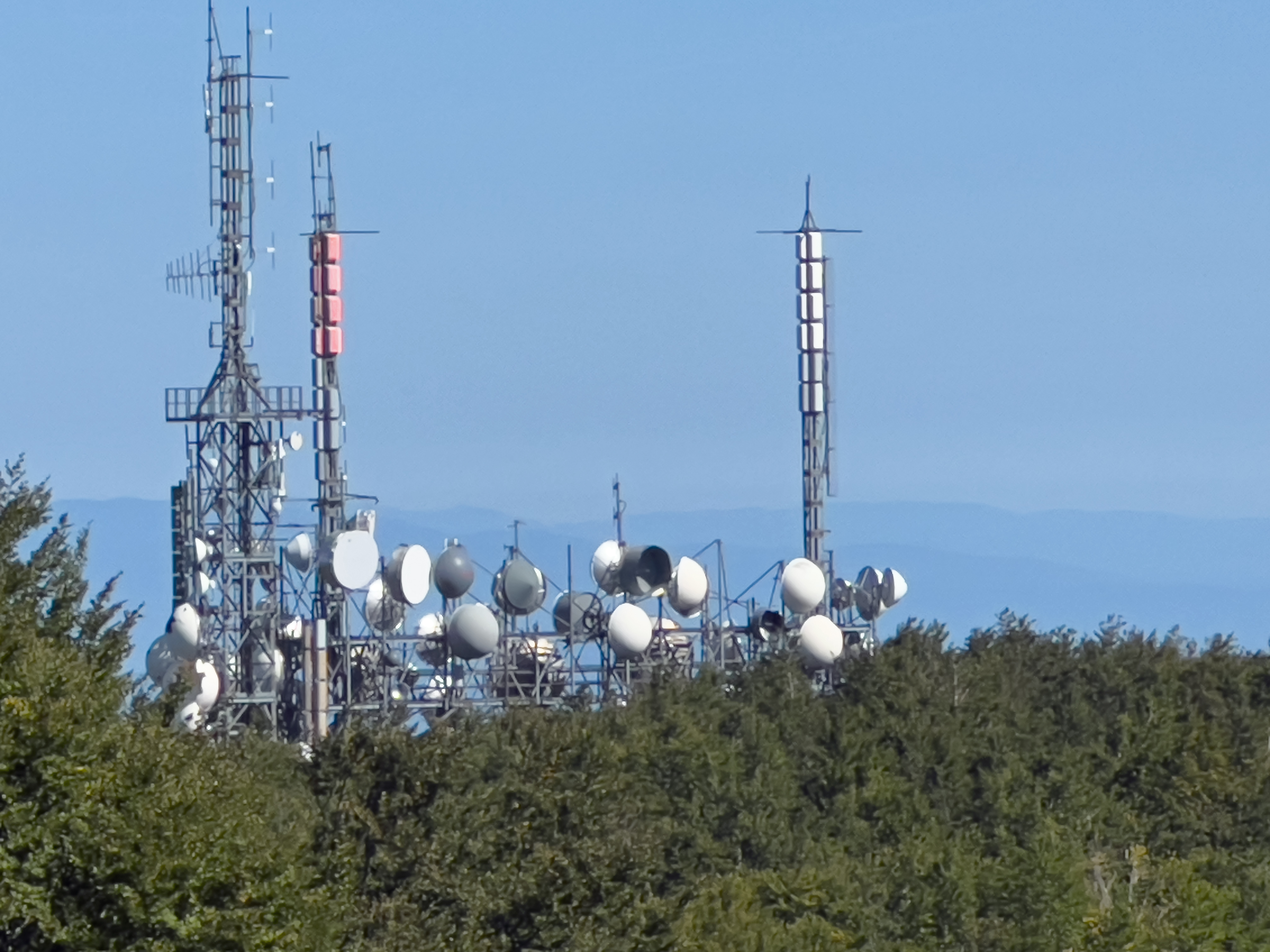
    The summit of Monte Amiata stands at 5,702 feet above sea level. Because of its height, the summit is dotted with microwave towers and other communications equipment.

    The mountain affects the weather for the whole region, even altering the taste of Brunello wine depending on its proximity to the vineyard.

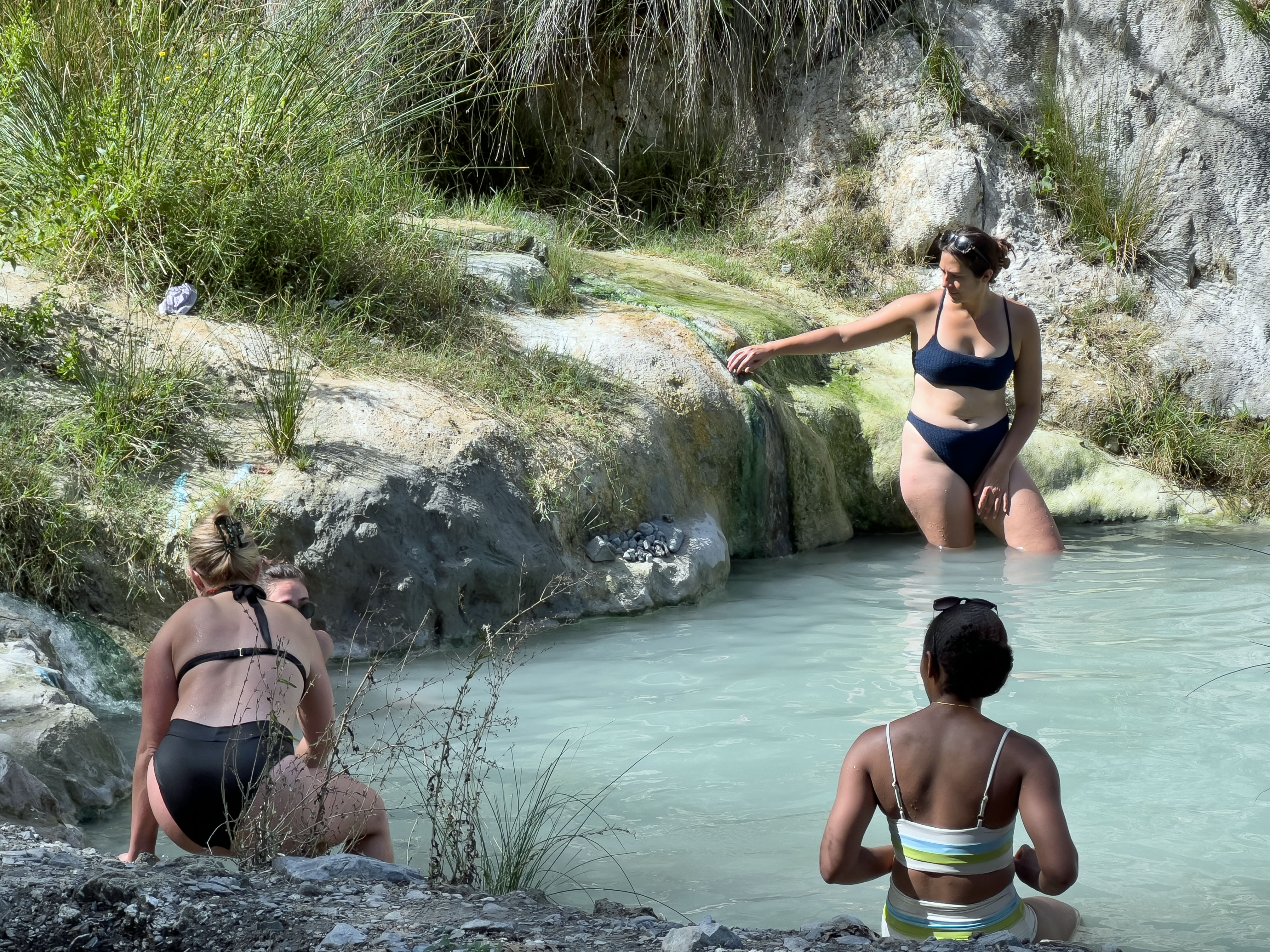
    The volcano may be dormant, but it’s still cooking away deep below its summit. It feeds the numerous thermal baths in the area…Bagno San Filippo, in this case…and still actively produces Cinnabar, the main ingredient in vermilion pigment.

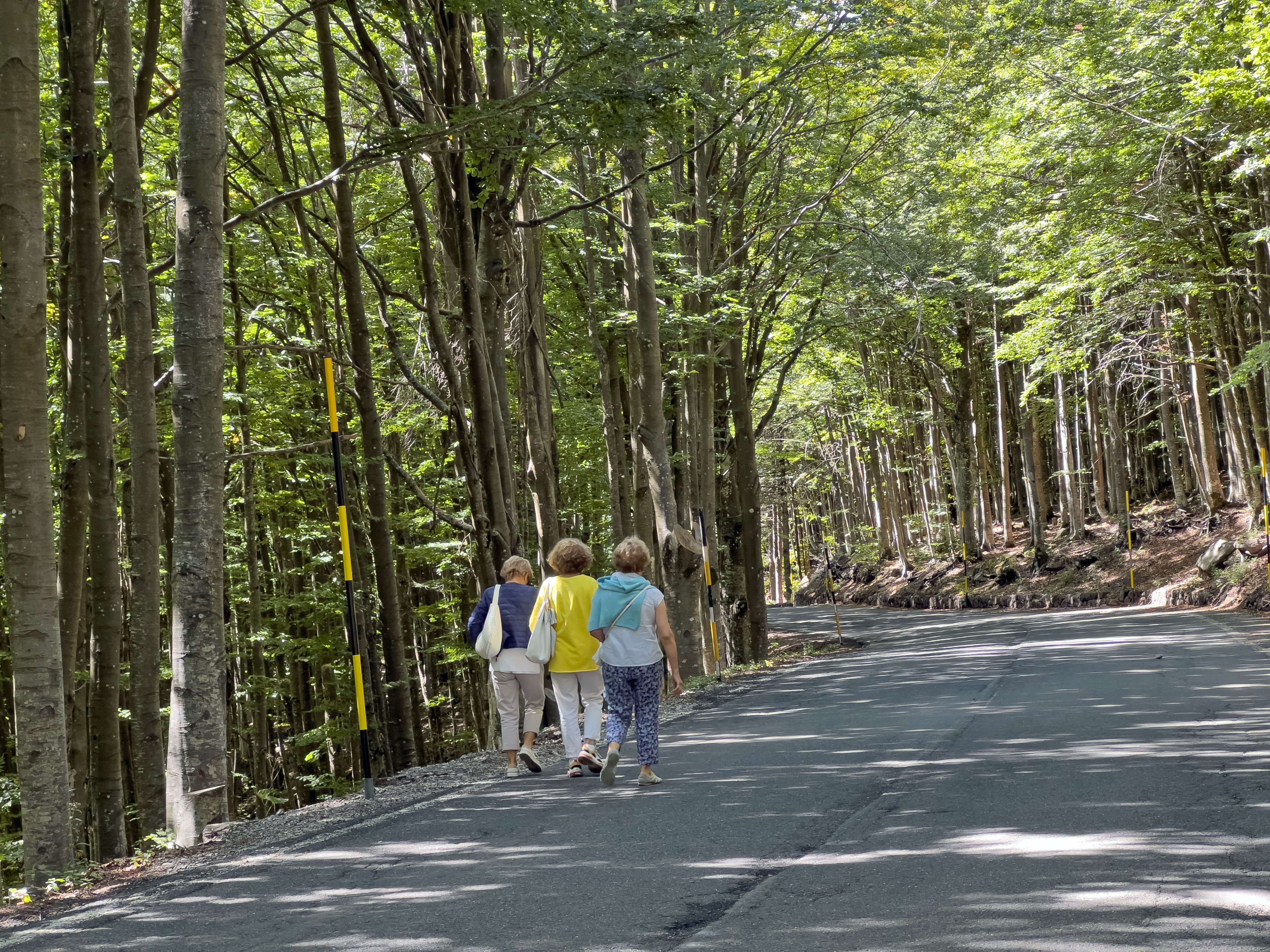
    The lower slopes of the mountain are covered with chestnut and beech forests…beautiful in the dappled sunlight…and the elevation makes it cool enough for hikers to beat the 90 degree temperatures down in the valley.

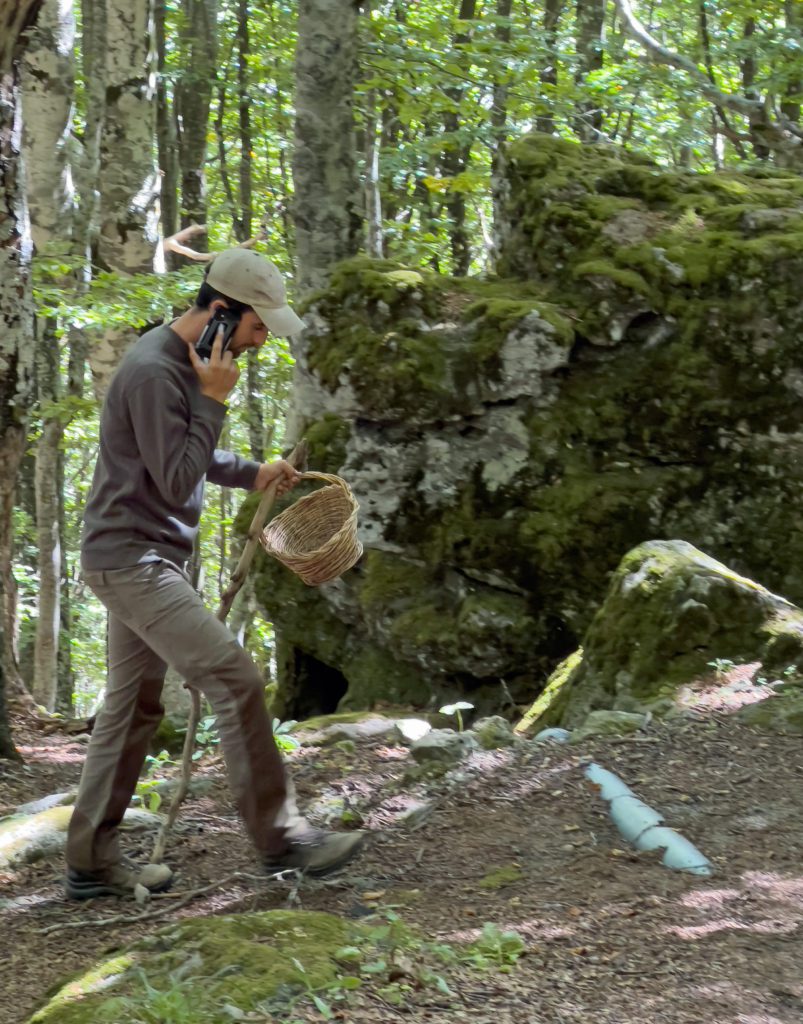
    Farther up the mountain, we saw mushroom hunters searching for the first porcini of the year.

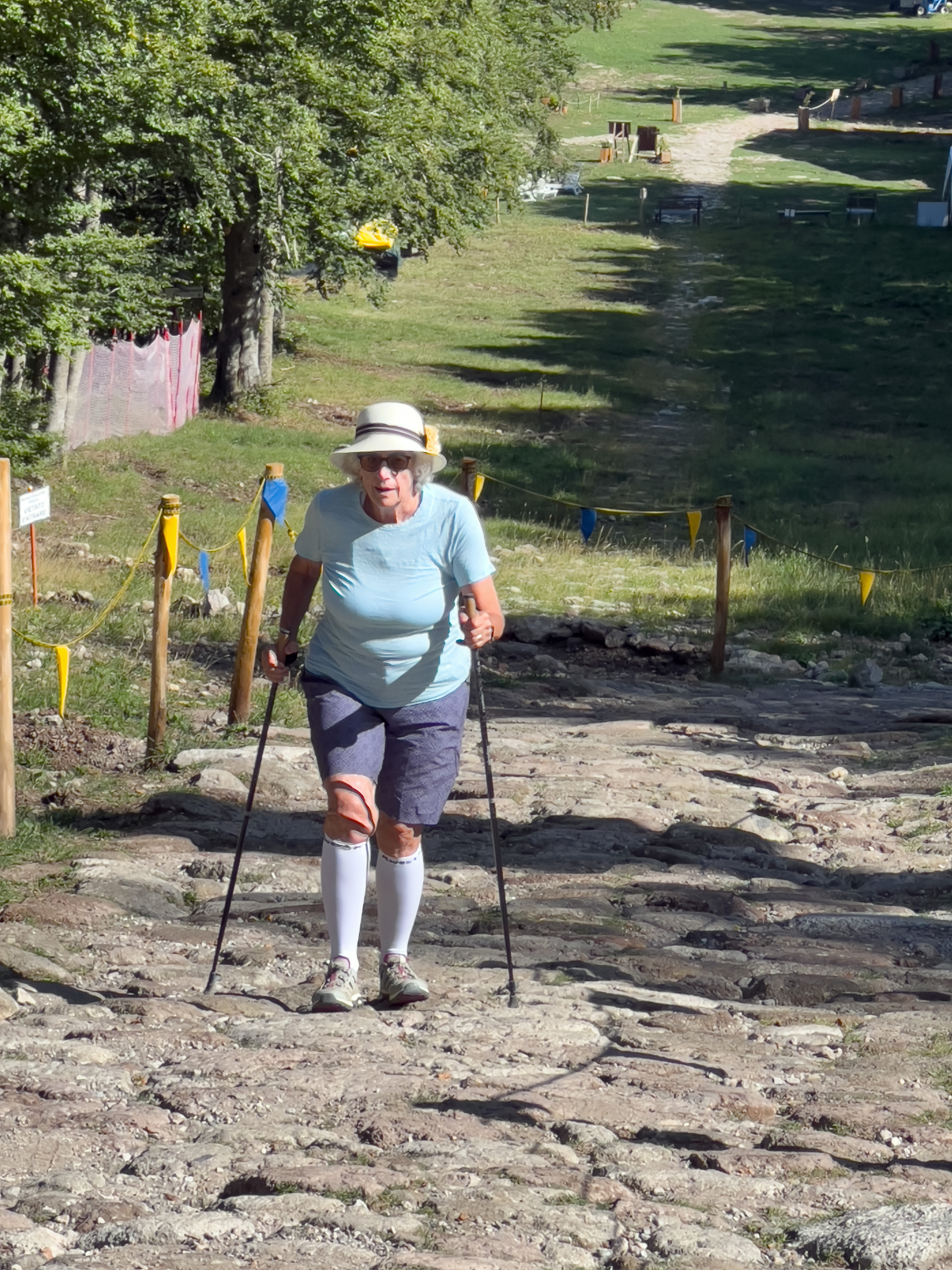
    The path up to the summit is not technical, but it is fairly steep and a good way to work up a sweat on a Summer’s day.

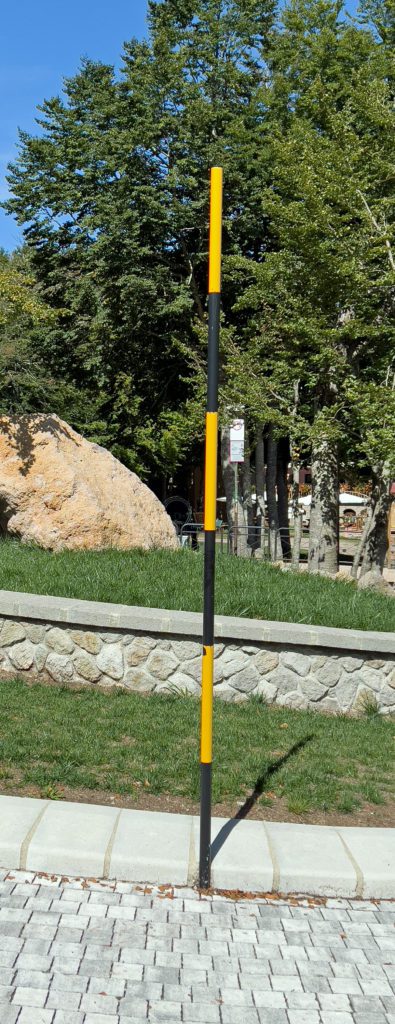
    The upper reaches of the road to the summit are lined with these black and yellow poles. They guide the snow plows as they clear the roads and measure the depth of the snow.

    The snowfall record, set 8 years ago, is 14 feet.

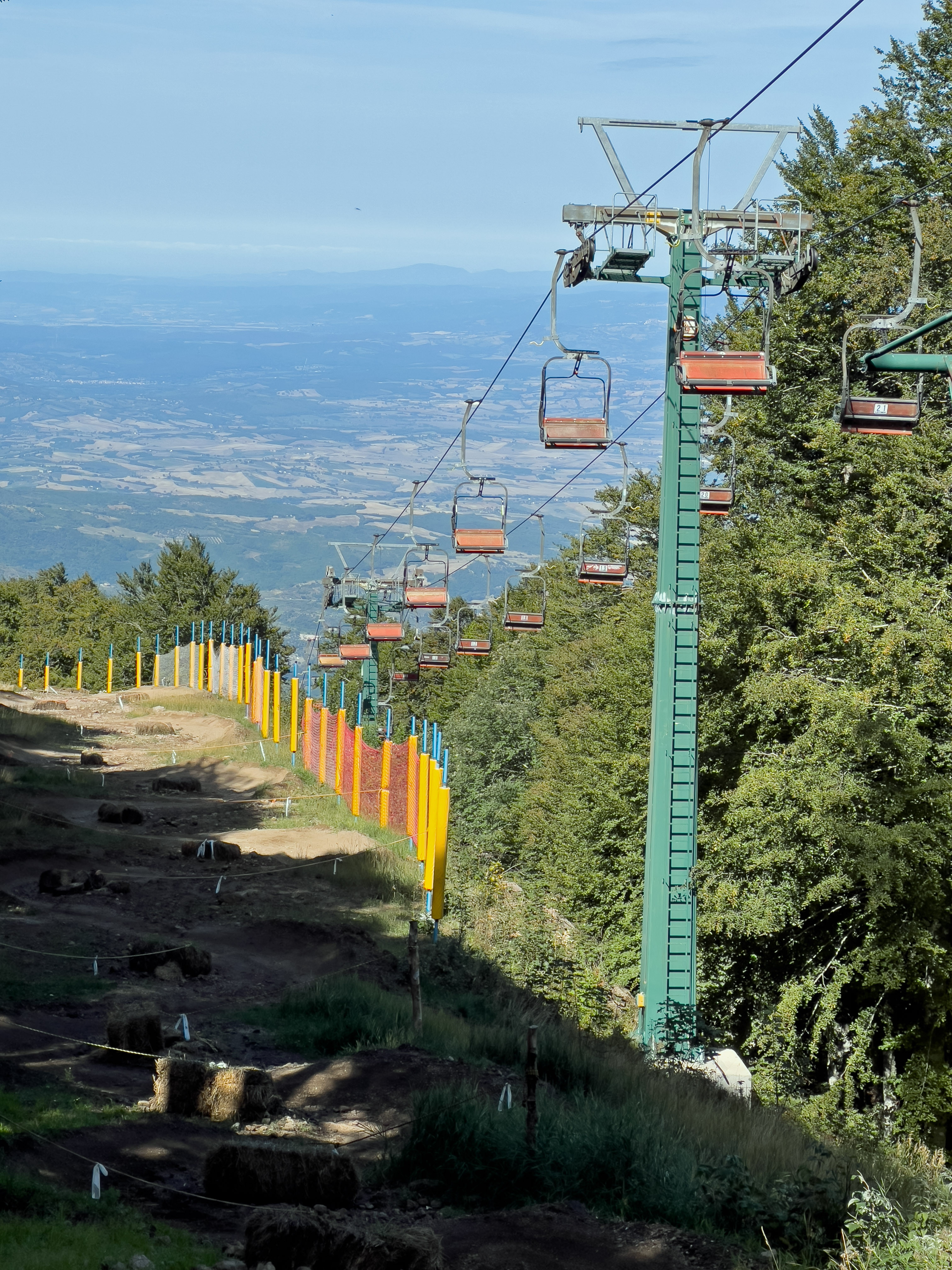
    We saw three chair lifts for ski runs near the summit. While Pienza rarely gets snow, apparently Monte Amiata, at 1200 meters higher elevation, gets plenty.

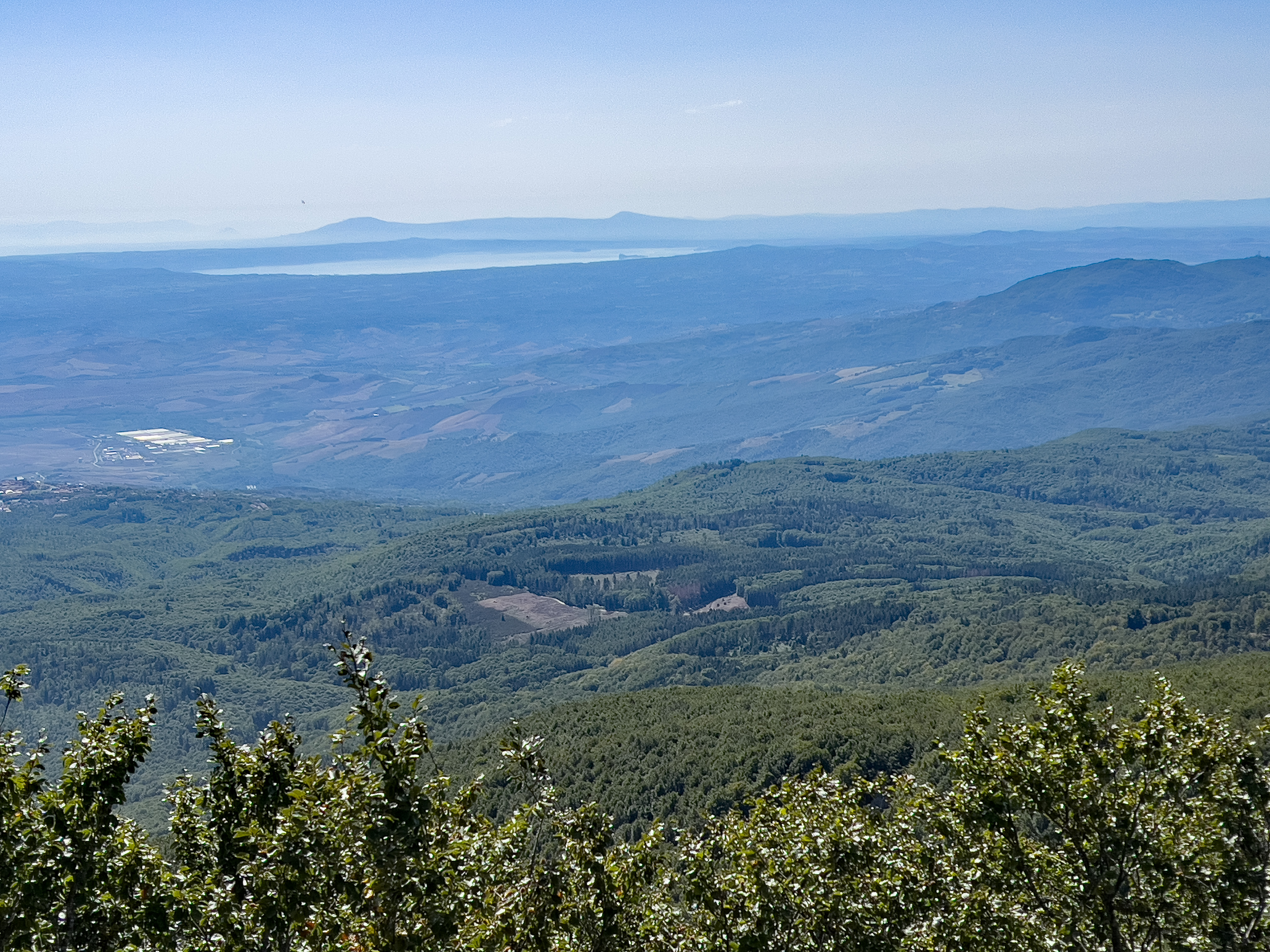
    Looking east from the summit, you can easily see Lake Trasimeno, 34 miles away.

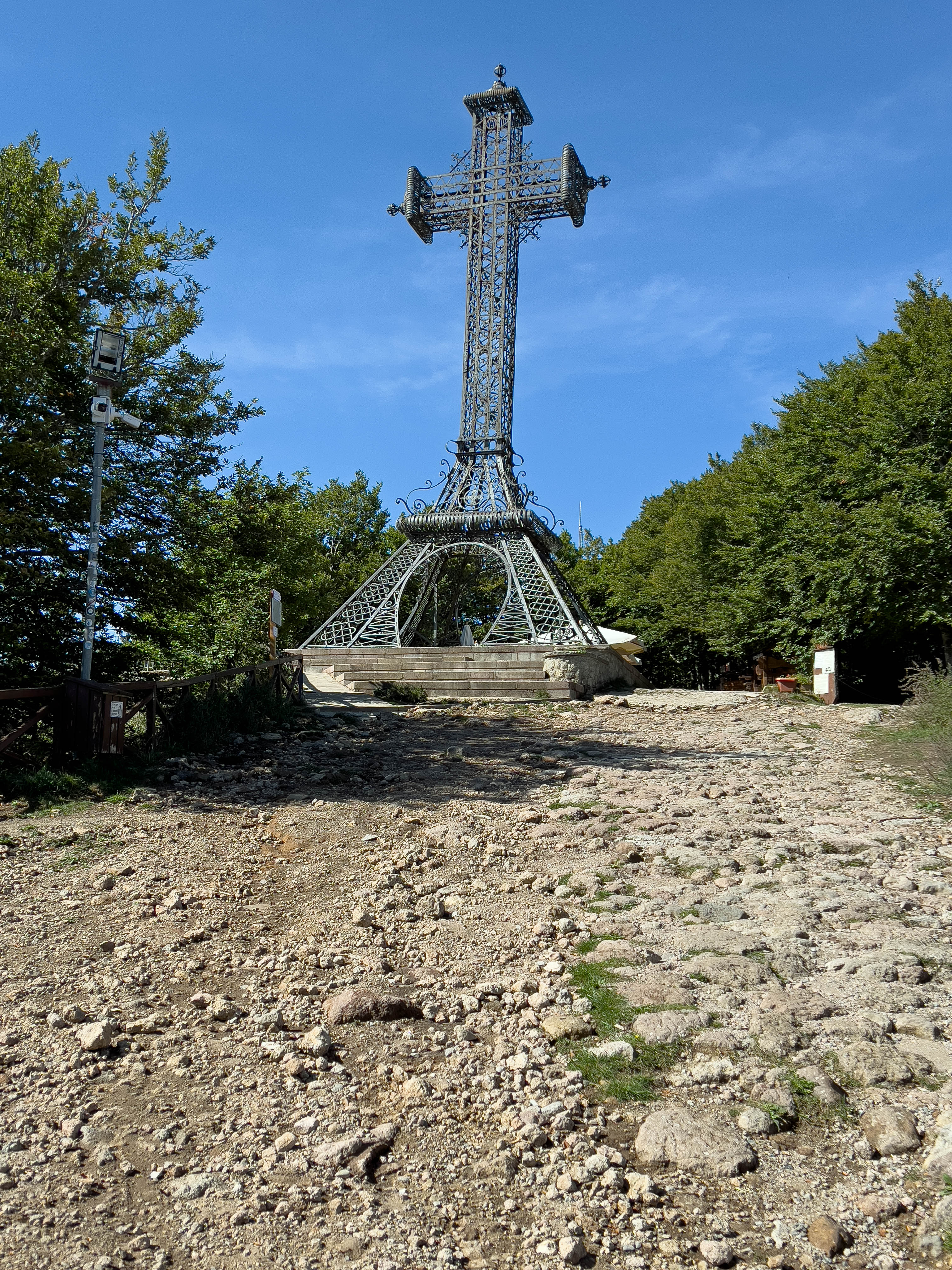
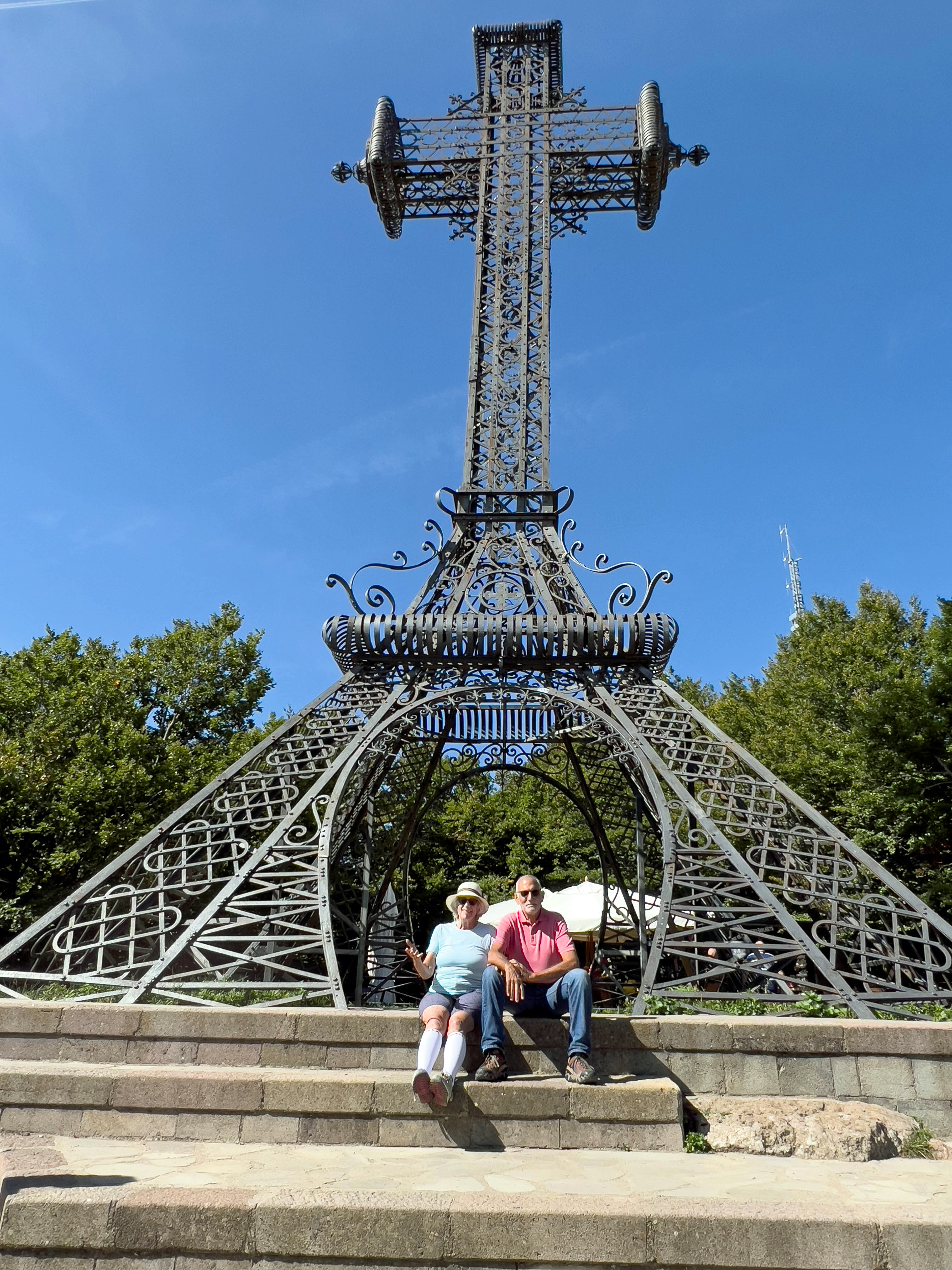
    At the very top of the mountain, we saw this….

    How did this get here?

    Well…at the end of the 19th Century, Pope Leone XIII decided to put giant crosses atop Italy’s twenty tallest mountains. This one was #9 (Monte Amiata being Italy’s 9th highest peak). Think of what it took to get all that wrought iron up to the top of this mountain!

  • The End of an ERA

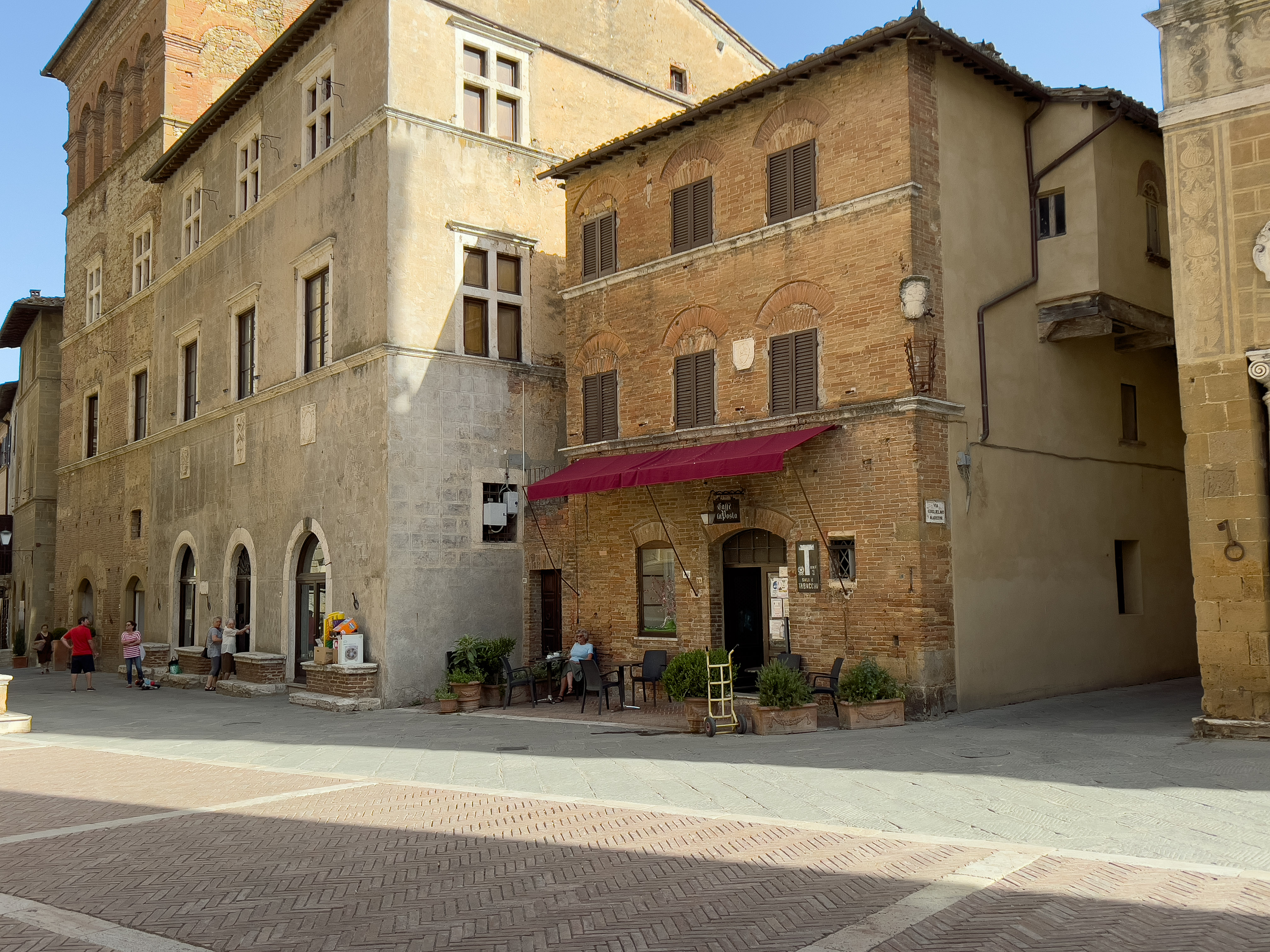
    In the heart of Pienza lies Piazza Pio. The piazza is dominated by the Duomo (cathedral) and is flanked by two palaces: Palazzo Pio and Palazzo Borgia.
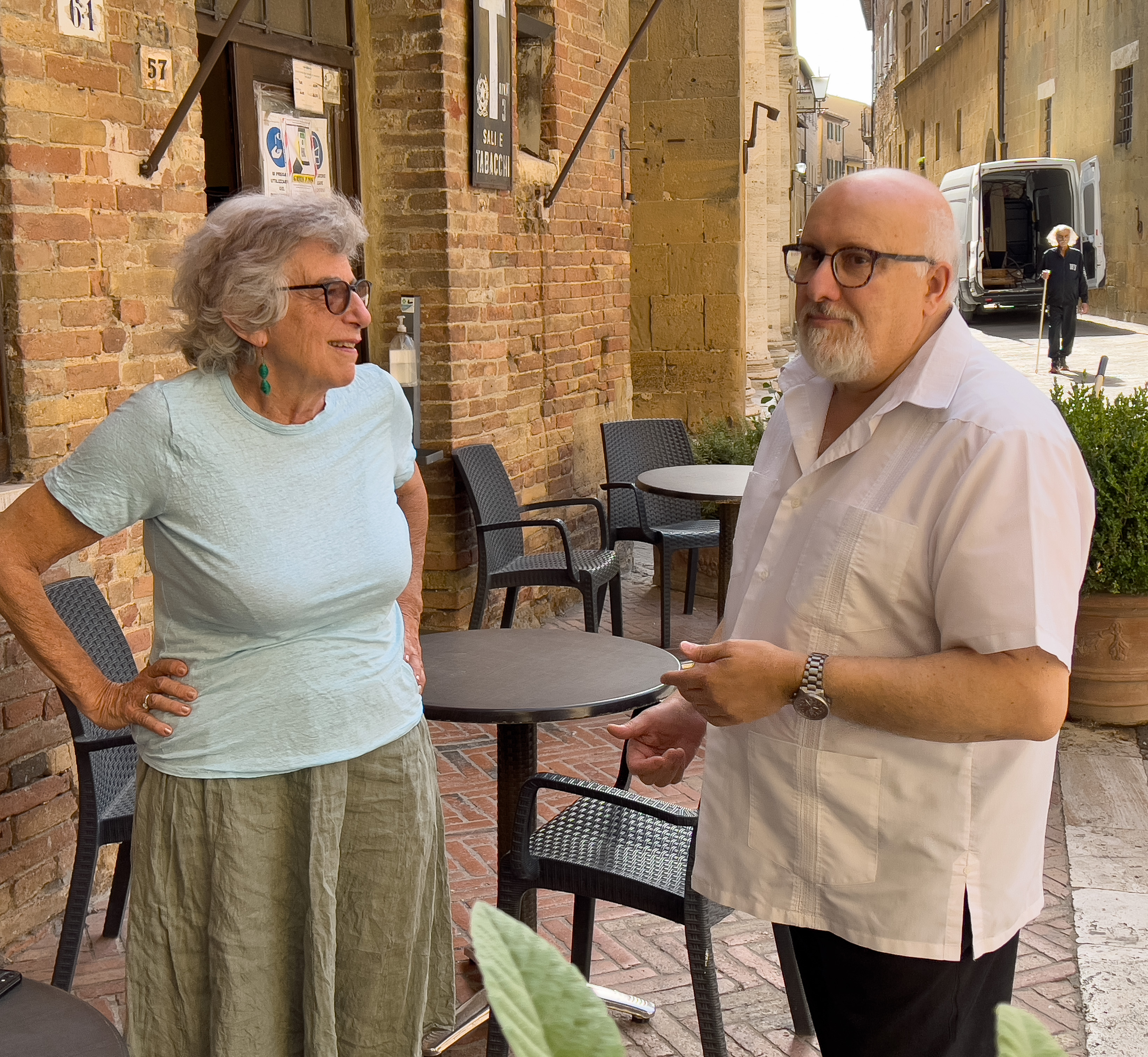
    Across from the Duomo, in what is probably the least conspicuous building on the piazza, sits a bar named La Posta.

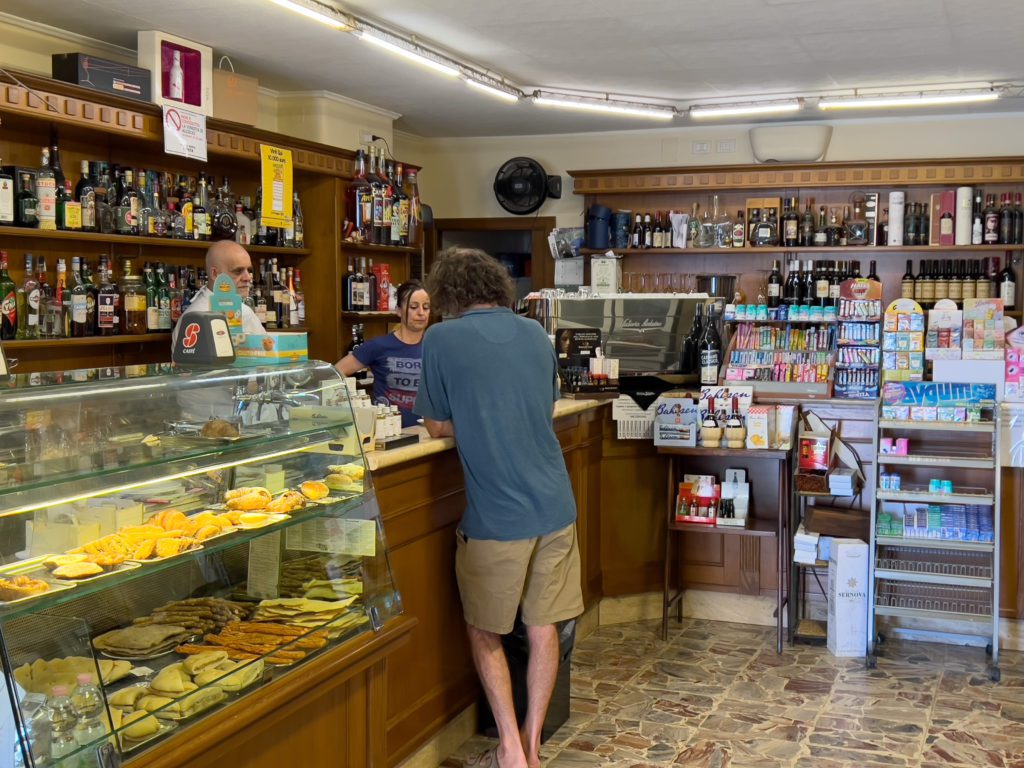
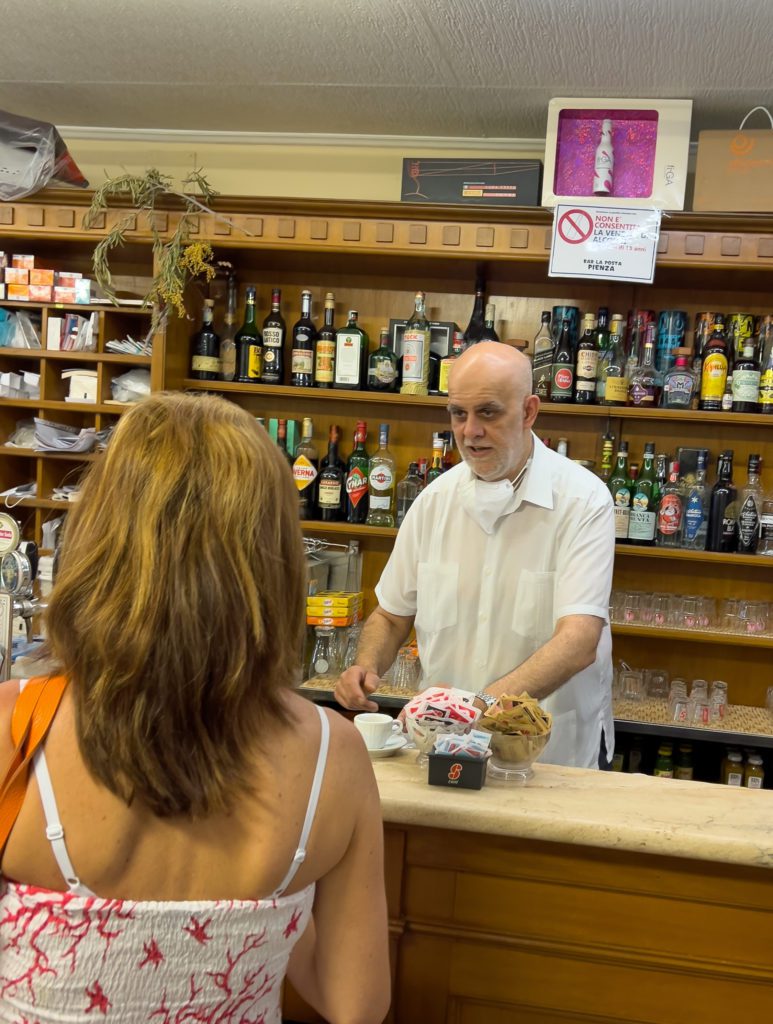
    The bar is old-school.

    No huge TV screen blaring music videos…as in so many Italian bars these days.

    Just an espresso machine, a display case for pastries, and a dizzying assortment of Italian digestivi and imported liquors.

    It’s the place where the town priest, before he retired, came for his daily beer.

    Like the TV show “Cheers,” it’s a place where, “Everybody knows your name, and they’re always glad you came.”

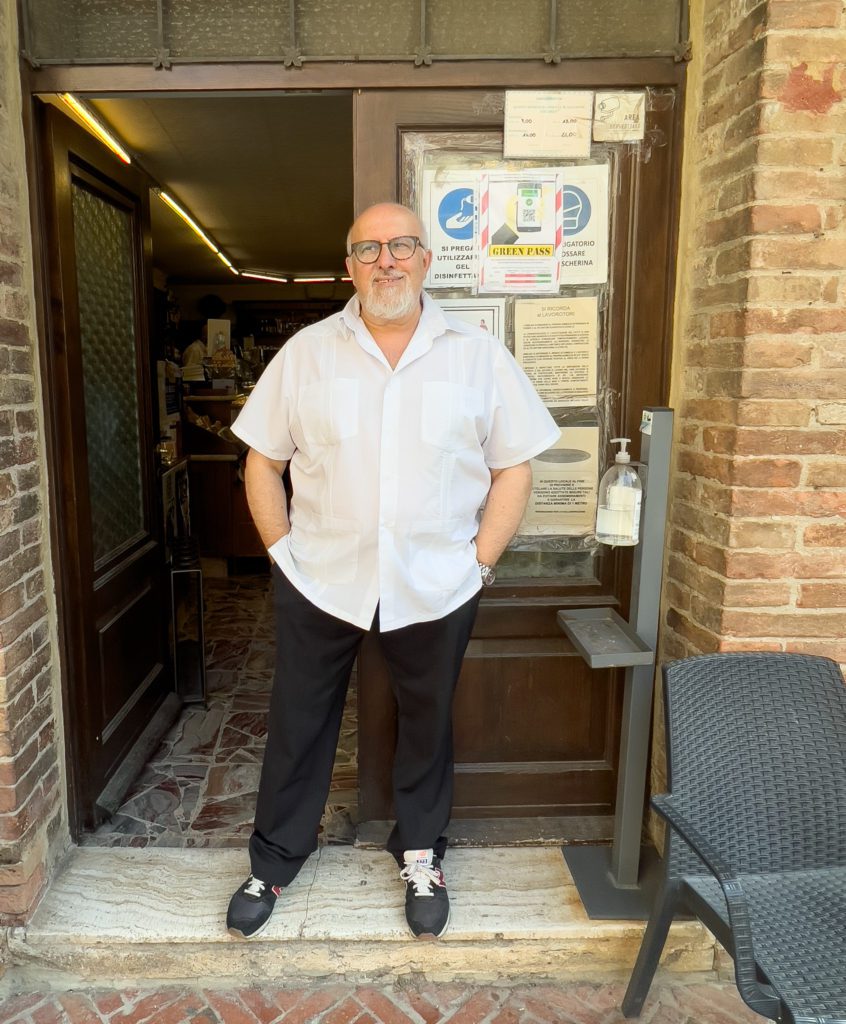
    The bar is owned, as it has been for the past 30 years, by Fabio Martini.

    Fabio told Carol, his grandfather owned the bar way-back-when, and it’s been in the family ever since.

    Fabio said he first learned to make coffee in his father’s restaurant (around the corner). He had to stop when the Carbinieri came to the restaurant and told his father Fabio was two years below the minimum legal working age.

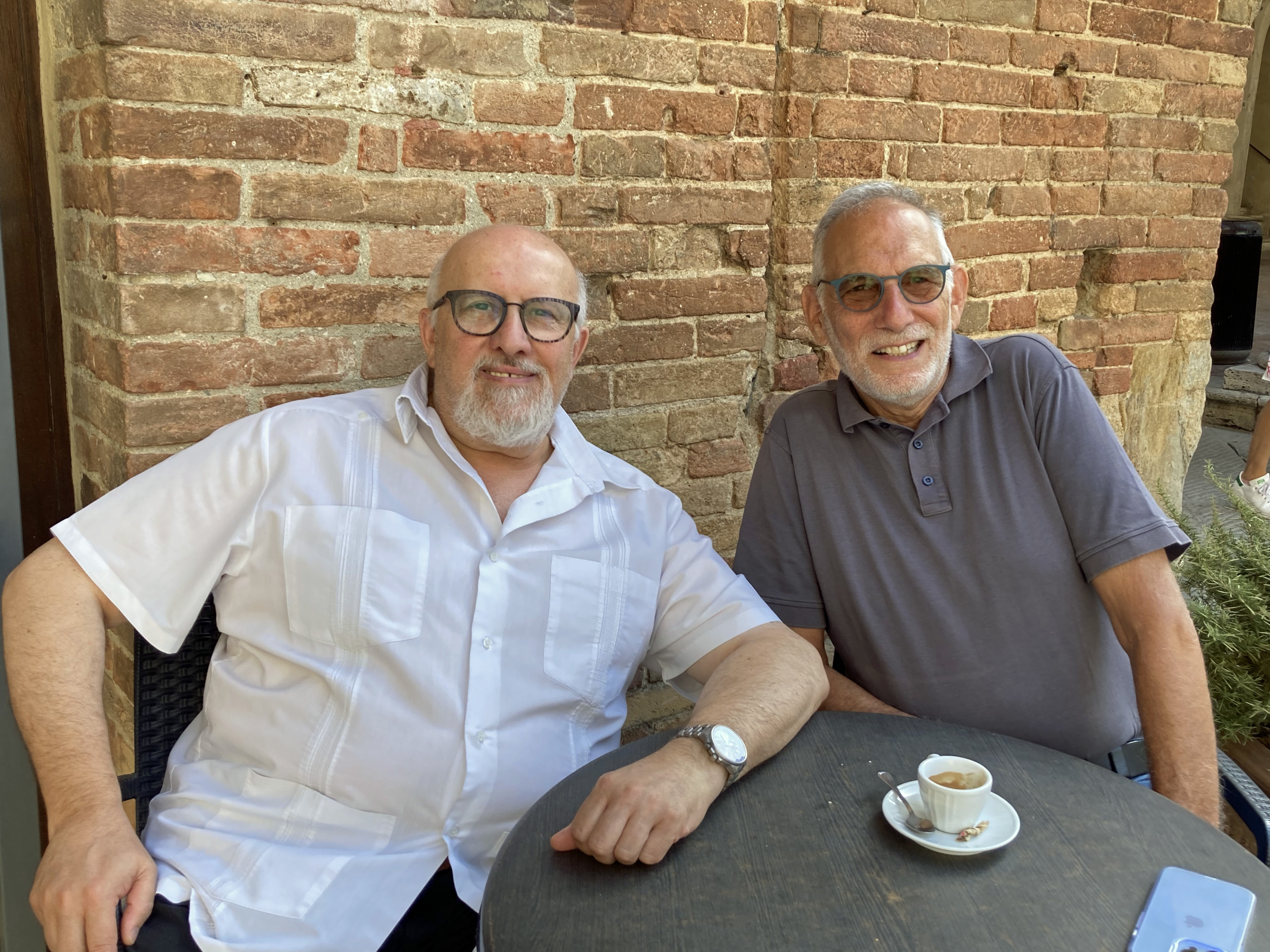
    This morning, Carol and Roger did some on-the-napkin calculations and estimated over the years they’ve had a thousand cups of coffee here….as well as a few beers, glasses of wine, and Campari & sodas.

    The bar is staffed by Fabio’s brother Michele, who began at La Posta even before Fabio. With him behind the bar, there is no need for a local newspaper.

    And Chiara, the bar maid, has a smile for every tourist she serves…even those who’ve been coming daily for the past decade.

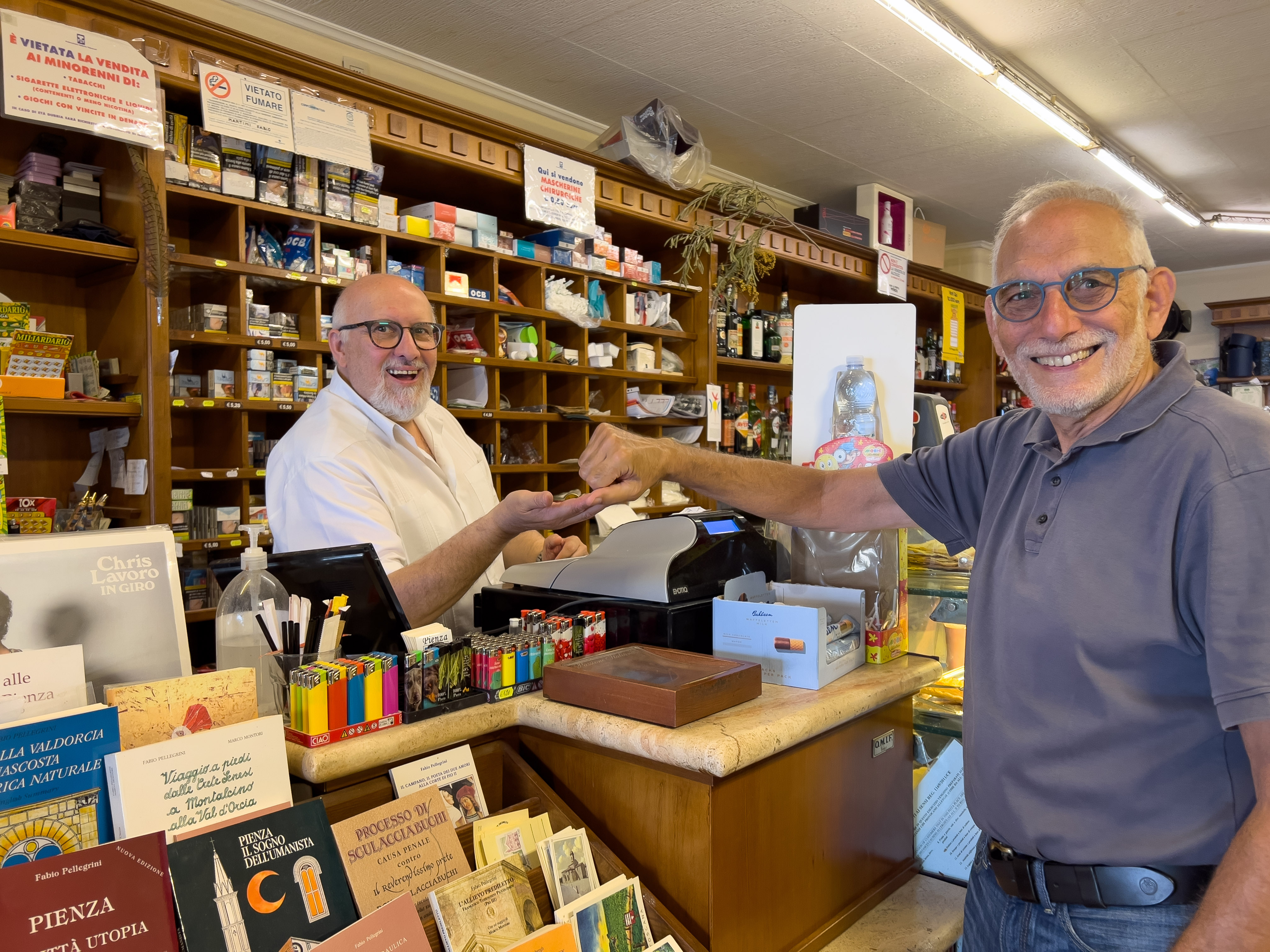
    But all good things must end. With today’s cups of coffee, Roger paid Fabio for the last time. Fabio has sold the bar and is headed into retirement. When we return at the end of the Summer, La Posta will have a new owner.

    Fortunately, Michele and Chiara will still be there. Hopefully, La Posta’s unique ambiance will be as well.

    The local historian Fabio Pelligrini has decided to write a book about the history of La Posta. As he told the other Fabio, “the history of La Posta is the history of Pienza.”

    Fabio doesn’t have to worry about keeping busy during retirement. He’s an avid photographer, a fisherman and mushroom hunter.

    As much as he looks forward to not having to come into work each day, we…and dozens of other Pientini…will miss his being there.

    Adieu, Fabio! Che tu possa avere molti anni di gioia e buona caccia ai funghi!

  • Palazzo Medici and the Oldest Building in Firenze

    Carol and Roger don’t get into Firenze as often as they would like (it’s five hours each way by bus and train), so when we do get to go, we try to make the most of it.

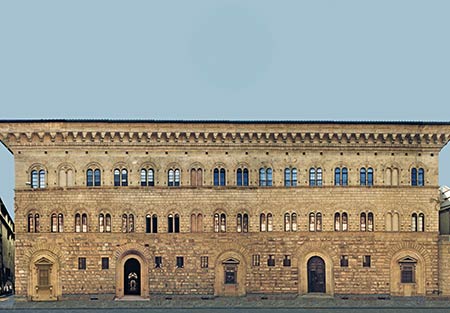
    photo courtesy Palazzo Medici Riccardi Foundation

    Our goal this trip was the Palazzo Medici.

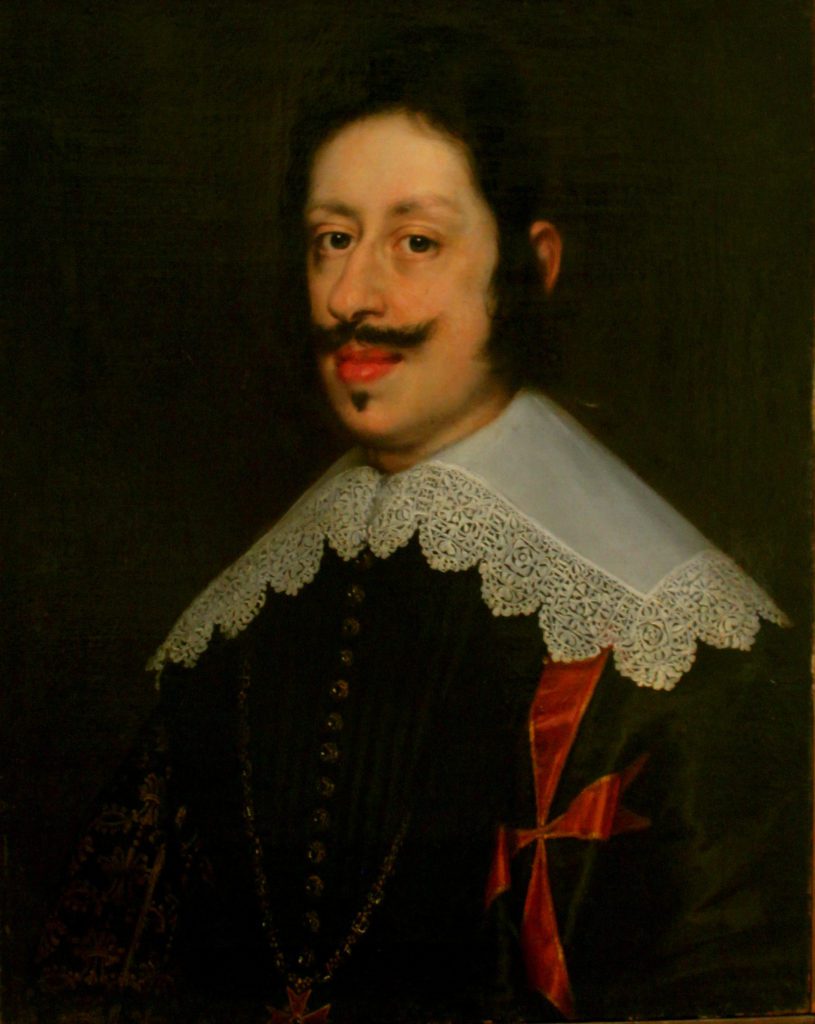
    The palace was the inspiration of Cosimo di Medici (pictured right), who grew a moderately successful banking family into the most powerful clan in Firenze. In the early 1440’s, he asked two archetects to come up with designs for the palazzo: Filippo Brunelleschi (who designed the dome of the Florence cathedral) and Brunelleschi’s oft-collaborator Michelozzo di Bartolomeo.

    Cosimo decided Brunelleschi’s design would violate Firenze’s sumptuary law (against conspicuous displays of wealth), so he chose Michelozzo’s plan.

    Brunelleschi got so angry with the decision, he never spoke to his friend Michelozzo again.

    Somehow, this design was within the bounds (though barely) of the sumptuary law.

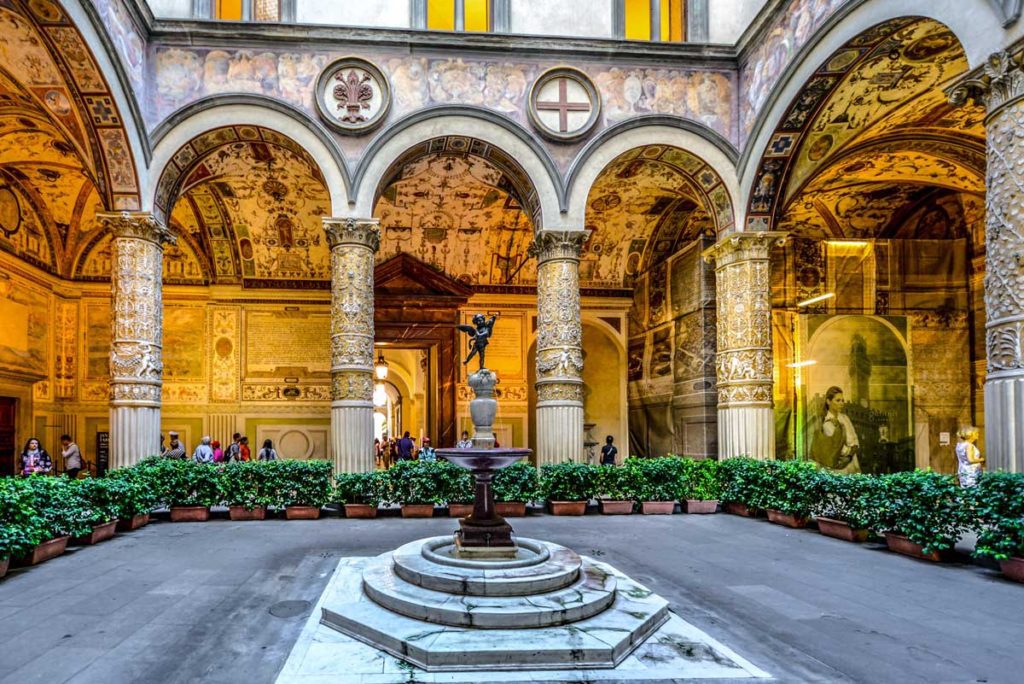
    The original statue in the middle of the cortile was Donatello’s David (see previous post).

    With this commission, Michelozzo became the Medici family architect. He worked on this building (and others) for the next 40 years.

    This building is considered the prototype renaissance palace…and contains several architectural innovations: principally the use of slightly smaller sized stones on the exterior of each floor of the palazzo.

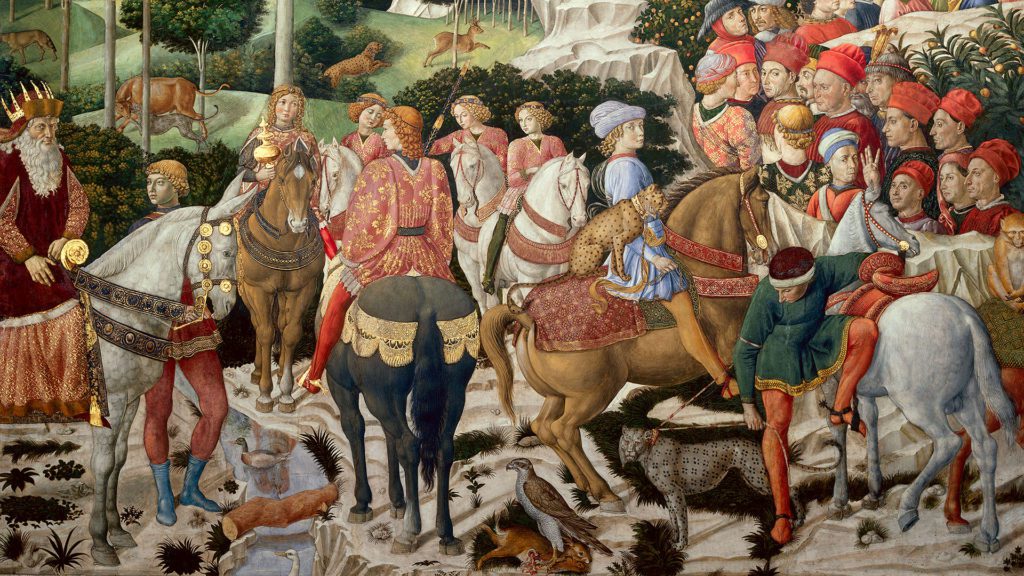
    The most famous room in the palazzo is called the Magi Chapel…because the fresco on the main wall portrays the three magi on their way to visit baby Jesus.

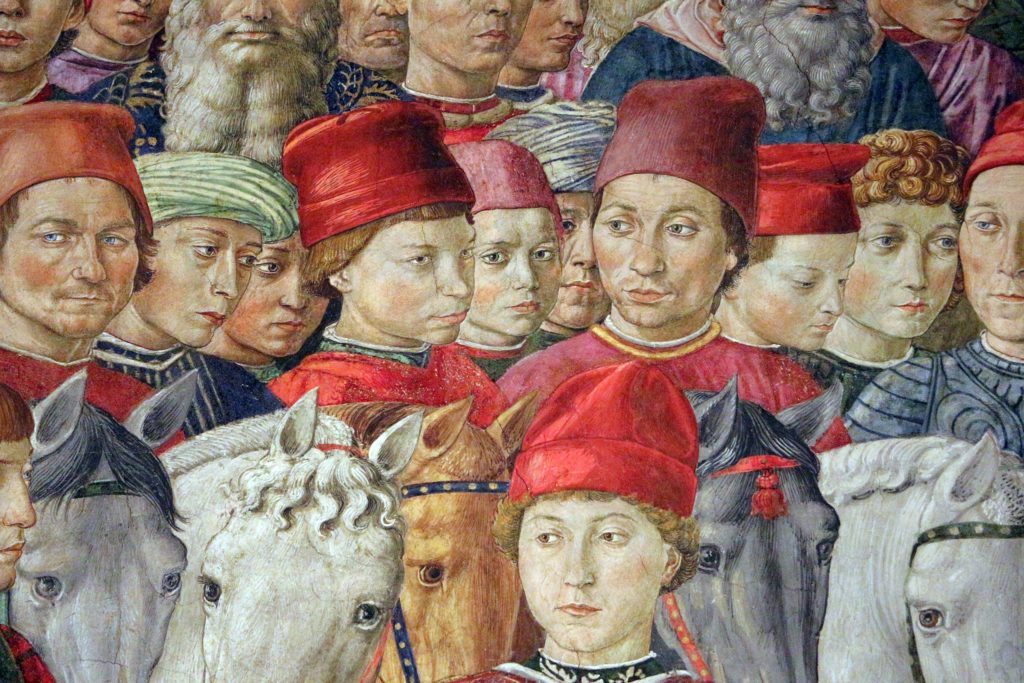
    As with much Renaissance art, the painting portrays more than it seems. The faces of the three magi are portraits of the Holy Roman Emperor, the Byzantine Emperor, and Cosimo di Medici. (Placing yourself in pretty exclusive company,eh?)

    Two of the faces in the crowd are Cosimo’s grandsons: Guiliano and Lorenzo di Medici.

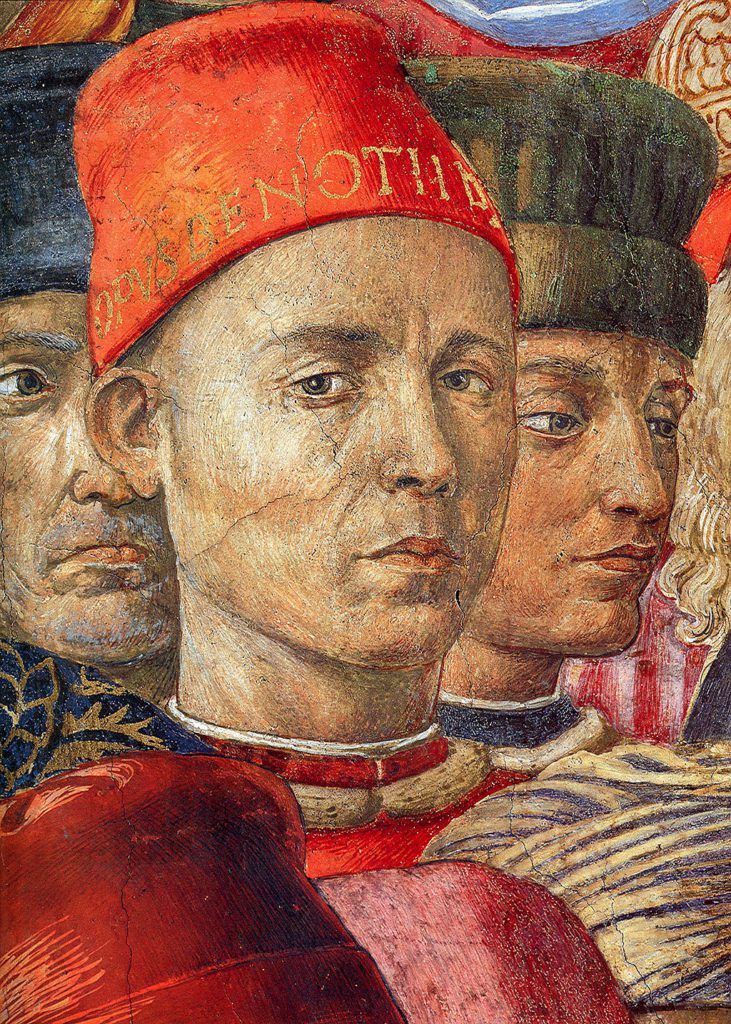
    And the artist, Benozzo Gozzoli, even managed to sneak his self-portrait into the scene.

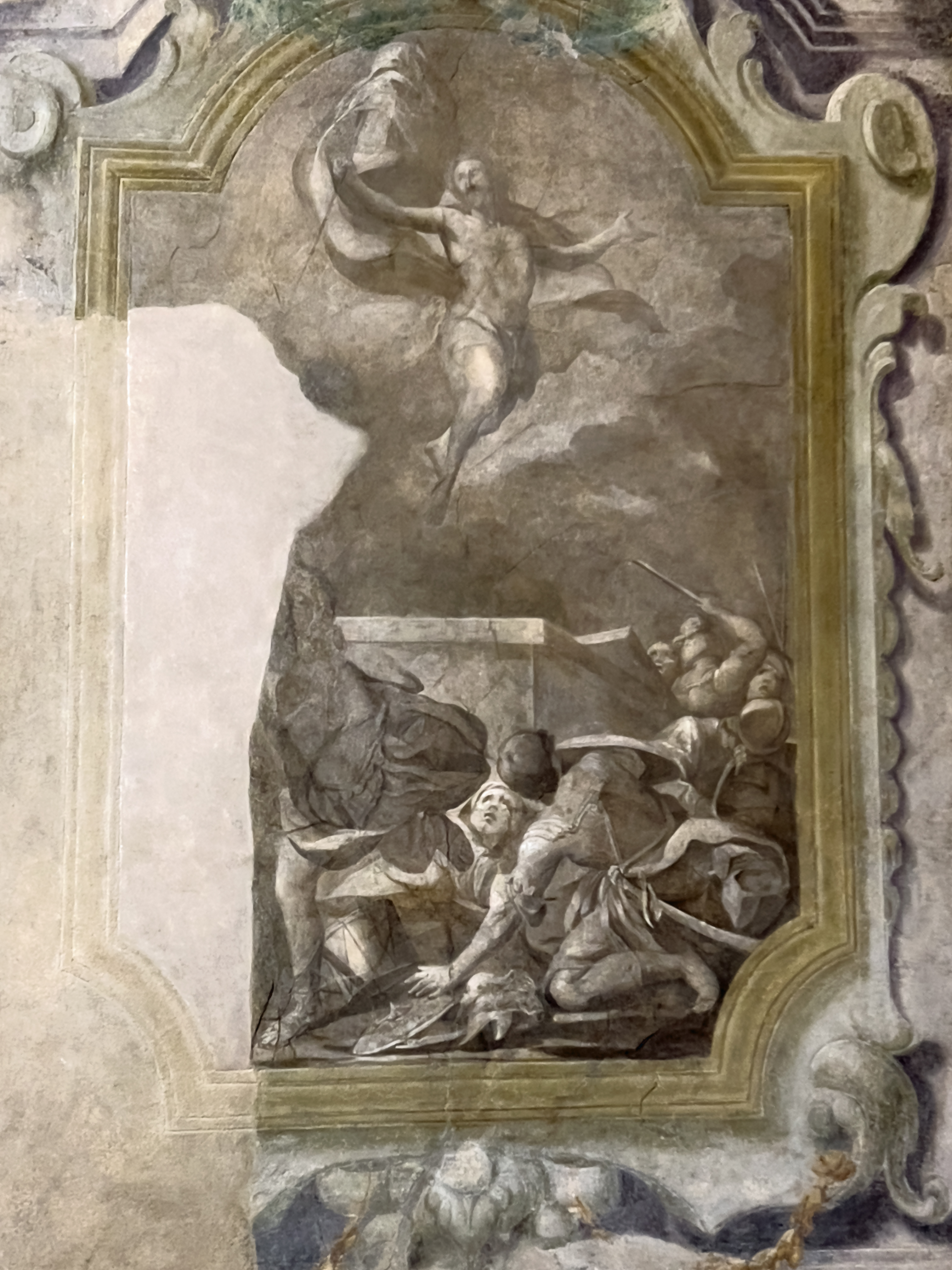
    The rest of the palazzo was also covered with art. After five centuries and several remodels, many of the original frescoes were gone. But detailed plans for the palazzo still exist, and in many places you can still get a pretty good idea of what the walls originally looked like.

    Cosimo di Medici believed in the greatness of classical antiquity and how that art, poetry, and philosophy could be applied to improve 15th century life.

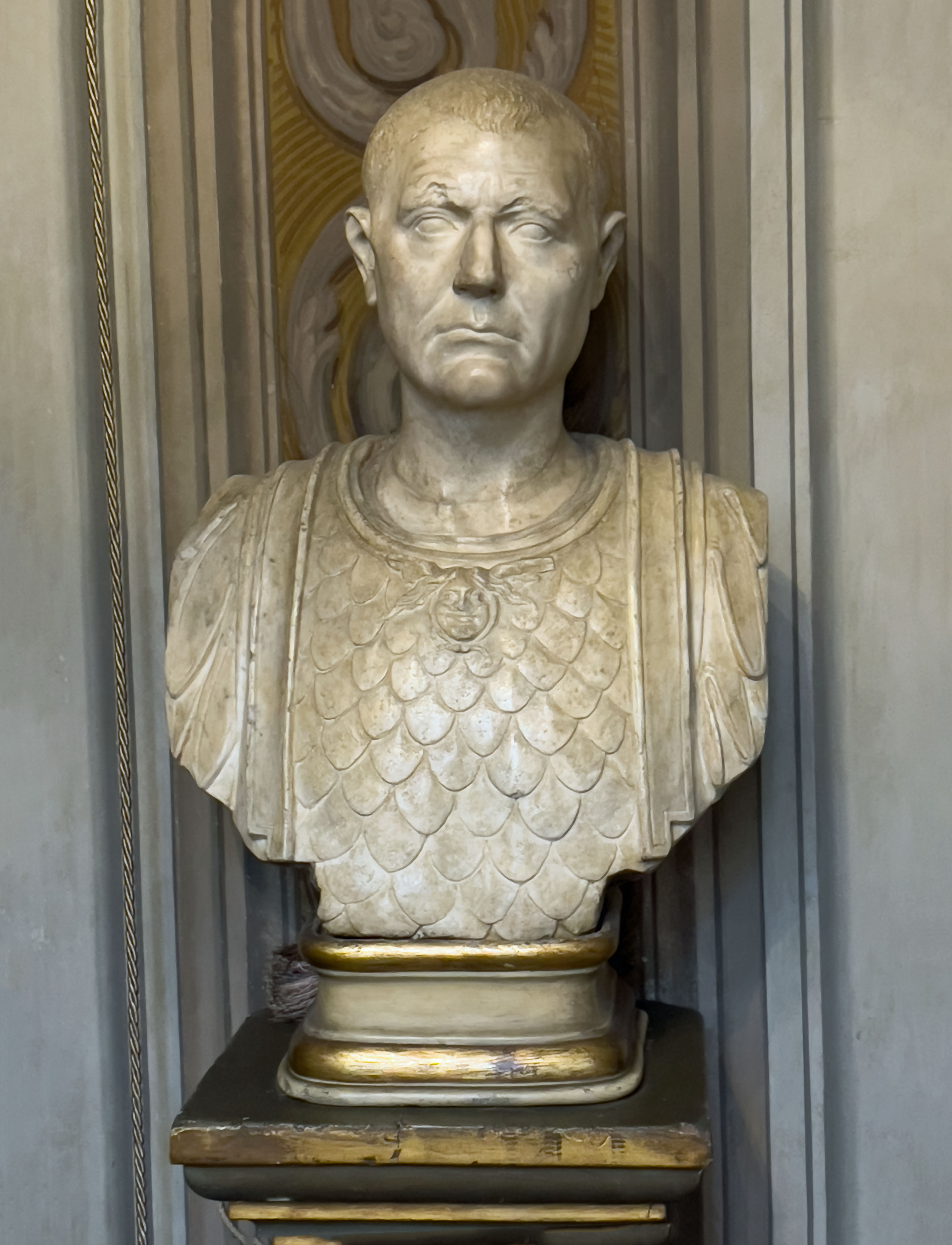
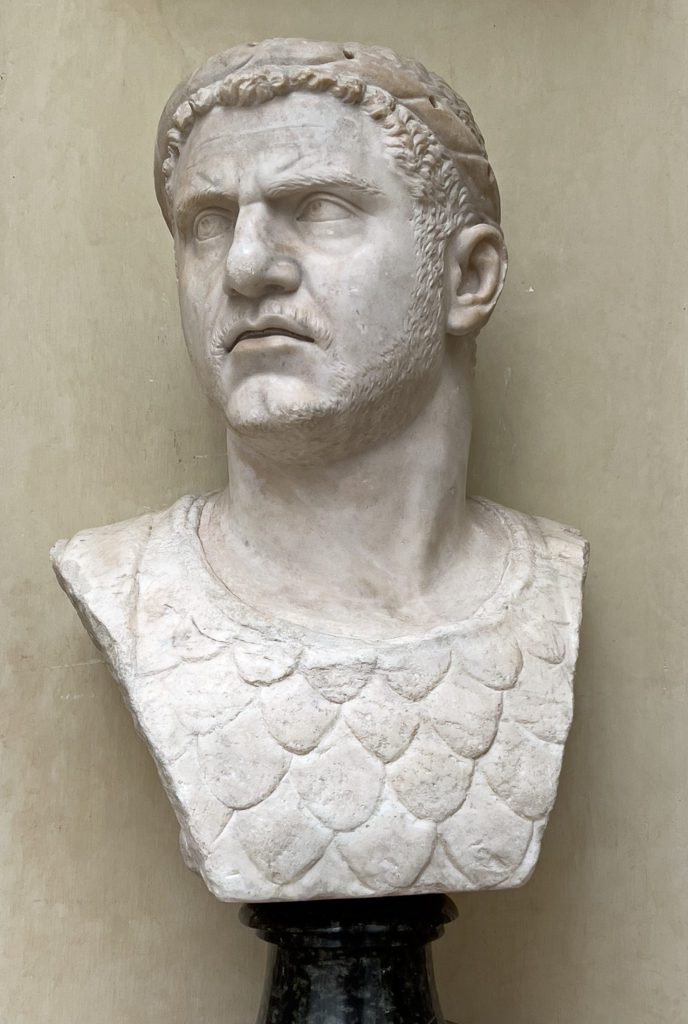
    He collected antiquities from ancient Rome, like this 1st century (CE) bust of Caracalla.

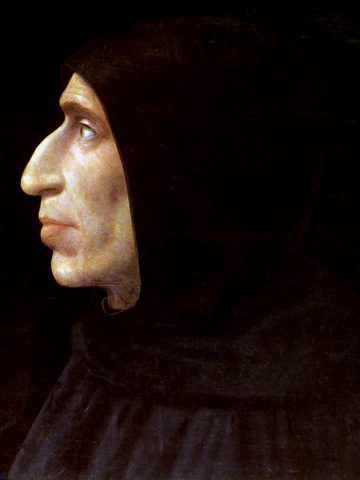
    In 1492, the fundamentalist priest Giolamo Savonarola overthrew Medici rule in Firenze and set up Europe’s first civil theocracy. In 1494, he had the entire Medici family exiled from the city. (A few years after that, the people of Firenze, disgusted with Savonarola’s fundamentalism, hung the priest, burned his corpse, and re-established a republic).

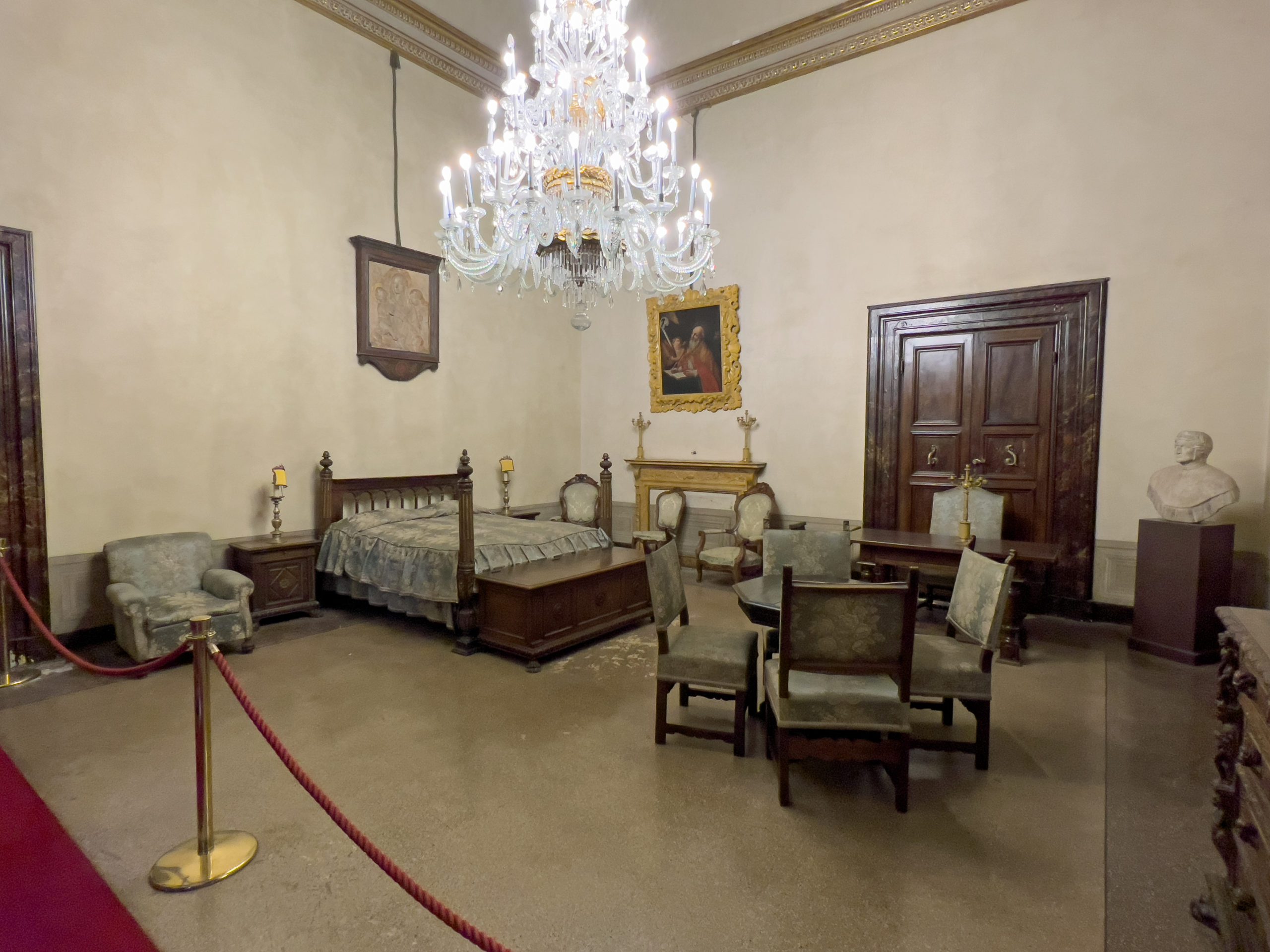
    With the Medici family in exile, the city government expropriated the palazzo for public use. A few months later, September 1494…when the French King Charles VIII invaded Italy…he stayed in this bed chamber…which remains decorated as it was for his visit.

    Even today, when the President of Italy visits Firenze, this room is reserved for his stay.

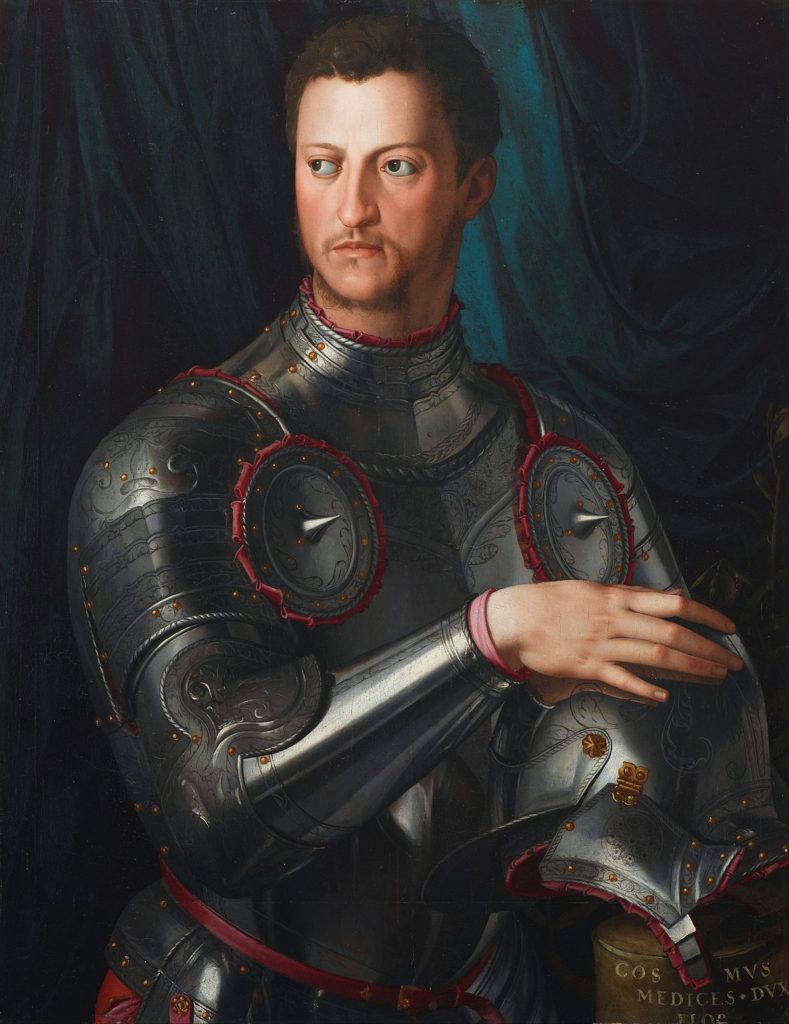
    In 1512, the Medici family returned to Firenze from exile and again took up residence in their palazzo. A few years later this man, Cosimo I di Medici, was born in the palazzo. In 1569 this Cosimo became the first Grand Duke of Tuscany.

    A grand duke needed something more palatial than the Palazzo Medici. Cosimo I wanted something that matched his ambitions, and he moved family headquarters to the even-grander Palazzo Pitti across the River Arno.

    The Palazzo Medici stayed in the family, however, for almost another 100 years

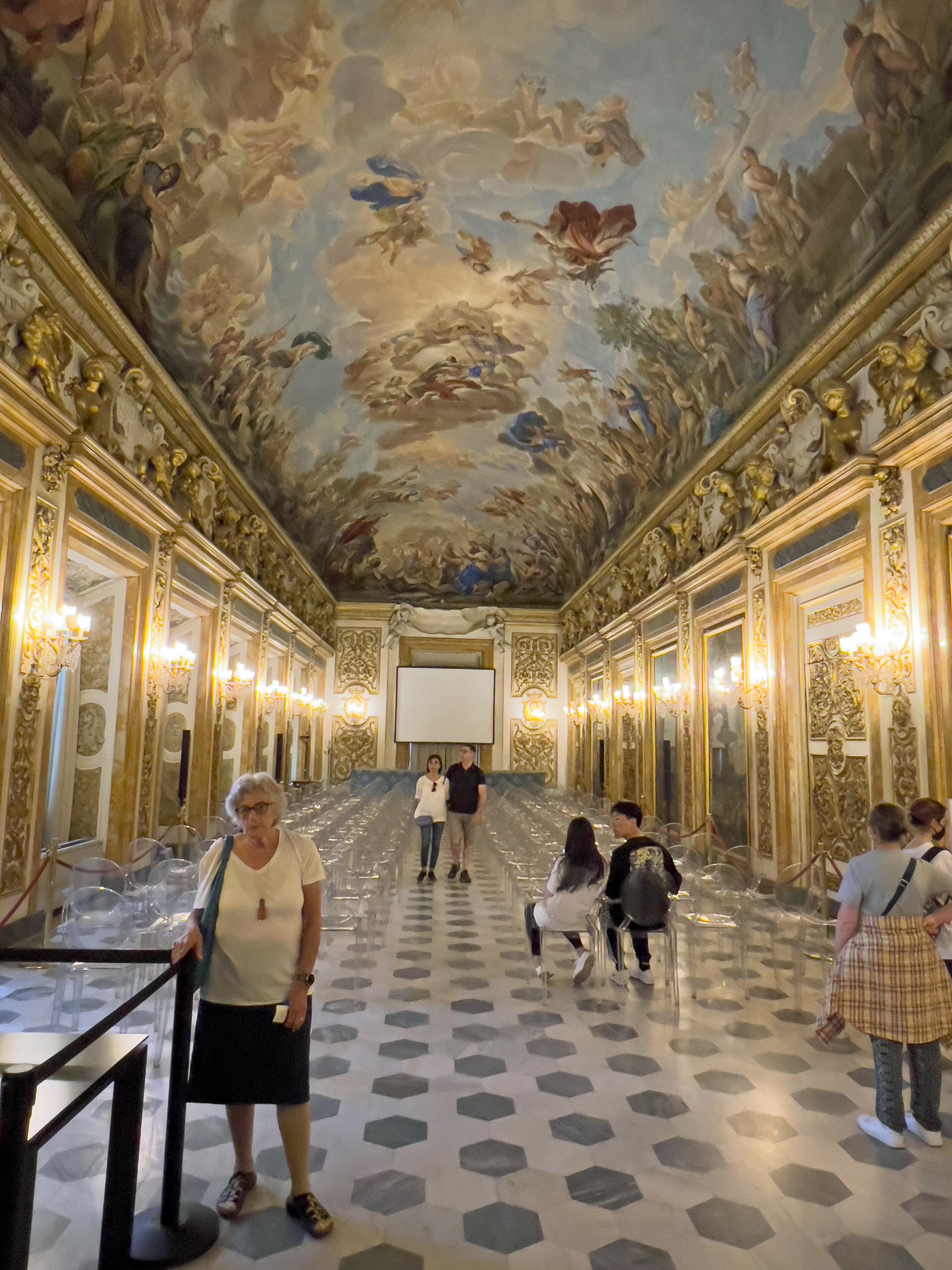
    As the Renaissance era evolved into the Baroque, the renovations became ever-more ornate, culminating in this great hall. Just imagine standing in this room, looking at the ceiling, the mirrored walls, and the gold leaf on plaster! There’s no way to put it into words!

    As if the interior of the palazzo weren’t enough, just outside the cortile lies the private garden. The Medici’s were the first Florentine family to import orange and lemon trees for their garden. The trees were kept in pots, so they could be moved inside during cold winter weather.

    Even today, Tuscans keep their citrus trees in pots…so they too can move them into shelter when the weather gets cold.

    All good things must come to an end.

    In 1659, Grand Duke Ferdinand II sold this remarkable palace to Gabriello Riccardi. The Riccardi family did extensive renovations over the centuries to “update” it to then-current, “modern” standards.

    Only in the past few decades has the foundation that now owns the palazzo been able to begin restorations to it’s original grandeur.


    Which brings us to the oldest building in Firenze…..

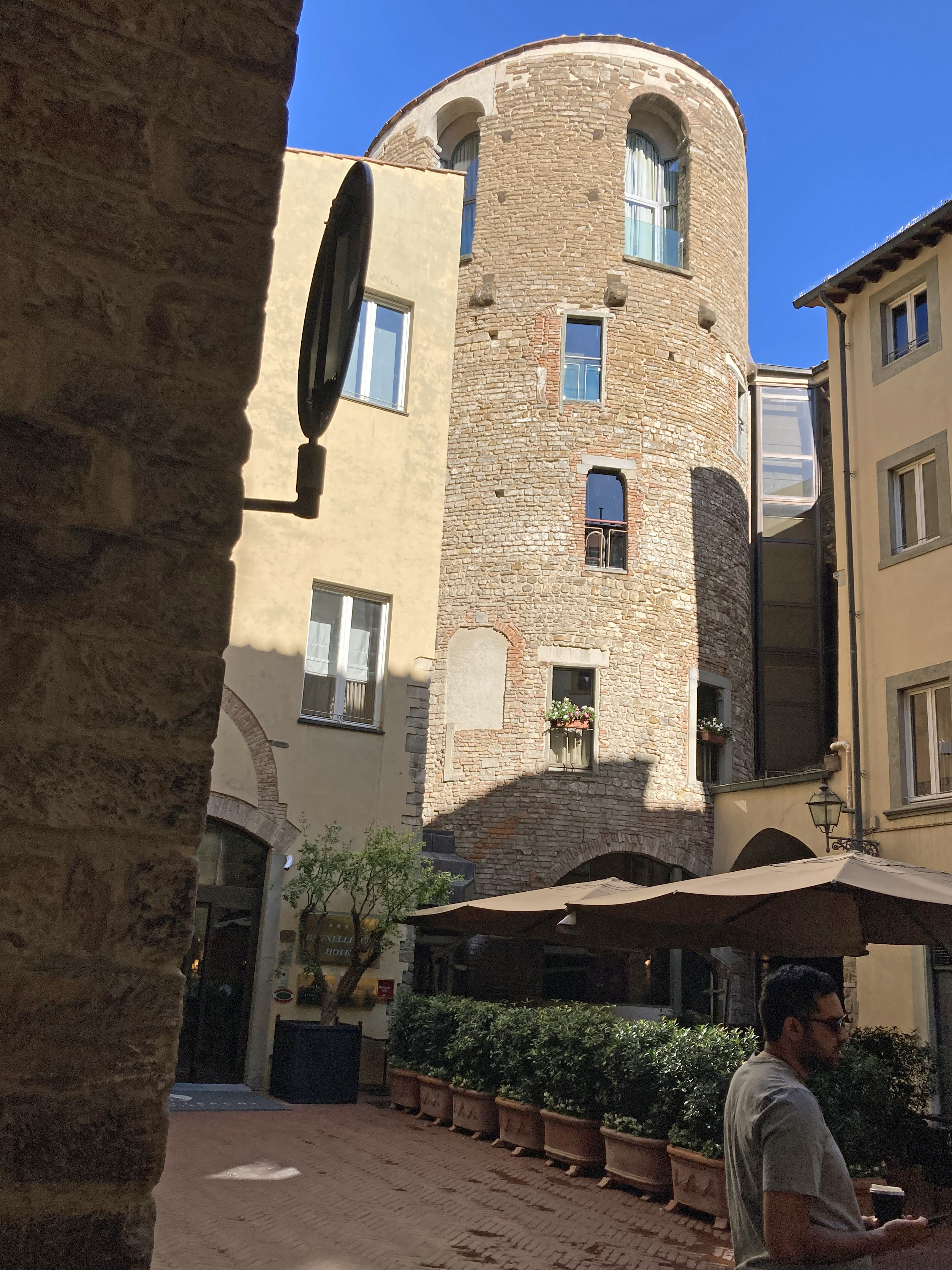
    The round tower in this picture, less than half a kilometer away from the Palazzo Medici/Riccardi, is known as the Torre Pagliazza.

    It first appears in the written records of Firenze in the year 1141. Even then, it was not a new building. Best estimates are the tower was built some time in the Sixth Century as part of the city’s defenses against the invading Goths.

    By the year 1268 the tower served as the women’s prison… which is where it gets its name. “Pagliazza” is the Italian word for straw. Unlike in the men’s prison, where prisoners had to sleep on the bare stone floor, inmates in the women’s prison got to sleep on straw palettes.

    If this were all there were to the story, the tower’s record as the oldest building in Firenze would be intact.

    But the story goes back even farther.

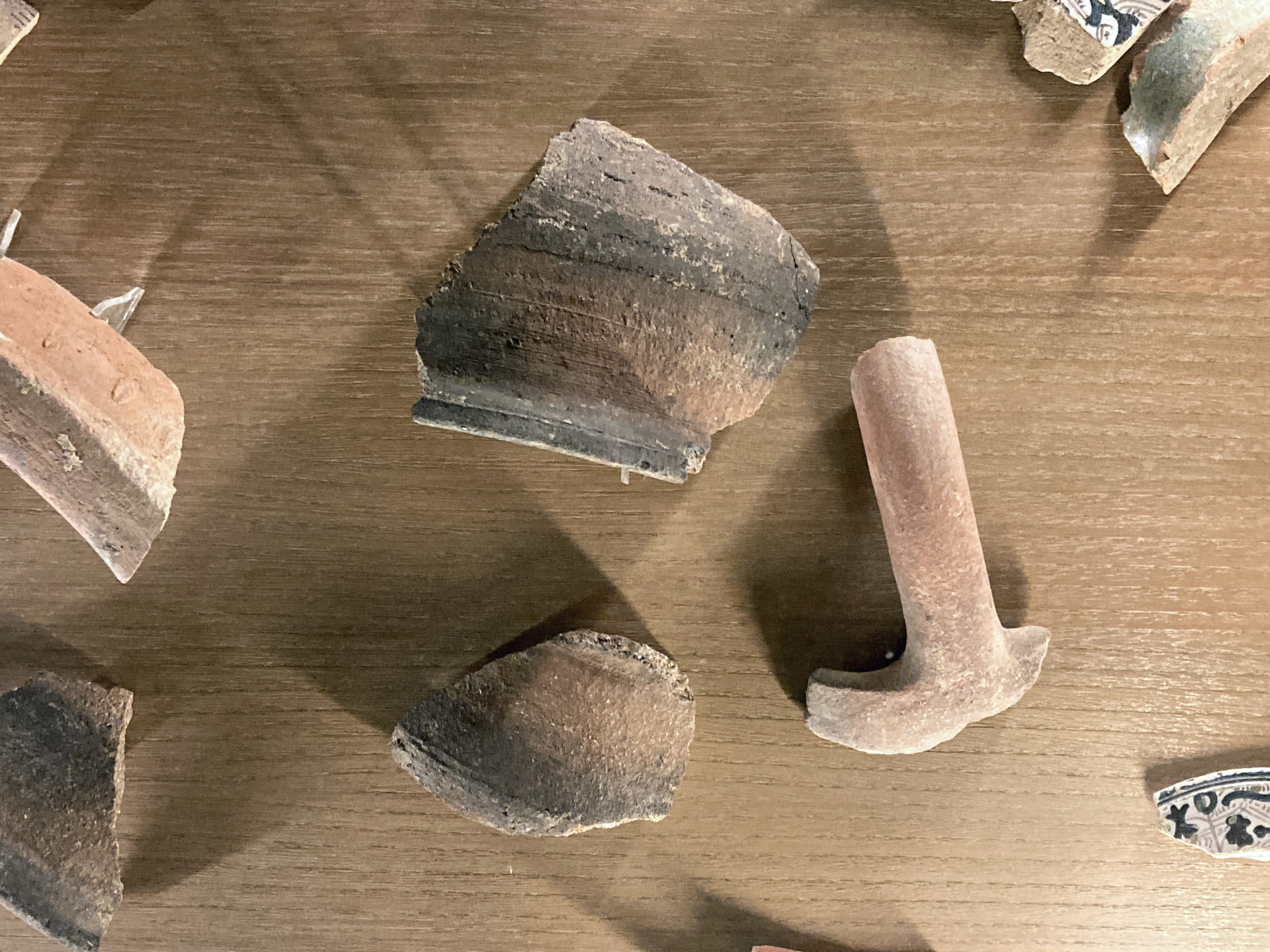
    In 1983, as the city was doing yet another round of renovations to the Torre Pagliazza, construction workers discovered these shards of pottery…that date back to the first century CE.

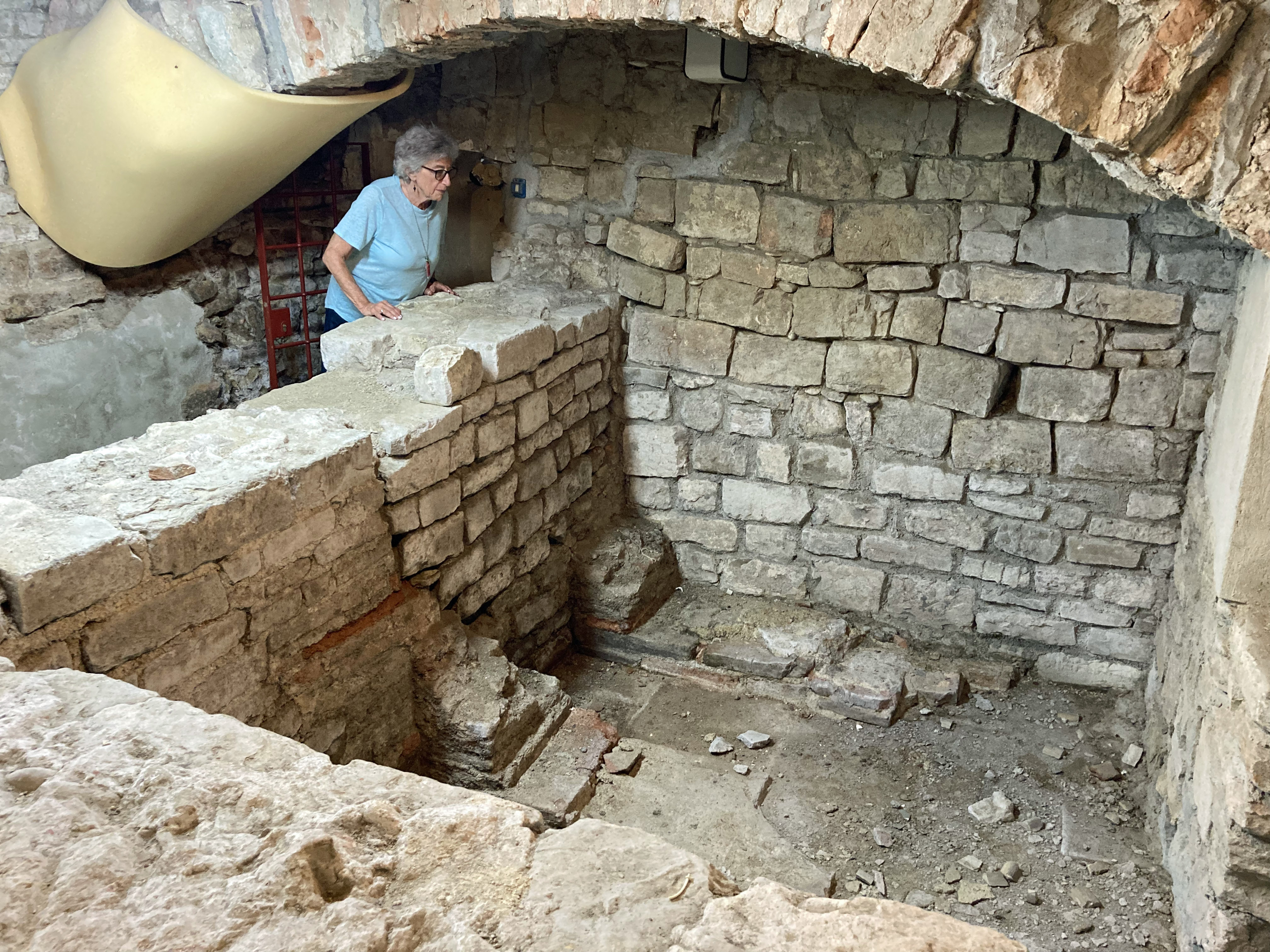
    Renovations stopped, so archeologists could excavate the site. At a level even lower below ground, they discovered this…

    …a Roman bath. One pool for hot soaking and another for cool.

    Today, the renovations are long completed, and the Torre Pagliazza is part of a four star hotel, the Hotel Brunelleschi, where rooms go for 700€ a night. (Probably a bit different level of luxury than the inmates of the women’s prison experienced in the 13th century).

    If you want to see the Roman baths, just ask the doorman to take you down to the museum in the basement. You don’t even have to be a paying guest.